The Importance of Digitization for Hybrid Manufacturing


Manufacturing is changing for the better.
As the industry continues to evolve, the combination of additive (such as 3D printing) and subtractive (like CNC machining) processes has given rise to hybrid manufacturing, a promising approach for producing complex, high-performance components.
The industry is experiencing high levels of growth; it’s set to be worth $948.6 million by 2030.
While the technological potential of hybrid systems is clear, their real-world effectiveness depends on more than just hardware.
Digitisation is the key enabler that unlocks the full value of hybrid manufacturing, streamlining workflows, improving traceability, and driving smarter decision-making.
In today’s blog, AMFG examines how digitisation drives progress in hybrid manufacturing processes, and how companies can leverage new technologies to ensure a competitive edge in today’s market.
Hybrid manufacturing: the best of both worlds
AMFG has long outlined the strengths of both CNC machining and AM processes. As 3D modelling company Spatial points out, hybrid manufacturing marries the speed of 3D printing with the flexibility of subtractive detail work.
Hybrid processes may be used to print parts using metal deposition with a metal power with subtractive machining used in post-processing to smooth out the rough edges. Alternatively, a part may be machined using milling or cutting techniques with additive manufacturing used as a coat to finalise the part.
For example, a component may be 3D-printed to near-net shape and then finished with precision milling. This approach enables greater design flexibility, reduced material waste, and shorter production times, particularly for high-value industries like aerospace, medical devices, and energy. Money and time are both saved.
However, the convergence of these two very different manufacturing methods introduces complexity. Without a strong digital infrastructure, this complexity can quickly become a barrier to efficiency and scalability.
The role of digitisation
Digitisation involves converting manual or analog processes into digital formats that can be integrated, analysed, and optimised. In hybrid manufacturing, this means adopting digital workflows that connect design, production, quality control, and supply chain operations into a seamless, data-driven ecosystem. In fact, according to a study by PwC, digitised supply chains can reduce operating costs by up to 30%.
Of course, every company’s dream is to produce high-quality work while minimizing time and effort. Digitisation can be a crucial factor in making that dream a reality with a study by Deloitte finding that digitised manufacturing operations can increase efficiency by up to 20%.
Here’s how digitisation is reshaping hybrid manufacturing:
1. Integrated workflow management[spacer height="20px"]
Hybrid manufacturing processes typically involve multiple stages—design, material preparation, additive build, machining, heat treatment, inspection, and sometimes post-processing. Managing these manually is both error-prone and inefficient.
Digitisation enables end-to-end workflow automation, where each step is digitally tracked and orchestrated through a Manufacturing Execution System (MES) or similar platform. This reduces lead times and ensures consistency across production batches.
Digitally integrated MES can automatically schedule a CNC finishing operation immediately after a build is completed, without requiring manual intervention. It can also flag discrepancies in material certificates or machine status in real time.
Looking for an MES to improve workflow management? Chat to one of our experts here:
2. Improved traceability and compliance[spacer height="20px"]
In sectors like aerospace and medical manufacturing, regulatory compliance and traceability are non-negotiable. Hybrid parts often undergo complex, multi-step processing, which increases the risk of data loss or quality issues if records are kept manually.
For example, Mazak’s INTEGREX i-400 AM system is able to join different types of metals together, which can be used to efficiently repair existing worn or damaged components such as aerospace turbine blades. A company using this Mazak system would need to ensure they meet regulatory requirements.
[caption id="attachment_44500" align="aligncenter" width="700"]

Mazak INTEGREX i 400AM. Image courtesy of Mazak[/caption]
Digitised systems provide full traceability across the hybrid manufacturing lifecycle. Every action, from material selection to machine parameters and post-processing steps, is logged, timestamped, and stored. This not only supports compliance (e.g., AS9100, ISO 13485) but also allows manufacturers to quickly identify and isolate issues when defects occur.
Manufacturers can use Quality Management Systems (QMS) to monitor production processes in real time and ensure that products meet quality standards at every stage of production. AMFG’s platform captures and stores all part quality and production data to ensure final parts meet the required specifications.
3. Enhanced quality control[spacer height="20px"]
Combining AM and subtractive methods demands tight quality control to ensure geometric accuracy, material properties, and structural integrity. Traditional inspection methods often fail to keep pace with the speed and complexity of hybrid processes.
Digitisation empowers real-time, data-driven quality assurance. For example, machine monitoring systems can detect deviations during the build process, while automated inspection tools can feed results directly into the MES for instant feedback loops. This enables faster corrections and reduces the risk of scrap or rework.
Additionally, as AMFG has previously discussed, digital twins are possible for hybrid manufacturing. These virtual replicas of parts and processes can be used to simulate and validate hybrid builds before any material is committed, representing a huge area of possibility for manufacturers.
4. Better resource planning and scheduling[spacer height="20px"]
One of the major challenges in hybrid manufacturing is coordinating multiple machines and process steps. Without digitisation, planning this workflow relies heavily on spreadsheets or tribal knowledge, which doesn’t scale.
A digital manufacturing platform offers real-time visibility into resource availability, machine utilisation, and job priorities. With smart scheduling algorithms, manufacturers can automatically allocate jobs based on machine capacity, tooling readiness, and deadlines.
Perhaps the greatest long-term benefit of digitisation in hybrid manufacturing is the ability to leverage data for continuous improvement. By collecting data across the entire production lifecycle—machine performance, part quality, operator inputs, maintenance logs—manufacturers can identify trends, predict failures, and optimise their operations.
Enterprise Resource Planning (ERP) systems allow manufacturers to integrate various processes, such as inventory management, production planning, and order processing into a single platform. Certain MES, like AMFG, are able to integrate with ERP systems in order to enable real-time data synchronisation and streamline operations.
This approach transforms hybrid manufacturing into a strategic, intelligence-driven operation.
Final thoughts
Hybrid manufacturing holds enormous potential to revolutionise how high-performance parts are designed and produced. But without digitisation, manufacturers risk being bogged down by complexity, inefficiency, and quality issues.
By embracing digital tools, manufacturers can unlock new levels of agility, traceability, and precision. These tools, which range from MES platforms to real-time monitoring and data analytics, unlock another facet to hybrid manufacturing.
In an increasingly competitive environment with more regulations than ever, digitisation is not just desirable– it’s necessary for any company serious about hybrid manufacturing.
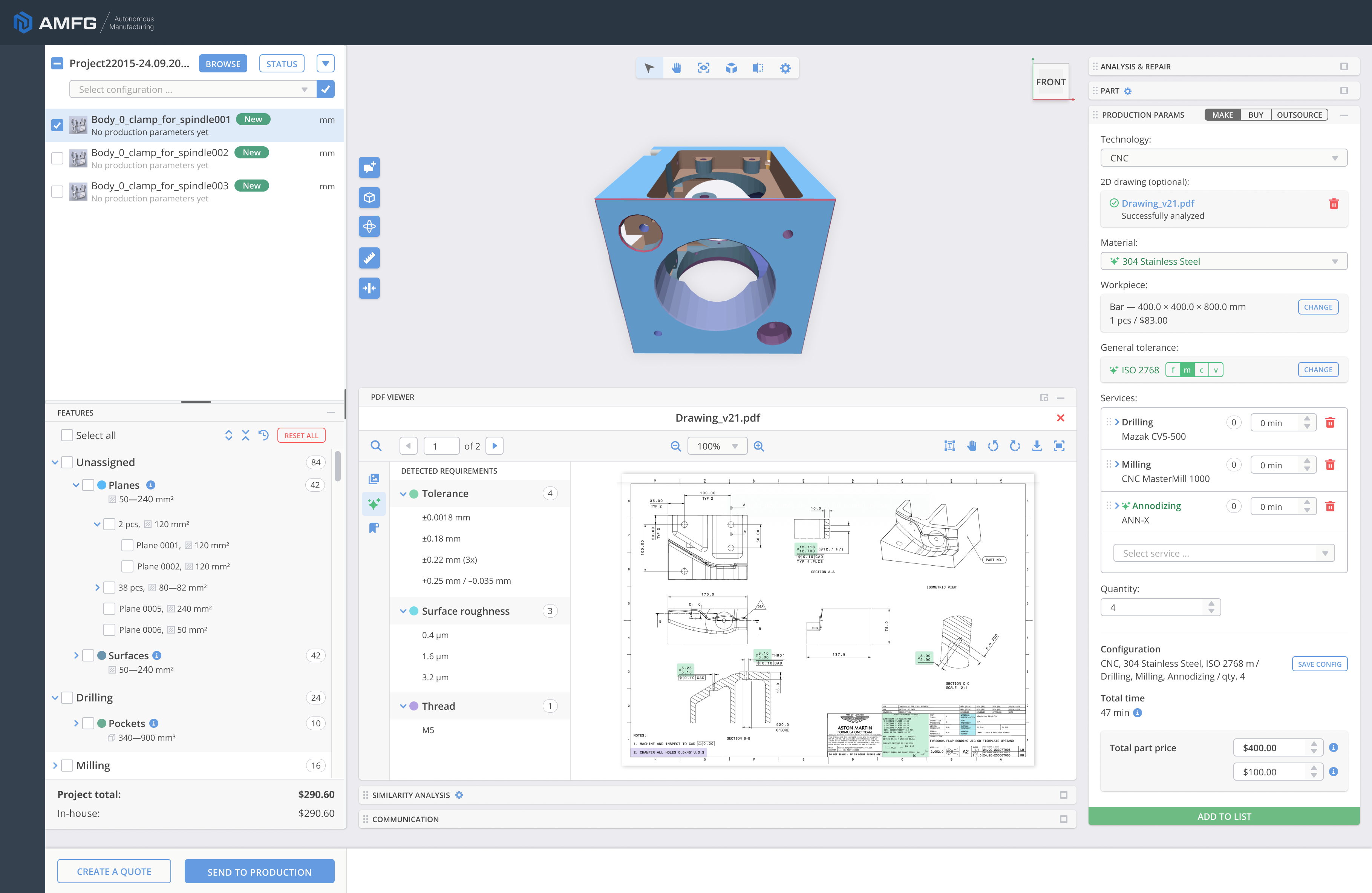
AMFG is an award winning MES designed to empower production workflows, from order placement to shipment, with seamless integration and precision automation.
With over 500 successful implementations in 35 countries and across a range of industries, we specialise in enabling companies to successfully integrate our software for AM and CNC production, into their wider manufacturing processes and scale their AM operations.
For more information, please contact us here: Book a demo


.avif)
.svg)