Long read: America’s Oldest Job Shops
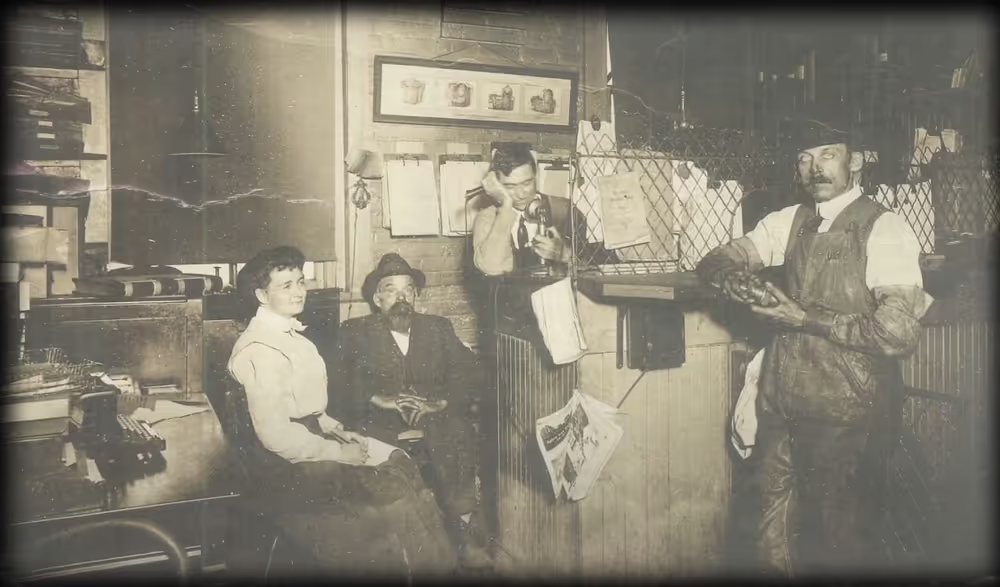


Image courtesy of JBSIn 2023, John Bouchard & Sons Co. (JBS) made headlines when it added CNC mills to its job shop. With CNC machining being available for over half a century and used by 86% of job shops, you may wonder why this was a newsworthy story. It wasn’t just a slow news day. This update marked the latest development in JBS’s technology since it opened over a century ago. The shop was originally established in 1900 by John Bouchard and his sons to provide machining services for refrigeration and elevator companies. A lot has changed in the past 123 years, however, John Bouchard’s descendants still own and operate the business as well as an army of craftsmen, service experts and staff who are also part of “the JBS family”.In 2024, JBS offers a much wider scope of services including iron construction castings, repair services and equipment sales to name just a few. Despite the company’s changes and modernisation, it carries on a legacy from another era in American industry. The American job shop has been the backbone of manufacturing for centuries, adapting to the evolving needs of its clientele while preserving time-honoured techniques. In this article, we delve into the fascinating history of five of America’s oldest job shops. From water-powered machinery to 5-axis milling, we explore how these job shops have stood the test of time and what the job shops of yesterday tell us about the job shops of today.
1. Wilmington Iron Works - Established in 1920
[spacer height="50px"][caption id="attachment_40784" align="alignnone" width="1000"]
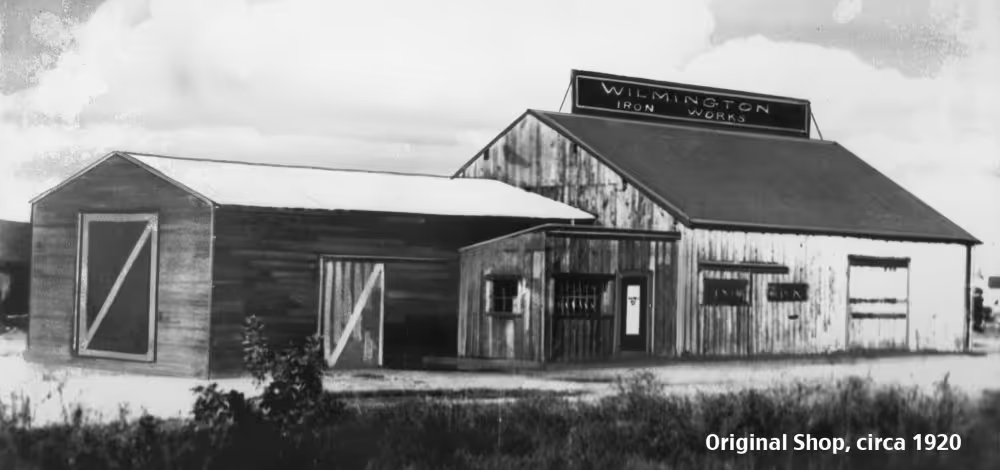
Image courtesy of Wilmington Iron Works[/caption][spacer height="50px"]California is a machining haven. The state is home to over 2,000 job shops, the largest chapter of the National Tooling and Machining Association and Wilmington Iron Works.Wilmington Iron Works (WIW) is a machine shop and repair facility that has been located in the Los Angeles Harbor since 1920.The company was established by Walter Charles Richards, "Wally" and, according to the company, “though it started as strictly a marine-repair business, Wilmington Iron Works has always emphasized its machine shop capabilities. In fact, WIW now has one of the most versatile repair and fabrication facilities in the Los Angeles and Long Beach Harbor region. What was once a tiny two-roomed shop is now over 23,000 square feet of commercial space spread over an acre of property.”Today the company offers a range of services and specialises in machining parts such as propellor shafts, couplers, rudder stocks and more.WIW claims that “when you're in business for over 98 years, you're probably doing a few things right.”The continued success of the business is a testament to this, stay tuned for the next 100 years of WIW.
2. Lucas Precision - Established in 1900
[spacer height="50px"][caption id="attachment_40800" align="alignnone" width="1000"]
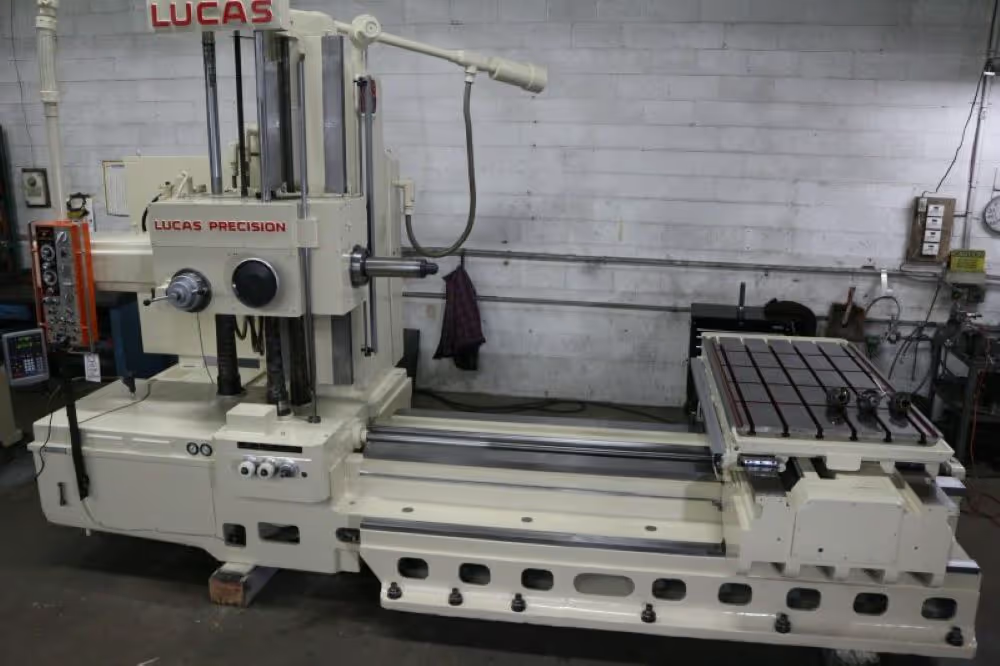
Image courtesy of Machinery Consultants[/caption][spacer height="50px"]When it comes to machining and milling equipment, some names carry a lot of weight, brands such as DMG Mori, Mazak and Matsuura. What does it take to make a famous machine? Our next company may have some answers.Established in 1900, Lucas Precision is a company that offers the most advanced rebuilding, remanufacturing and retrofitting of horizontal boring mills in the machine tool industry. The company’s story begins in 1900 when Henry M. Lucas, George C. Lucas and Frank Yost established Lucas Precision in Ohio. In 1901 they unveiled the Lucas Boring Mill, selling 351 machines in their first sales run. According to Lucas Precision, Henry M. Lucas made machine tool history by designing and building the original of the now familiar 'Lucas Type' Horizontal Boring, Milling and Drilling machine. “This was the first commercially available machine with a fixed-height worktable and was equipped for simultaneous adjustment of both the counterweighted machine head and the tailblock or Backrest.”Henry M. Lucas’s work made major strides in boring machinery and the innovations of the Lucas-type machine revolutionised boring accuracy capabilities.The company’s impressive history continued through the 20th century and ramping up production to meet the demand of the navy during WWII doubling the number of machines produced without any additional staff.Today, Lucas Precision is a part of FERMAT, a leading manufacturer of the most powerful and accurate horizontal boring and milling machines and cylindrical grinding machines, providing machine tools for all major markets worldwide.Lucas Precision is boring by name but certainly not boring by nature.
3. Kempsmith Machine Company - Established in 1888
[spacer height="50px"][caption id="attachment_40802" align="alignnone" width="1000"]
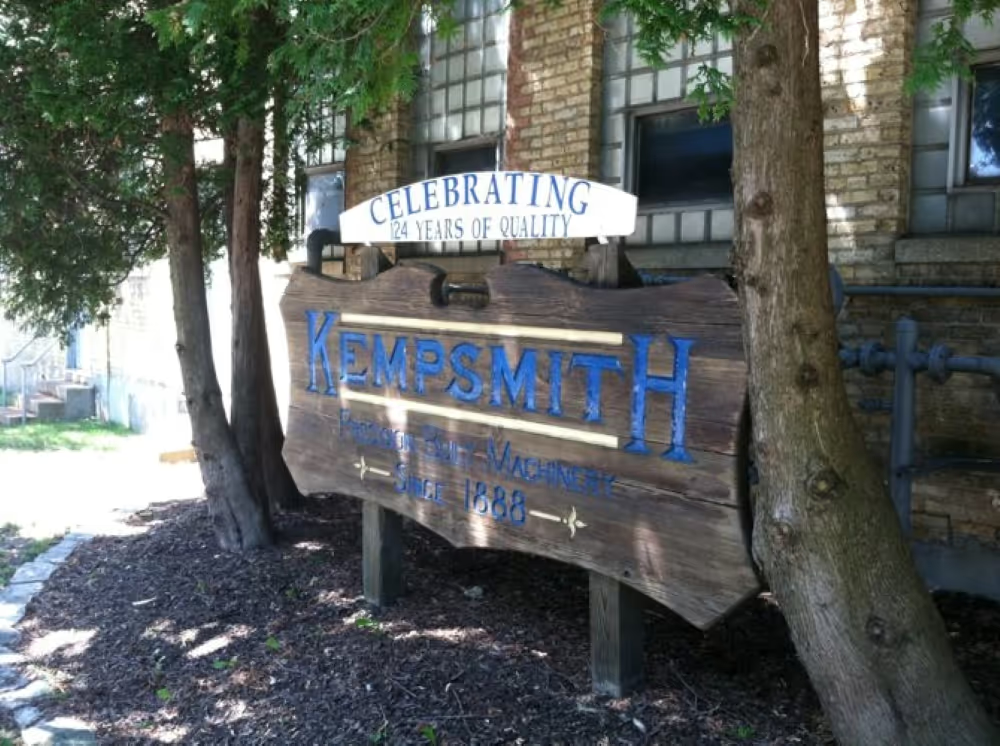
Image courtesy of Kempsmith[/caption][spacer height="50px"]A look at the history of these companies offers insight both into the innovations in American manufacturing technology as well as the industries driving that change. AMFG has explored how industries such as aerospace, defence and medical are set for huge growth but what about paper?Established in 1888, Kempsmith Machine Company specialises in “building custom flatbed and rotary Die Cutters for the folding carton market and paper-converting equipment for file folders and the office products market.”The company was founded over 135 years ago by highly respected machinist and toolmaker Frank Kempsmith.His 1904 obituary in American Machinist provides a unique insight into the 19th century job shop owner. It outlines how Frank “and with two partners started in business building machine tools and [...] moved to Milwaukee, where by himself he built up the business now known as the Kempsmith Manufacturing Company, originating the milling machines which are known by his name. His shop was a good one; he took great pride in it, and every piece of work turned out of it had to be up to his high standard of workmanship.”Another piece in American Machinist provides a stellar character reference that any machinist would be proud to have on Yelp. As one of Kempsmith’s former employer’s comments:“I consider Frank Kempsmith the best mechanic that ever worked in our place. He had the skill and the nerve to make a job exquisitely fine when it was required to be so, and at the same time he had the good judgment to stop work on a job as soon as it was good enough for the purpose it was to serve."Today the company follows in Frank’s footsteps and their vast experience and knowledge to produce the latest in innovative technology.
4. Metzger Machine - Established in 1878
[spacer height="50px"][caption id="attachment_40778" align="alignnone" width="1000"]
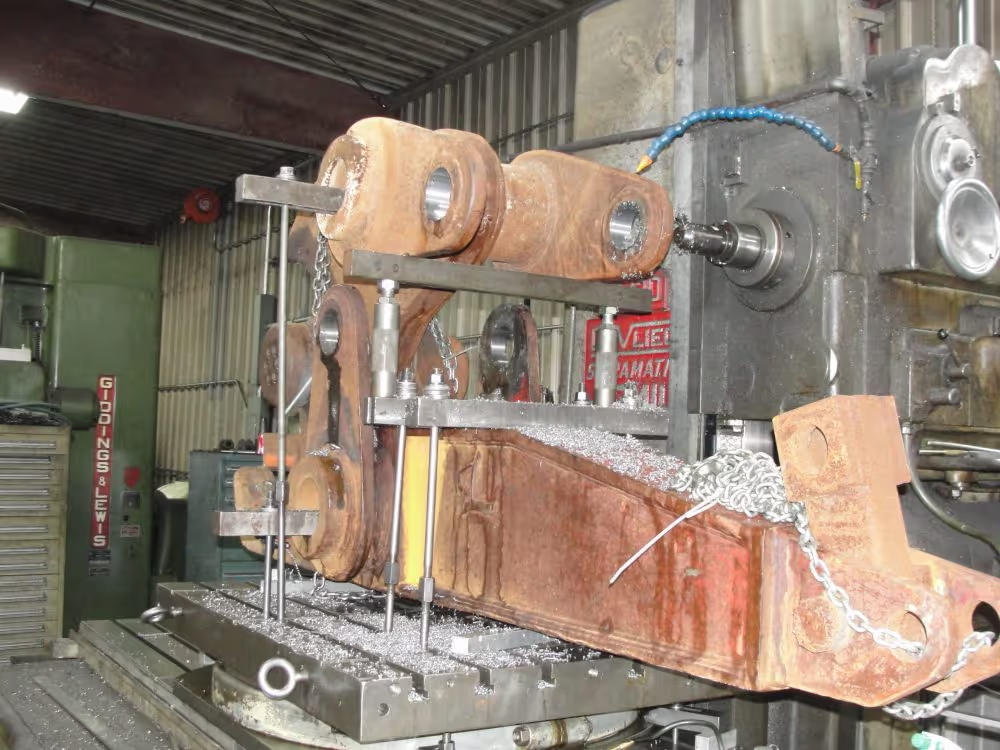
Image courtesy of Mezger[/caption][spacer height="50px"]20 years and 250 miles may separate the foundation of Lucas Precision and Metzger Machine but the two company’s form part of Ohio’s rich manufacturing history. As AMFG discussed in a recent article, Ohio along with states such as Michigan, Pennsylvania and New York formed the American Industrial heartland. While the region has been haunted by decline, Metzer Machine has persisted and is now the oldest operating machine shop in Cincinnati. The company has even been operating on the same street for almost 150 years.Nevertheless, despite its long history, the company has moved with the times.Today, “with its full-service machine shop and three graduate engineers on staff, Metzger Machine is capable of providing a wide range of machining and engineering services.” The company Metzger is able to provides “ complete job shop services such as sawing, milling, drilling, welding, turning, dynamic balancing, and grinding. Engineering services include design & redesign of custom equipment and reverse engineering & production of expensive or obsolete OEM parts.”The story of Metzger Machining works as both a historical company as well as a modern one, adapting to fit the times.
5. Fulton Iron and Manufacturing - Established in 1852
[spacer height="50px"][caption id="attachment_40804" align="alignnone" width="1000"]
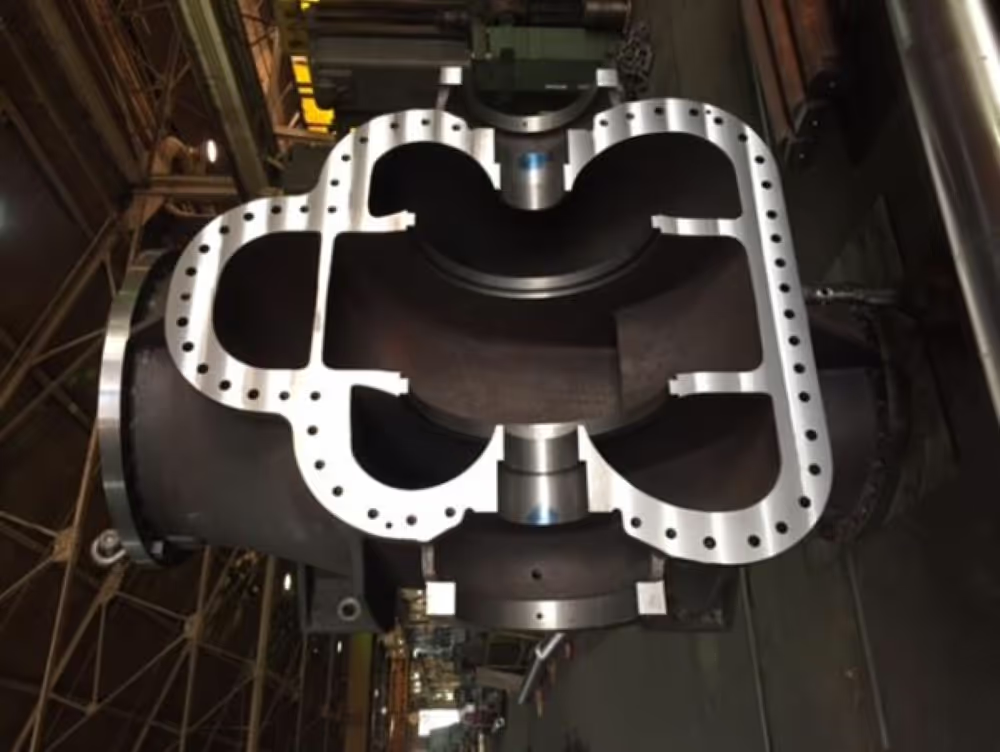
Image courtesy of Fulton[/caption][spacer height="50px"]If you looked out at the Mississippi River in the mid-19th century, you were sure to see a whole host of steamboats - Fulton Iron and Manufacturing played a major role in powering them.Today, Fulton Iron and Manufacturing is part of South Side Machine Works, Inc, MidWest’s Largest Job Machine Shop. The company’s origins date back to 1852 when Gerald B. Allen founded the shop to manufacture riverboat steam engines, during the steamboat's Golden Age.Over the next few decades, Fulton Iron Works diversified and manufactured stationary power-plant engines. According to the company, “Fulton's reputation became worldwide in the manufacture of more advanced, diversified presses and mining equipment, and international exportation began.”Over the 20th century, the company added the Lehmann Boring Tool Division, as well as the developing presses for the United States mint, the Chinese Government mint, and presses for Armed Forces ammunition.Today, in partnership with South Side Machine Works, Fulton works on a facility with more than 200,000 square feet of manufacturing space and employs 110 journeyman machinists and welders.After 175 years of machining and engineering, Fulton Iron Works is truly an institution of American manufacturing.
Honourable mentions
[spacer height="50px"]The five companies that we’ve discussed this far are remarkable both for their contributions to the history of American manufacturing as well as the fact that they’re still operating to this day.Nevertheless, they only offer a snapshot of America’s rich industrial history. While these next machine shops may no longer be in business, there’s still a lot we can learn from their stories.
The Knight Foundry - Established in 1873
[spacer height="50px"][caption id="attachment_40780" align="alignnone" width="1000"]
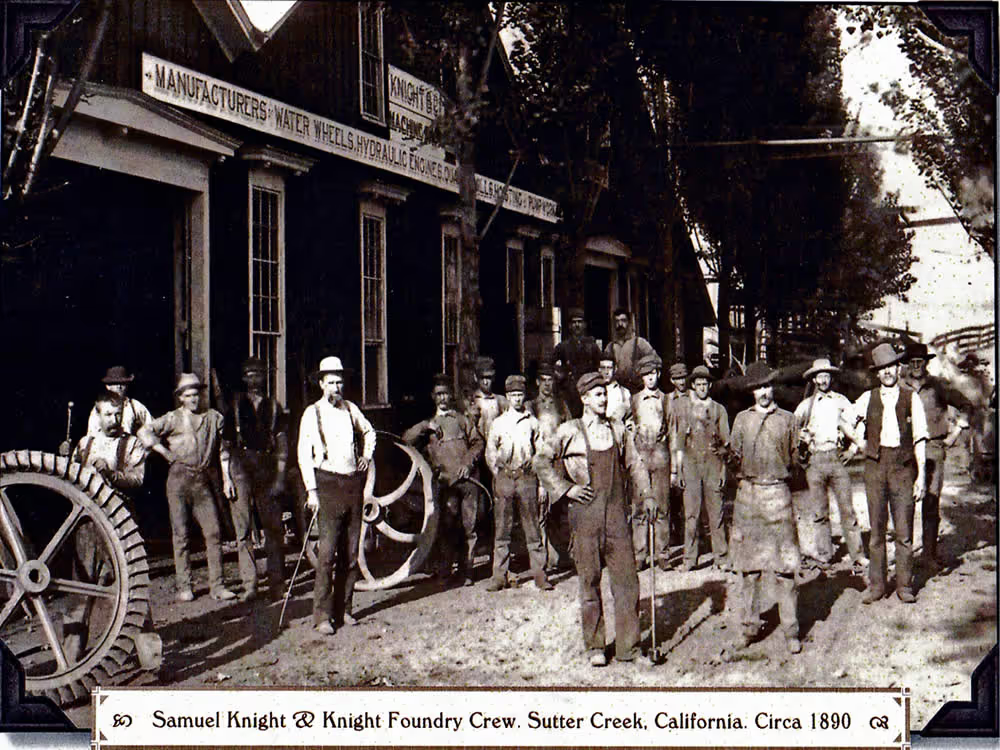
Image courtesy of Knight Foundry[/caption][spacer height="50px"]For 123 years between 1873 and 1996, the Knight Foundry operated as a water-powered foundry and machine shop. The company was Founded by Samuel Knight at the height of the American Gold Rush. Knight Foundry made the tools and machinery to make this mining possible. Now, the Knight Foundry is a Historical Landmark and offers tours, events and masterclasses to teach visitors about gold mining history.
Holyoke Machine Co - Established in 1863
[spacer height="50px"][caption id="attachment_40806" align="alignnone" width="1000"]
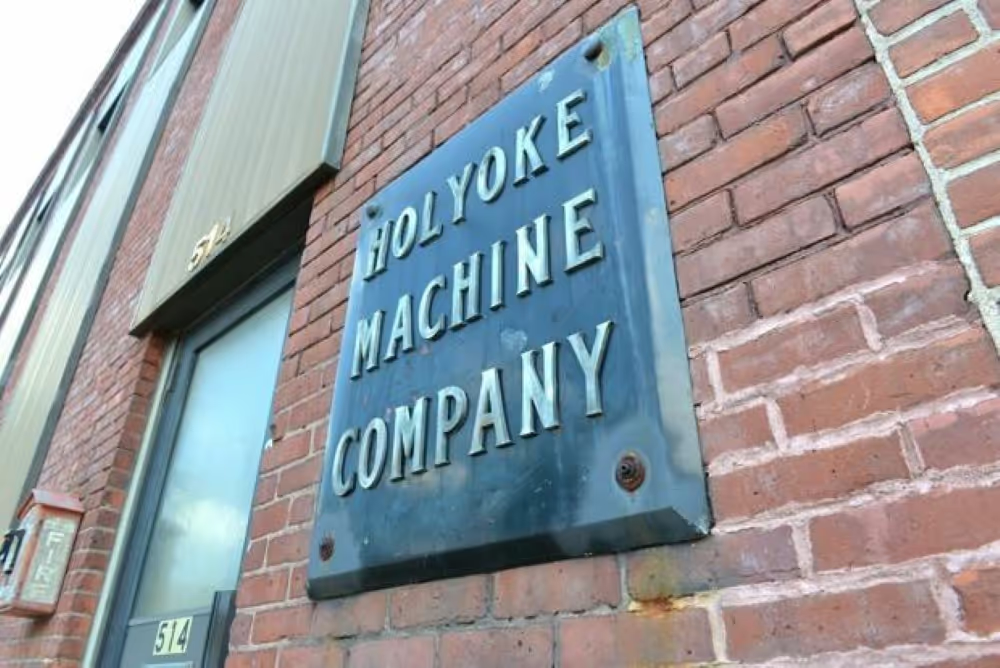
Image courtesy of Don Treeger , The Republican[/caption][spacer height="50px"]Best known for producing the Hercules water turbines, Holyoke Machine was a leader in producing paper manufacturing equipment and water turbines. Another of Holyoke’s claims to fame is that the foundry also cast the doors for the US Capitol building.In 2017, after 154 years in the business, Holyoke Machine Company closed its doors and a chapter of US industrial history.
W.A. Young & Son's Foundry and Machine Shop - 1900
[spacer height="50px"][caption id="attachment_40798" align="alignnone" width="1000"]

Image courtesy of WA Young Foundry [/caption][spacer height="50px"]Built in 1900 W.A. Young & Son's Foundry and Machine Shop provided machining services for over six decades before closing in 1965. The shop “produced parts for steamboats, coal mines, and railroads, and supported local small businesses.” What’s remarkable about this shop is that “when it closed in 1965, the building was locked and all of its tools and equipment were left in place—perfectly preserving its line shaft driven, 25-machine network for future generations.”Declared a National Landmark in 2017. Today, the machine shop is a museum as part of the Rivers of Steel Initiative, that serves to preserve the cultural heritage of Pennsylvania’s industrial history.
Final thoughts
[spacer height="50px"][caption id="attachment_40792" align="alignnone" width="1000"]
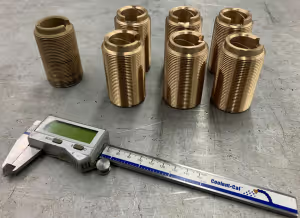
Image courtesy of JBS[/caption][spacer height="50px"]The future landscape of job shops is an exciting one, defined by technological developments from 5-axis machining, to AI and robotics. These technologies may seem like a world away from steamboats and water-powered machines. Nevertheless, we can get just as much inspiration from looking at the future of the industry as we can from looking into its past. The history and evolution of America's oldest job shops provide a fascinating glimpse into the endurance and innovation that have driven the nation's manufacturing sector for over a century and continue to drive it to this day. From the pioneering advancements of Lucas Precision to the diversification of services offered by Fulton Iron Works. Similarly, Kempsmith Machine Company's contributions to paper-converting technology and Metzger Machine's steadfast presence in Ohio's industrial heartland showcase the versatility of American job shops. Many job shop owners may see themselves in the resilience and adaptability demonstrated by these companies. In fact, the companies that we’ve discussed have achieved the dream of many job shop owners: to create a business that survives the test of time through generations - even centuries. Even the businesses that have closed their doors continue to educate others on American innovation and keep traditional practices alive.These stories not only celebrate the rich heritage of American manufacturing but also illustrate the continuous evolution necessary to meet modern demands. The legacy of these establishments is a reminder of how America’s industrial history and how critical role of job shops in shaping the nation's industrial landscape.

.avif)
.svg)