Three Takeaways from 2024 Additive Manufacturing Awards

16 Jan 2025

And the winner is...In a dynamic and innovation-centric industry like additive manufacturing (AM), keeping a watchful eye on the awards can illuminate market trends and philosophies key to productivity and profitability.Following on from last year’s blog about the biggest awards in manufacturing, AMFG is taking a look at those who picked up prizes in 2024 for their work in AM.We take a look at award-winning companies who produced innovative parts in healthcare, aerospace and defence, and sustainability, and the steps manufacturers could take to replicate their success.Below are stand-out winners from five awards in 2024, and three takeaways for AM in 2025.

1. Healthcare application is as important as ever

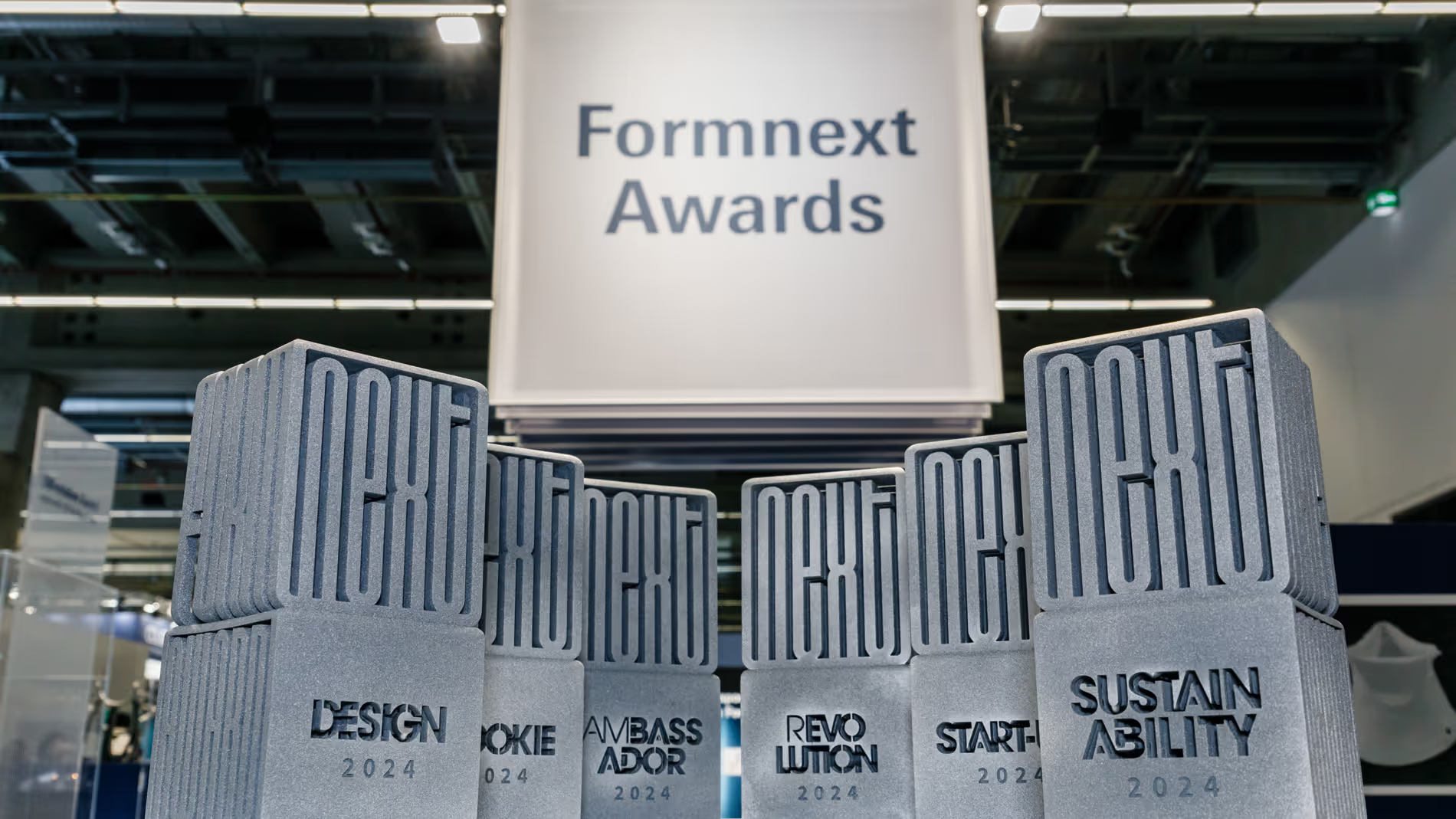
 As AM continues to move away from prototyping and towards end-use parts, the customisability and personalisability of AM-produced parts is incredibly salient, particularly in healthcare.According to a projection from Vision Research Reports, the global market size of 3D printing in medical applications will surpass $5.89 billion by 2030 due an accelerating demand for customized 3D printing solutions. Companies who engaged with medical applications won big in 2024, picking up prizes for creative solutions.The Formnext Awards, held in November in Frankfurt, showcased the importance of medical applications in the past year. Oryx Medicals picked up the Rookie Award for a 3D-printed aortic valve designed to revolutionise the treatment of aortic valve stenosis, and Axolotl Biosciences took first place in the Start-Up category after they produced a research-grade, xeno-free bioink for 3D-printing human tissue models.At this year’s SME Awards, a team from Advanced Engineering Solutions were honoured for their case study on a personalised femur implant for a bone cancer patient, designed using DICOM data and laser power bed fusion technology.

am case study winner advanced engineering solutions 768x432
Image courtesy of SME

The TCT Healthcare Application Award, presented to Arburg and HASHTAGTWO at the Birmingham NEC in June, recognised a fully tailor-made orthosis for women who have undergone a mastectomy, a ‘disruptive innovation’ in healthcare.The success of these companies in their respective awards demonstrates the natural affinity between additive manufacturing and healthcare- there are few methods that facilitate the production of bespoke, one-off parts from scanned data with such ease.However, this relationship can benefit from autonomisation; 70% of O&P production companies leverage the benefits of additive MES. 2024 saw AMFG partnering with Toolkit3D to facilitate seamless workflows within the healthcare industry.

2. Aerospace and defence continue to harbour potential

 During the evolution in the last few decades from prototyping to full-scale manufacturing, aerospace and defence have grabbed large portions of the sector’s attention. As the TCT Awards describes, the aerospace and defence industries are renowned for leading the way in innovation, with the technologies incubated by these industries quickly becoming popular in many commercial applications.With increasingly more ambitious goals in this field and greater demand for innovation to provide solutions, in 2024 companies took on the mantle. Boeing won the TCT Aerospace and Defence Application Award for their Phased Array Antenna Cold Plate, an additively manufactured part installed on the O3b satellite constellation ‘able to provide internet service to three billion people across the globe’.The 3D Printing Industry Awards in December underscored a 3D printed crushable lattice made by NASA JPL and REM Surface Engineering with laser beam powder bed fusion and designed for a Mars Sample Return Mission. The technology had previously been considered to be impossible, yet its achievement represents a compelling encouragement for others to continue driving towards unprecedented results.

9b596b8e node TCT AWARDS NCC 050624 KatjaOgrin 001 Medium
Image courtesy of TCT Awards

Moving into 2025, with the reality of several international conflicts and the beckoning possibility of a new space race, additive manufacturing is poised to play a key role in both production and innovation alike.However, congested 3D printing workflows and required adherence to regulatory standards, such as ITAR and AS9100, jeopardises companies’ ability to fully take advantage of such a fertile industry. The right digital infrastructure can ensure that companies maximise efficiency and optimise operations.While working with Babcock for the UK Ministry of Defence’s Project Tampa, AMFG’s MES software helps combat part obsolescence, improving contingency plans and readiness.

3. Sustainability is on the list of priorities

 As AMFG discussed in a blog last year, characteristic material efficiency and customisability has placed AM at forefront in a move towards a general adoption of sustainable practices to continue reducing the ecological footprint.However, there are still barriers to circularity. Here’s what AM award winners did in 2024 to overcome these and make a step towards a greener future:Siemens / 3D-PROCESS research consortium was awarded the Formnext Design Award for an innovative reactor design which consumes up to 50% less energy than the conventional process.Ceratizit picked up the Sustainability Award for creating a unique procedure for additively manufacturing hard metals based on bonding agents and sintering, saving 91% of the raw material normally required for conventional production and reducing its carbon footprint by 95%. Jury members were impressed by the amplified role that social relevance and greener processes played this year, hailing the arrival of sustainability in the AM industry.In December, the CECIMO Machine Tools Innovation Awards awarded Prima Additive the Green Impact Award for their groundbreaking Rapid Coating of brake disks, a transformative, scalable solution which leverages high-speed laser cladding technology to coat brake disks, reducing waste and energy consumption through the reuse of metal powders.

CECIMO
Image courtesy of Prima AdditiveBeyond the benefits of a better planet lie the possibility of recognition within the industry and increased industrial opportunities.

AMFG recently collaborated with Innovate UK on IntelliJeni, a project aiming to create AI-enabled, robotic, high-speed digital manufacturing. This revolutionary innovation promises cheaper and quicker manufacturing processes and greater environmental sustainability across the entire production lifecycle, a key industry priority in 2025.

Final thoughts

 2024’s awards have raised a glass to companies exemplifying innovation and efficiency in key applications. Healthcare has continued to be high-up on the list, whilst aerospace and defence have been areas of interest. Likewise, sustainability has been important, with several awards going to manufacturers aiming to contribute to decarbonisation with their products. With the right implementation and optimisation, manufacturers can continue to prosper in these applications.As we head into the New Year, these three patterns can be seen as educational opportunities for companies innovating in these areas, those aiming to win awards, and manufacturers that exemplify efficiency and productivity. AM is a dynamic industry, and keeping ahead of the game may just lead to success.

About AMFG

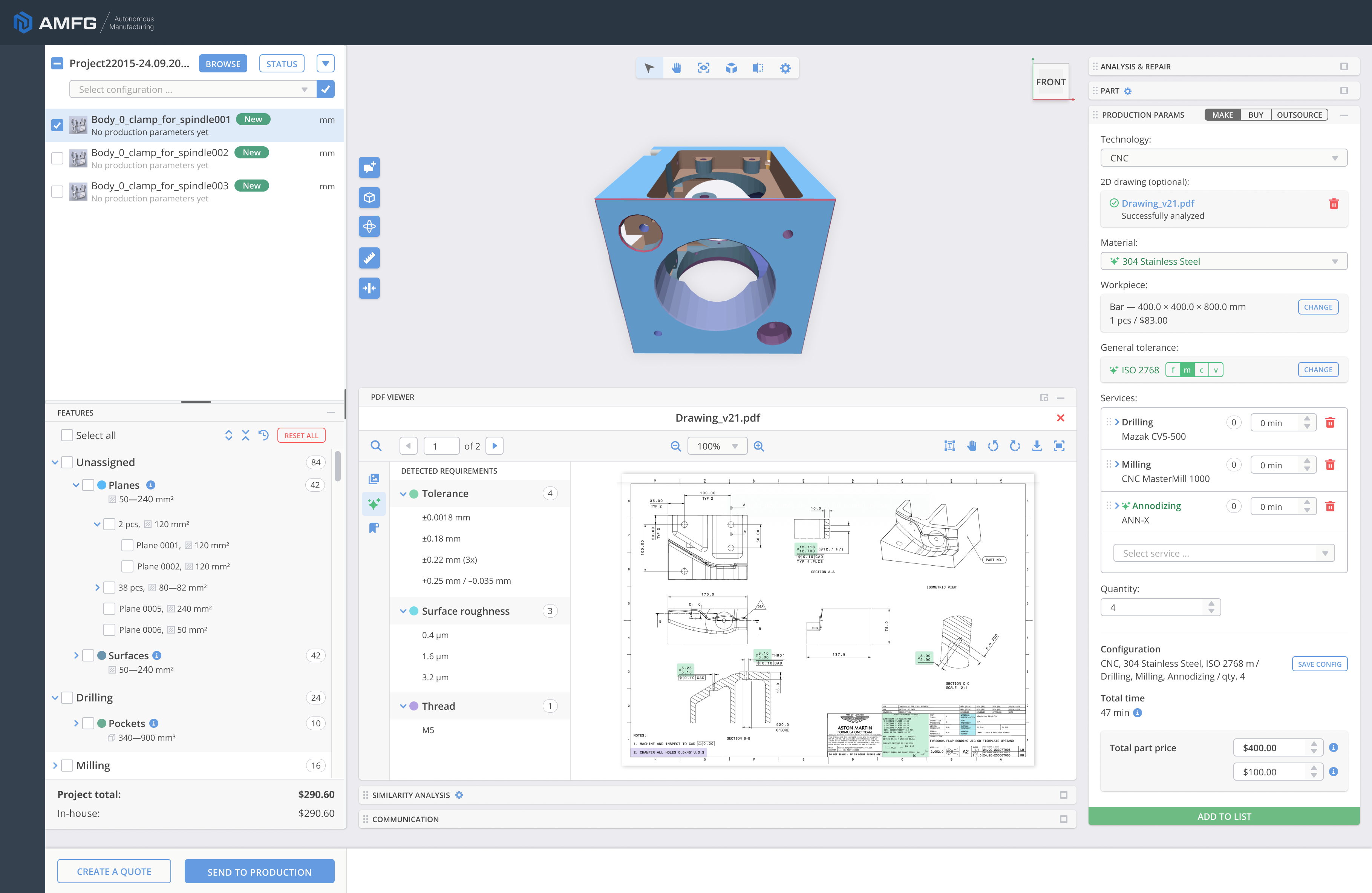
 AMFG is an award winning MES designed to empower production workflows, from order placement to shipment, with seamless integration and precision automation.

With over 500 successful implementations in 35 countries and across a range of industries, we specialize in enabling companies to successfully integrate our software for AM and CNC production, into their wider manufacturing processes and scale their AM operations.For more information, please visit www.amfg.ai or contact: press@amfg.aiBook a demo