What Does Trump 2.0 Mean for Job Shops?
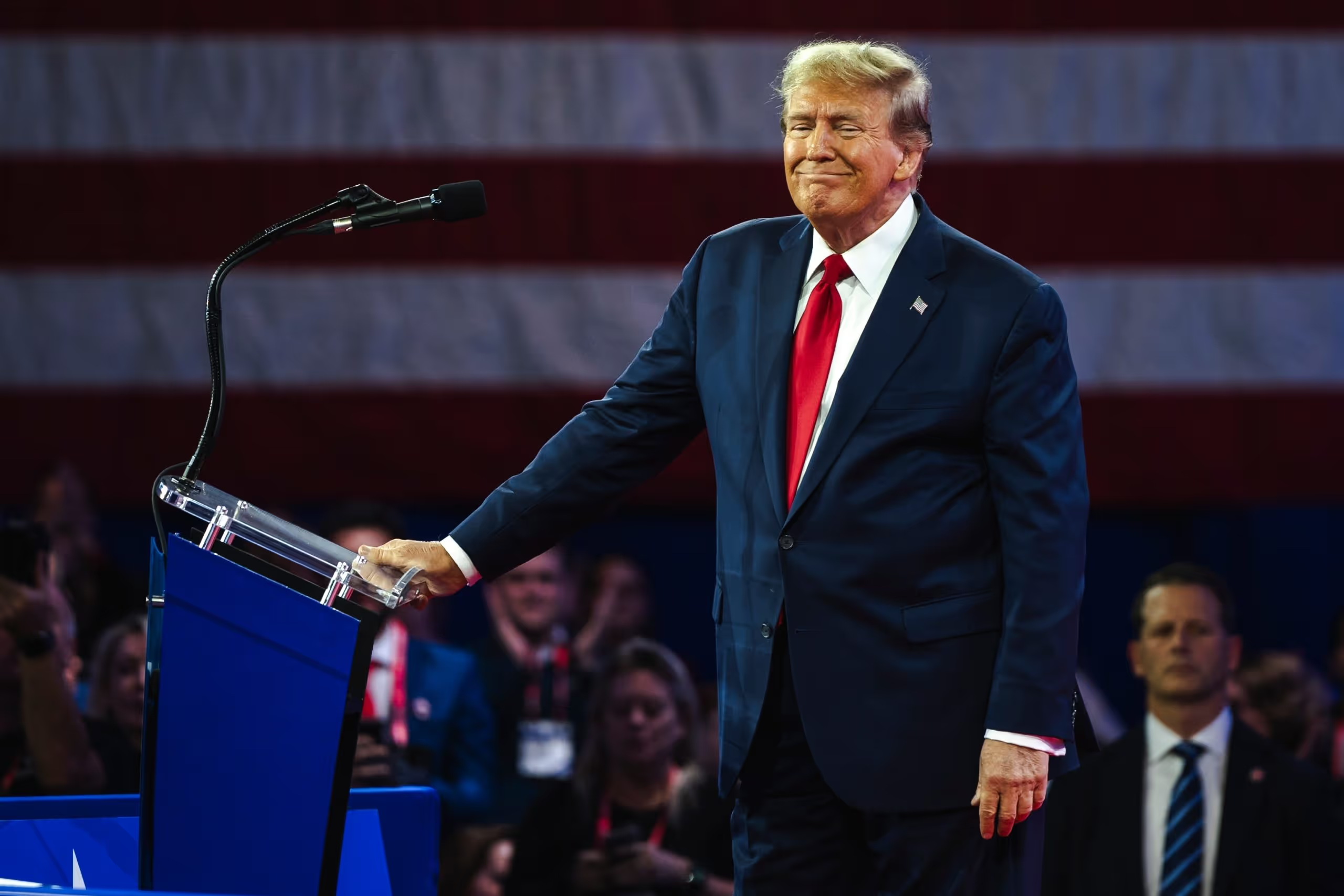


On the campaign trail, President-elect Donald Trump promised to reignite American manufacturing, vowing to transform the United States into a “manufacturing powerhouse like the world has never seen before.” But what would his second presidency mean for custom parts manufacturing and CNC job shops across the nation?Drawing from his previous policies and current campaign pledges, AMFG explores how Trump 2.0 could reshape the landscape for U.S. manufacturers.
1. Tariffs: A Double-Edged Sword
Tariffs were the centerpiece of Trump’s protectionist economic strategy during his first term, and his second promises more of the same. Proposing a baseline tariff of 10–20% on all imports, escalating to 60–100% for Chinese goods, Trump aims to stimulate domestic manufacturing by discouraging reliance on foreign imports. Tariffs would also undermine unfair trading practices like state-subsidized dumping. China, for instance, sells steel below production costs, undermining global competition.
Upside for Job Shops: Higher tariffs could boost demand for locally produced custom parts as companies reconfigure supply chains to avoid hefty import duties.
Challenges Ahead: Tariffs would likely raise costs for job shops that rely on imported raw materials, or foreign-manufactured components. For example, a 20% tariff on steel imports could add a further $1.6 billion cost to the $8 billion worth of steel that the US imported from Canada last year, potentially driving up prices for fabricated metal products by 2% or more.
Retaliatory tariffs could also dampen export opportunities, squeezing manufacturers that depend on global markets.
How Job Shops Can Prepare:
1. Reevaluate contracts and factor in tariff scenarios.
2. Diversify suppliers to reduce reliance on foreign imports. 3. Invest in efficiency measures to offset potentially higher material costs.
2. Tax Cuts: Fuel for Growth
During his first term, Trump reduced corporate taxes from 35% to 21%, sparking reinvestment across manufacturing sectors. For his second term, Trump is proposing a further cut to 15%, which could unlock new opportunities for job shops.
Increased profitability: Lower taxes could free up resources to modernize equipment, adopt automation software, and expand operations.
Workforce investment: With additional tax savings, job shops could increase wages or fund training programs to address skilled labor shortages.
Reshoring incentive: Lower costs should make U.S.-based manufacturing more competitive, encouraging corporations to bring production back Stateside and compounding demand.
Sectors like aerospace, defense, and energy, critical to national security, stand to benefit the most from these tax cuts as Trump pushes for robust, self-sustaining domestic infrastructure that isn’t vulnerable to foreign interference.
3. “Buy American” Gains Momentum
Trump’s “Buy American” initiative prioritizes federal procurement from U.S.-based manufacturers. During his first term, domestic procurement spending increased by 26%, and Trump is expected to double down on this policy.
What It Means for Job Shops:
Government contracts: Manufacturers specializing in mission-critical, precision-engineered components — especially in defense, aerospace, and energy — could see a surge in demand.
Space Force expansion: Trump’s ambitions for the Space Force and a manned mission to Mars could open new opportunities for suppliers capable of delivering high-precision, zero-tolerance parts for space exploration.
4. Hiring American: Tackling the Skilled Labor Gap
A key focus of Trump’s first term was rebuilding the U.S. manufacturing workforce. Policies like the 2017 executive order allocating $183 million to apprenticeship training programs enrolled over 800,000 individuals.
Potential Impact for Job Shops:
Workforce development: Expanding funding for apprenticeships will help address the industry’s chronic skilled labor shortage, particularly in roles for machinists, programmers, and engineers.
Challenges remain: The time required to train workers and align programs with industry needs could delay meaningful impact. Job shops may need to supplement public initiatives with in-house training programs to meet immediate demands.
5. GDP Growth: The Domino Effect
Economic policies under Trump 2.0 aim to boost GDP growth through a combination of tax cuts, reshoring, and increased federal spending. Stronger growth typically translates into greater manufacturing demand, and analysis by Goldman Sachs is optimistic about sustained 2.5-2.8% GDP growth.
For Job Shops, This Means:
Increased orders: As sectors like construction, energy, and aerospace grow, so will the demand for custom parts.
Broader opportunities: A revitalized economy could spur investment in advanced manufacturing technologies, such as automation and quoting software, giving job shops a competitive edge.
The Bottom Line
Trump’s second presidency could bring both opportunities and challenges for U.S. job shops. Tariffs and tax cuts might stimulate domestic demand but could also increase production costs. Policies like “Buy American” and workforce investments promise to bolster key industries, but navigating supply chain disruptions and labor shortages will require strategic foresight.
For job shops, the key to thriving in this evolving landscape will be adaptability - investing in efficiency, modernizing operations, and seizing opportunities to strengthen supply chains and workforce capabilities.
Is your job shop ready for Trump 2.0?
.avif)



.svg)

Subscribe to our
newsletter