Optimizing the CNC Software Workflow: How Differentiation in 2023 will be Competitive Minimum by 2025


In today's era of digitization, the manufacturing world is in the throes of profound transformation. Technologies providing a point of differentiation in 2023 will soon become a minimum competitive standard. At the heart of this change is the software that powers the entire CNC workflow. In this article, we'll delve into this workflow, highlighting pivotal components and the current adoption statistics.
Automated Quotation Software: A Game Changer in Lead Conversion
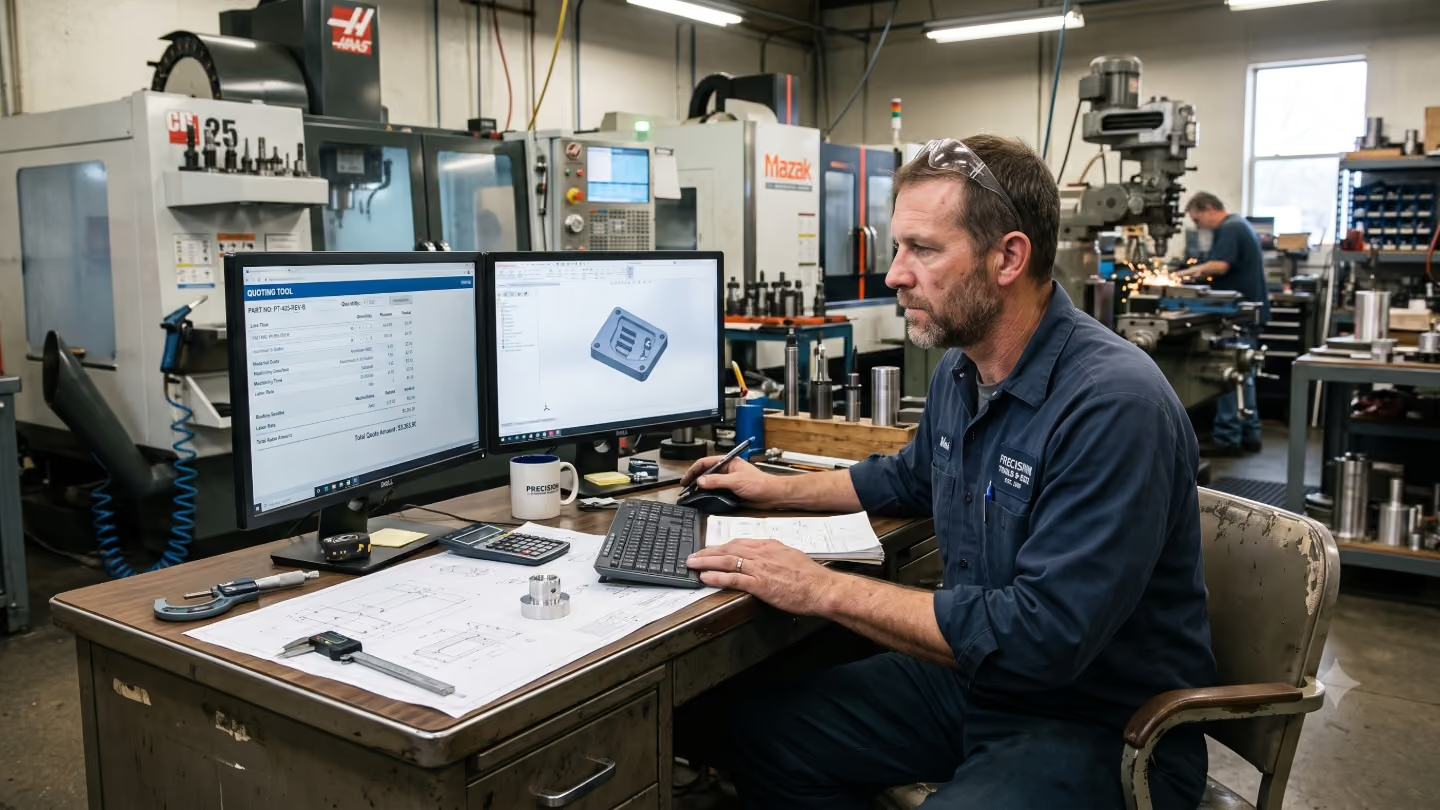
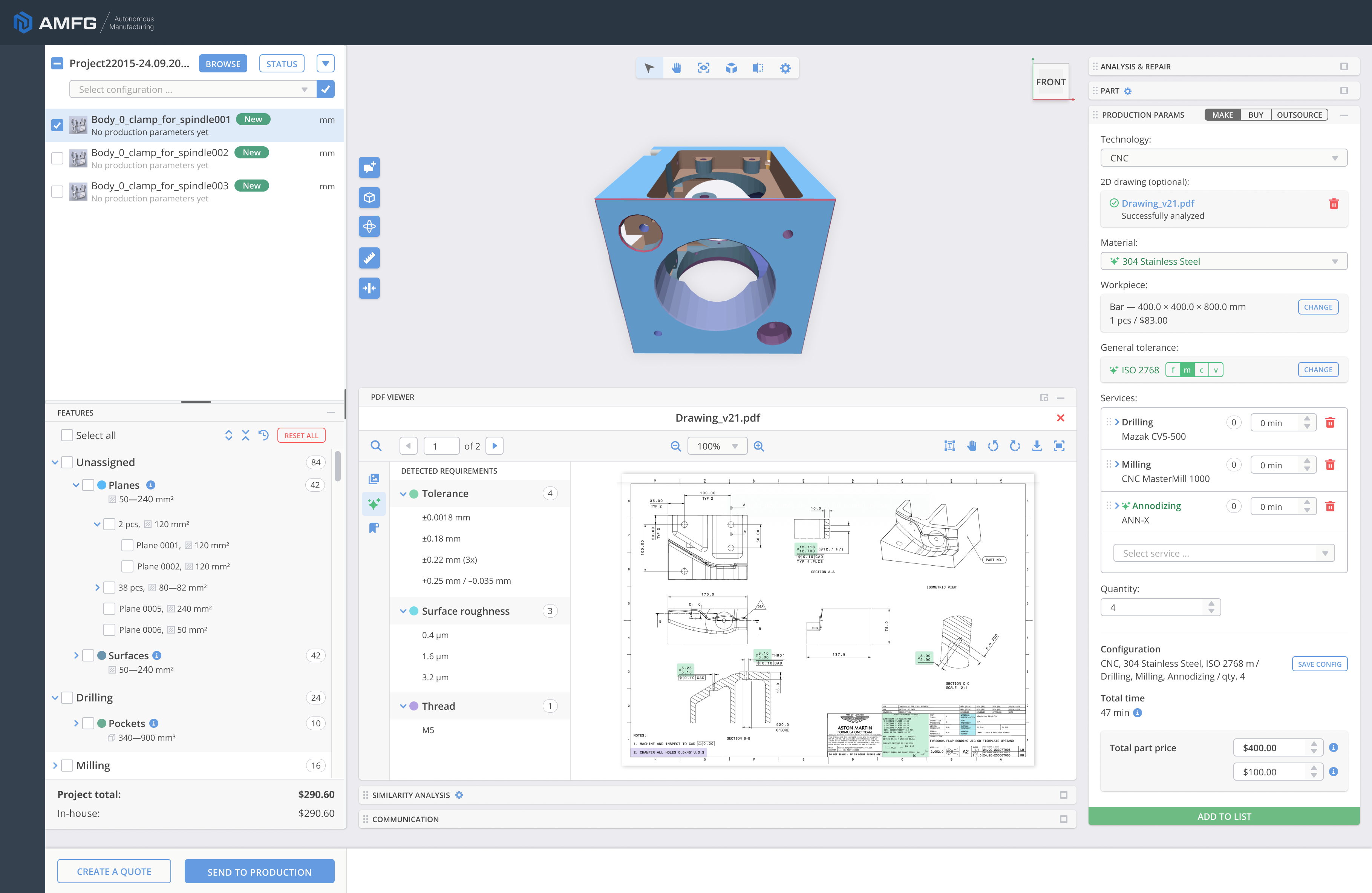
AMFG is a prime example of automated quotation software that has made a marked difference in the way CNC manufacturers interact with potential clients. By automating the quote generation process, these tools reduce the lead time, ensure accuracy, and enable faster response times. The AMFG platform, in particular, leverages AI to offer instant quotes based on 3D design inputs, bridging the gap between client expectation and operational feasibility, whilst trimming quote lead times from hours, or even days, right down to just a few minutes, or for some users, instant quotation.
With 50% of manufacturing tasks expected to be automated by 2025, it is no surprise Quotation Software has become an advancement of choice for manufacturers, given its conventional bottleneck and the “black magic” ambiguity of this typically analogue process. With the ability to harness speed that is impossible through manual quoting methods, Automated Quoting facilitates greater RFQ competitiveness - vital when you consider that 78% of RFQs are won by the fastest respondent. These greater business opportunities are matched by healthier customer interactions, with delays no longer caused by overloaded members of staff leading to customer dissatisfaction. With 61% of manufacturers finding skilled labor hard to come by and even harder to retain, automated quotation leverages the knowledge base of time-served employees and applies this ad infinitum, removing this labor-heavy demand on the skilled workforce. Instead, they are able to be utilized more effectively across the business, increasing productivity and focusing on more heterogeneous, value-adding tasks.
Computer-Aided Design (CAD): The Digital Drafting Table
Contemporary CNC manufacturing leans heavily on CAD software like Solidworks, CAITA, and NX. These tools allow for the intricate design of parts with complex geometries. While they've been industry mainstays for years, there's a paradigm shift towards cloud-based platforms such as OnShape. Cloud adoption offers benefits including real-time collaboration, easier version control, and reduced IT overhead. Garret Motion invested in OnShape to transform their production processes. With 11 close-to-customer engineering sites and 13 manufacturing sites worldwide, the benefits of collaboration, on and off site, were what draw Garret to OnShape. Previously, 95% of engineers had worked in on-premise CAITA. Not only does this lead to large overheads, for property and personnel, but static, individualized on-premises solutions disrupt the cohesion of the design process. Instead, OnShape facilitates the redistribution of responsibility. Whereas engineering concerns had been confined to a team of 200 skilled engineers, more than 700 members of staff can now access and become involved in design and engineering processes remotely. The transparency elimates bottlenecks of miscommunication, enabling Garret to maintain its position at the summit of worldwide turbocharger technology - through quicker design iteration and shorter time to market.
In a study assessing the importance of technology for growth and innovation, SPK and Associates found enterprise businesses voted Cloud computing and Computer Aided Engineering as being at the top of their priority lists. However, despite this vote of confidence from enterprises, only 20% of smaller businesses were implementing Cloud based solutions in 2022, highlighting this as an opportunity for smaller manufacturers to achieve competitive differentiationThere is also interest in cloud based CAD solutions societally, as seen by the success of TinkerCAD, with 50 million users of the free software bringing 400 million designs to life. As cloud CAD becomes a tool in the education sector and for CNC hobbyists alike, its benefits will be easier to harness for business. Harnessing the developmental power of cloud based software and using it to replace general purpose CAD software is a way to harness the growth capability of your business and increase agility, the ability to react to the market and facilitate a cohesive strategy.
Computer-Aided Manufacturing (CAM): Embracing the Cloud
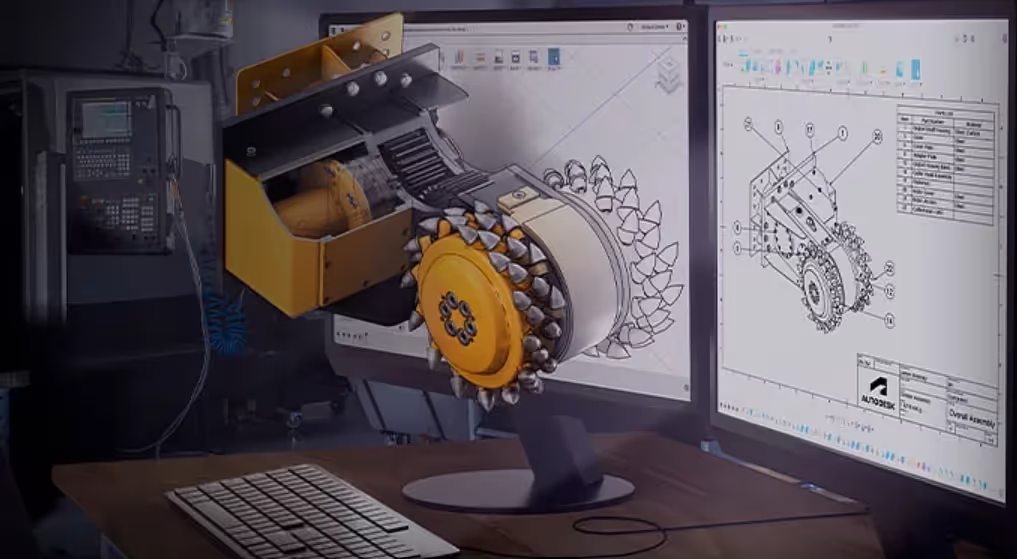
The transformation doesn't stop at design. CAM tools, responsible for translating those designs into machine-readable instructions, are also moving to the cloud. Cloud CAM offers scalability, flexibility, and often more competitive pricing models. Platforms like Fusion 360 lead the charge in this cloud-centric shift.
Expected to be worth $5.4 billion by 2028, CAM is part of the embracing of the digital age that is on the rise in CNC production. With CAM software designed to reduce manufacturing times and human error, the ability to access and tweak designs in a cloud based system is attractive - and explains why there is a growing demand for cloud based CAM software to be utilized alongside CAD options.
Autodesk's Fusion 360 has responded to this market desire, by creating a comprehensive platform integrating CAD, CAE and CAM software. With partners in industries including construction, automotive and aerospace, the applications of Fusion 360 are varied. Foster & Partners utilized hybrid manufacturing technology and generative design to decrease manufacturing costs by 20% in the creation of cantilevered prototypes. With the market growing by 7.1% in 2021 and valued at $3.2 billion in 2022, the CAM market is mature but evolving - with cloud based CAM the new competitive frontier that was spearheaded by products such as Planit Software's EDGECAM, Sescoi's WORKNC and Delcam's POWERMILL decades prior.
This is further supported by the findings of the Technology and Innovation Foundation, who concluded that digital services, including cloud computing, account for 25% of the inputs that eventually form complete manufactured products. The manufacturing process, therefore, is increasingly defined by the utilization of digital systems. Successfully harnessing these systems is the only way to keep pace with the market. Leveraging emerging CAD and CAM cloud based innovations has the capacity to streamline production processes and lead to the adoption of an all encompassing portal. Thus, lessening time taken in initial design and iteration phases, easing communication concerns and leading to a superior product with greater customer satisfaction.

G-Code Simulation: Ensuring Precision before Production
Once considered a “nice-to-have”, G-code verification is now becoming commonplace in the machining process. Simulating the machining process before actual production ensures that potential errors are caught ahead of time, eliminating scrap, reducing prove-out time and optimizing toolpaths to cut down tool wear and run time. NCSIMUL and VERICUT are two leading tools in this category but the market is seeing a growth in integrated solutions - Hexagon integrating NCSIMUL into their CAM softwares, and OPENMIND entering the market with a g-code verification tool within HYPERMILL.
Using the exact characteristics of client machines, Hexagon’s NCSIMUL software, over 20 years in development, verifies machines, tools and materials just prior to production. Airbus and Saffran, amongst others, have taken full advantage of this capability creating digital twins of CNC machines, spindles, tooling, fixturing and stock to avoid scrap, protect high value components and optimize cycle times.
Tonasco similarly implemented the leading system, reducing manual prove out time by 80%, as well as shortening de-bugging times and the creation of First Article parts. By taking advantage of NCSIMUL’s tailored processes.
The integration of g-code verification within CAM environments, reducing the need for manual data transfer and duplicate worksteps, alongside the increasing physical complexity of modern machine tools, has significantly expanded the adoption of this software. Driving down cycle times help a manufacturer to compete on p
roduction runs, whilst avoiding collisions ensures the protection of high-value capital assets as well as safeguarding against the downtime that can be crippling to agile manufacturing environments or low-volume subcontracting.
Manufacturing Execution Systems (MES): Orchestrating the Shop Floor
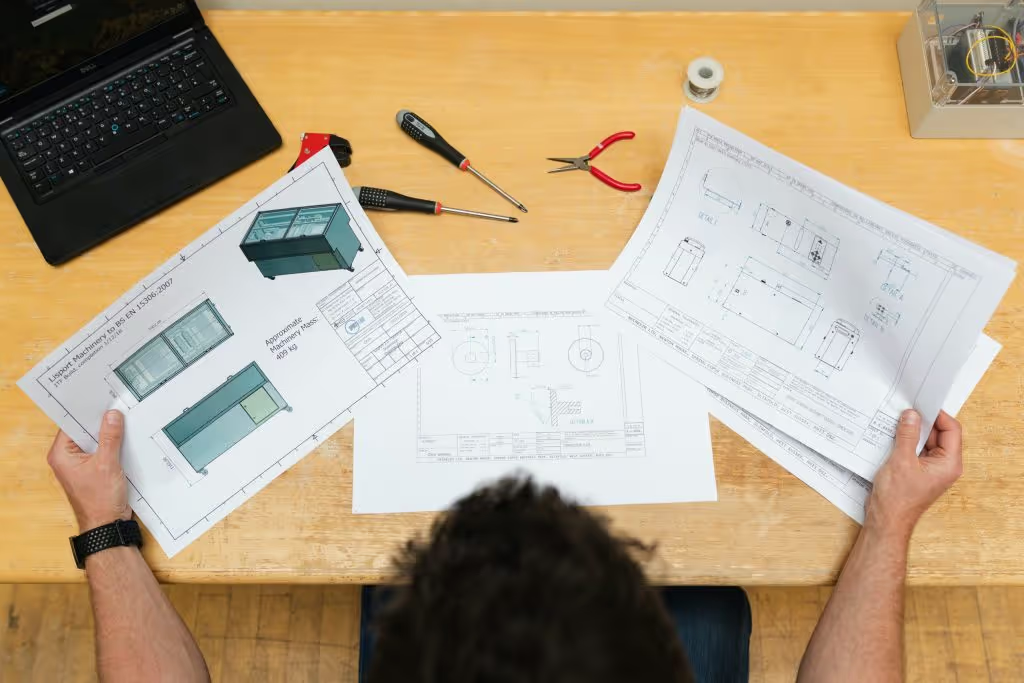
MES platforms bridge the gap between planning and actual production. They manage resources, track production processes, and ensure optimal utilization of assets.
The growth of Decathlon’s ADDLAB additive manufacturing facility at the BTWIN village in Lille, drove the requirement for workflow automation software to handle the full MES process, right down to machine integration. Working with AMFG, Decathlon has achieved a world-leading manufacturing workflow, automating over 90% of their manual process steps.
Key factors in the evolution of the MES market are the requirement for easy integration, and the ability for system administrators to customize a solution. Automation and UI are used to tailor best in class software capabilities direct to their application, rather than a forced-fit off-the-shelf product, or a homegrown bespoke solution with an inadequate infrastructure, a legacy of technical debt and the bill befitting the most expensive words in software procurement: “why don’t we just build it ourselves?”.
The MES sector is also expected to benefit from rapid growth, with its value as of 2023 being recorded at $18 billion, and expected to reach $24 billion by 2030, according to Future Market Insights.
CNC machining is therefore primed and ready to match the adoption rate the automotive industry is expected to enjoy and position itself as a key ally in the manufacturing of appropriate parts at the appropriate scale to feed demand. This new market avenue has been opened, and exploited by, the adoption of technological and software based solutions.

Quality Management Systems (QMS): Ensuring Excellence at Every Step
As CNC manufacturing processes become more intricate, ensuring consistent quality becomes challenging. QMS tools track, manage, and ensure the desired quality levels are maintained, vital for compliance with critical industry standards and regulatory requirements.
The value and impact of poor quality can be damning to the manufacturer, affecting lead times, margins and reputation. In 2010, GE Transportation, a freight train production company later bought by Wabtec in 2019, started facing notable quality discrepancies. Their locomotives were showing defects once they reached end-customers, resulting in persistent issues. These setbacks cost the company over $100 million each year, yet they had no clarity regarding the root of the problems or how to tackle them. The adoption of ETQ’s QMS tools led to a reduction in total quality costs of 35%.
The increased traceability offered by a first rate QMS, including the collection, storage and analytics of real-time quality data, ensures that there is a consistent stream of reliable production information. Much like g-code verification, QMS increases the speed and likelihood of issues being identified before the expense of failed parts.
Reducing costs, errors, and ensuring manufacturers can remain proactive rather than reactive means establishing QMS systems is vital to ensure the potential of CNC production is effectively harnessed in an ever increasingly automated world. The increased presence of IoT devices around the shop floor provide exponential increases in the available production data that can be monitored to accurately understand both the current quality status of manufacturing, and the underlying root causes of any non-compliance. Though sensor hardware advancements are providing great breakthroughs in the capture of this information, without QMS tools, it is impossible to properly control and manage the big data of large scale production facilities and the associated quality challenges.
In the realm of CNC manufacturing, certain software integrations can act as catapults, propelling a business forward, while others are life rafts, ensuring survival amidst the stormy seas of competition. Let’s dissect these two categories to understand what drives growth and what merely maintains equilibrium.

Quoting Software: The Revenue Rocket
The rapid adoption of automated quotation software is not just a coincidence; it's a strategic move by CNC manufacturers to revolutionize their revenue streams. Quoting software, exemplified by platforms like AMFG, not only shortens the sales cycle but also drastically reduces errors in quotation. This development allows for the entire procurement process to be sped up, leading the manufacturer to be positioned as a digitally savvy and commercialized provider. It's a prime example of a forward-looking approach, where businesses don’t just aim to satisfy requirements but aim to deliver faster and more efficiently than their competitors.
For instance, consider a prospective client who is in urgent need of a component. The ability to get an immediate and accurate quote might be the difference between winning and losing a contract. This is particularly obvious when you consider that 78% of customers go with the business able to respond to RFQ’s with the greatest speed. With automated quotation software, CNC manufacturers aren’t just fulfilling a need; they're exceeding expectations, positioning themselves as industry leaders and go-to solutions for urgent requirements.
MES: The Indespensable Life Raft
On the flip side, MES platforms are no longer optional niceties; they're core necessities. An unoptimized production schedule and manual process administration are anchors weighing down a business. In today's market, it's no longer a matter of "If we upgrade, we'll be ahead"; it's "If we don’t, we'll drown."
Without MES, a factory's workflow can easily descend into chaos. As modern CNC manufacturing has become increasingly lean and interconnected, delays in one department have the ability to entirely derail a supply chain. Not only does this increase downtime and machine dormance, but also fuels resource wastage and weakens customer trust.
Summing up the Difference
The CNC software workflow varies significantly between each OEM and contract manufacturer, but the continuum has broad homogeneity within makers. What varies, is the adoption rate and the maturity of the innovation. Whilst tools like quoting software offer a competitve edge, giving businesses a definitive boost in the marketplace; systems like MES are foundational - whilst not necessarily putting you ahead of the curve, they ensure that you don't fall swiftly behind.
It is crucial for CNC manufacturers to introspect: ''Are we looking to merely stay afloat, or are we gearing up to lead the race?'', or maybe to reflect that ''if you are not moving forwards, you are going backwards''. CNC manufacturers who optimize their software workflow, maximize their potential to deliver consistently exceptional services and maintain customer loyalty.


.svg)