The Bay State: Manufacturing in Massachusetts
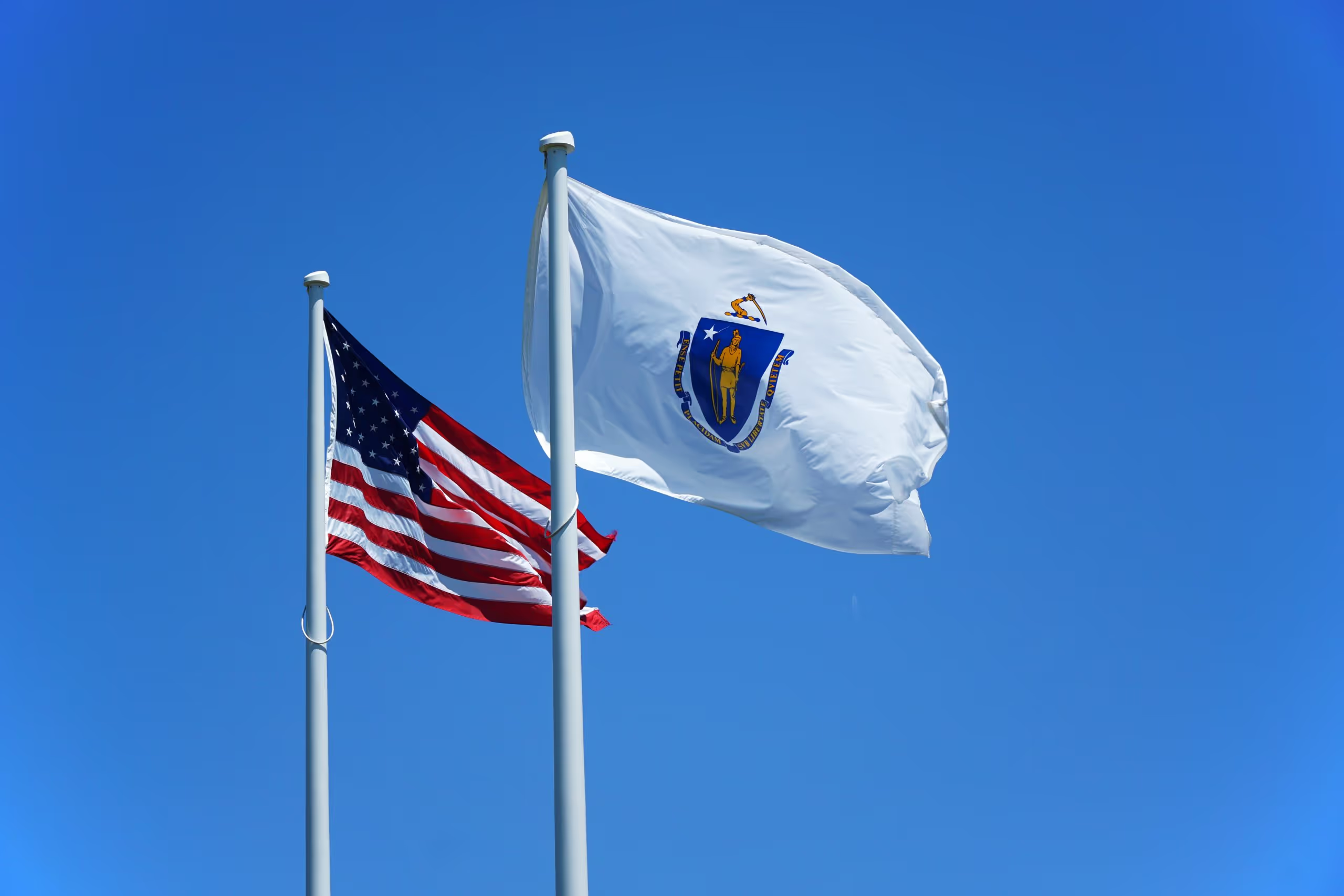


Massachusetts has one of the longest manufacturing histories in America. With the resources and innovations of the Massachusetts Institute of Technology (MIT), and the ground-breaking facilities of Amazon, the state’s manufacturing sector has strong competitive advantages. Despite this, Massachusetts’ manufacturing sector is ailing, and it remains to be seen whether another Massachusetts Miracle will occur.

History
In 1813, the Boston Manufacturing Company was formed, and a year later two water-powered textile mills were established in Waltham, Massachusetts, inspired by Slater’s own cotton mills in Rhode Island. The Lowell Mills are often referred to as the very beginning of Massachusetts’ manufacturing and production history.
Massachusetts has always remained ahead of the curve, and in 1952 a team of researchers at MIT developed the first CNC machine, changing the shape of manufacturing forever.
Despite the economic growth of the Massachusetts Miracle, the state was hit hard by the early 1990s recession, but recovered faster than the rest of the Northeast. This bounce-back was partly down to the wealth of technological advances taking place in the state, including a new development from MIT, a 3D printer system, in 1993.
Throughout wars and recessions, Massachusetts has always been at the forefront of innovation, and the manufacturing sector is no exception.

State Advantages
Given its impressive manufacturing history, it’s no surprise that Massachusetts has specific advantages that give it a competitive edge over other states.
MIT
Over the last few decades, MIT has consistently published in depth studies which have shaped manufacturing policies, and have helped change perspectives on the importance of domestic manufacturing in the U.S. MIT’s in-depth understanding of the Massachusetts manufacturing sector has led to the development of several initiatives that aim to transform the industry.
Collaborating with University of Massachusetts at Lowell, Cape Cod Community College, and manufacturing software firm Tulip, MIT has developed a new curriculum aimed at the manufacturing workforce. The programe aims to help technicians become shop-floor leaders, closing the gap between technicians and engineers, and enabling manufacturers to advance further up the career ladder. Graduates of the program will also have new, advanced manufacturing knowledge which they will bring to their factories, helping to narrow the existing skills gap. Running this programe in Massachusetts will reinvigorate the state's manufacturing education system and create a new wave of “technologists”.
This year, MIT also launched the Initiative for New Manufacturing (MIT INM), to focus on transforming manufacturing through a strategic combination of education, research, and industry engagement. Current partners of the initiative include Autodesk, Sanofi, and Siemens. The initiative works with companies of all sizes to accelerate their scaling and transform their operations, and provides workforce training at scale. There is also a strong focus on breakthrough research, including the development of new digital methods and tools to improve the human experience of manufacturing, and new approaches to advance energy production.
Amazon Robotics
In 2021, Amazon opened its robotics manufacturing facility, the first of its kind, in Westborough, Massachusetts. The facility contains research and development offices in addition to manufacturing space, allowing everything to be designed and created under one roof. Upon initial opening the facility created over 200 new manufacturing jobs, and can produce up to 1,000 robots a day.
In June of this year, Amazon opened a 2.8 million-square-foot robotics fulfilment center. Located in Charlton, Massachusetts, the facility aims to use robots to help employees fill customer orders faster, robots that are being designed and manufactured next door in Westborough.
Having these two ground-breaking facilities in the same state helps speed up development cycles and problem solving, while encouraging closer collaboration and communication.
Close to Home
Amazon is not the only company to recognise the advantage of keeping everything under one roof. Several companies first started at MIT, such as E Ink and Subline Systems, choose Massachusetts as their manufacturing location for precisely the same reason.
Alynlam Pharmaceuticals, a biopharmaceutical company with a focus on RNA interference therapeutics, have a facility in Norton, Massachusetts, which produces the company’s RNA interference (RNAi) therapeutics. Completed in January 2020, it has generated 150 new full-time jobs at Norton, and is located just 40 miles from their headquarters in Cambridge, Massachusetts.
Additionally, while MIT INM will work with companies across the U.S., it seems probable there will be a local advantage to manufacturers, as prototypes will likely be manufactured close to home, and new training programes may be tested locally before being rolled out more widely.
Having companies and education centers already operating within Massachusetts hugely benefits local manufacturers, but whether this will be enough to ensure the future of the state's manufacturing sector remains uncertain.

The Future
As of September 2024, there were 6,105 manufacturers in Massachusetts, providing 325,000 jobs. In comparison to Texas, with over a million manufacturing jobs, many are left wondering the inevitable question - why does the state that birthed CNC machines, and 3D printing, have so few manufacturing opportunities?
It’s no secret that U.S. manufacturing has been experiencing a steady decline for many years. Companies increasingly export their manufacturing abroad where wages are lower, allowing them to retain a competitive advantage. Automation has also led to the loss of some jobs, while a growing skills gap and aging workforce puts strain on an already struggling industry.
While Massachusetts ranks as the second most economically productive state in the U.S., its economic growth has slowed considerably over the last four years. Crucially, the manufacturing industry in Massachusetts grew more slowly from 2020-2024 than the nations average, and was outpaced by competitor states such as Texas, Florida, and North Carolina. A combination of rising living costs, a housing crisis, and an inhospitable business environment (due to tariffs and taxes), has resulted in an exodus of talent, as manufacturers move to competitor states. In addition to this, there has been a contraction in private sector job growth since 2020, with the manufacturing sector shrinking as a result.
Given its long history of manufacturing and strong state advantages, the future for manufacturing in Massachusetts could be bright. However, there are warning signs that the state’s manufacturing sector may struggle in the years to come.
About AMFG
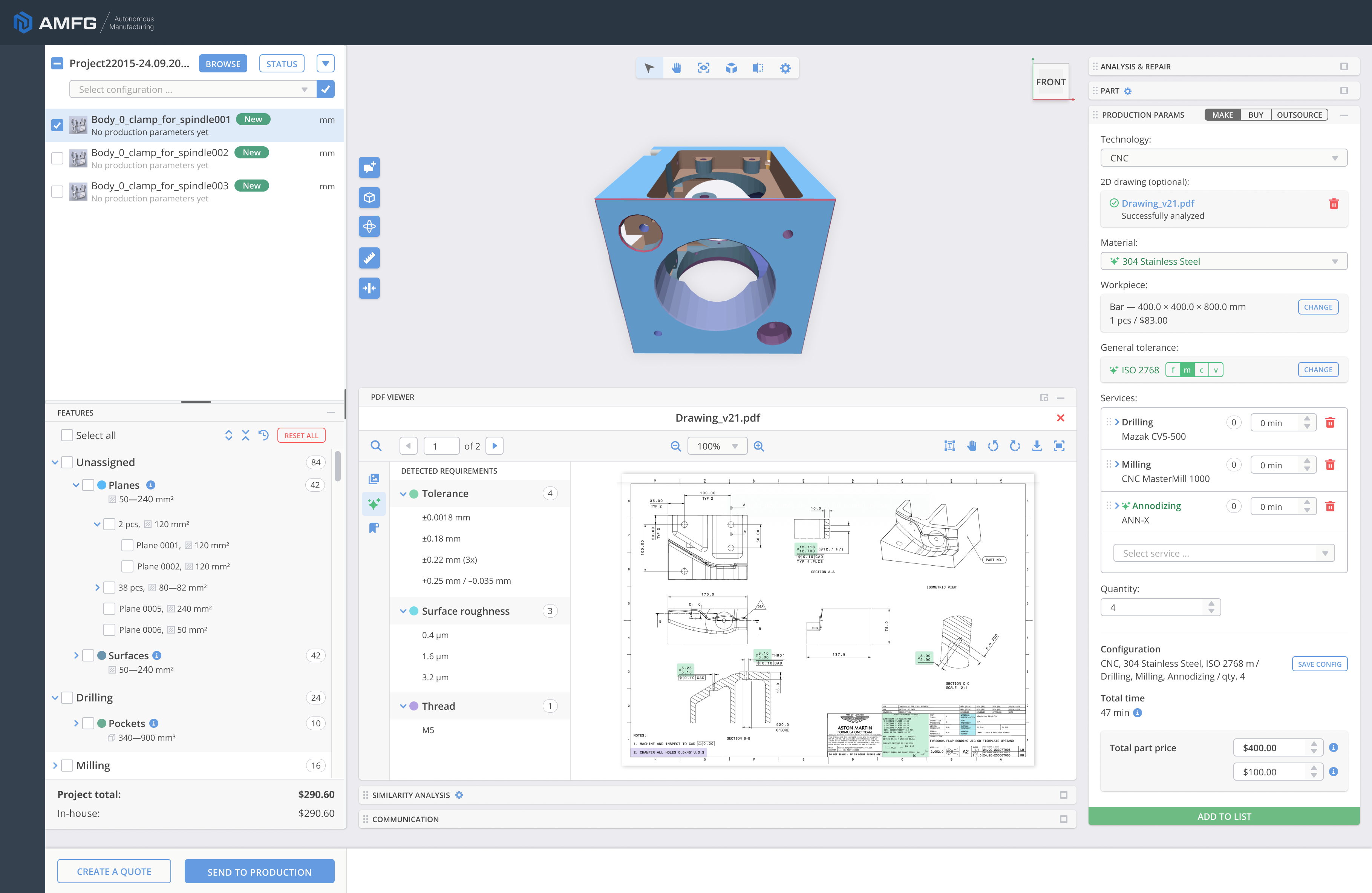
AMFG works with high-mix, low volume manufacturers across the globe, streamlining their operations with our cutting-edge software platform. Our scalable tools automate all stages of manufacturing operations, providing automatic quoting and order management, with 500+ integrations. Using our software, our clients can adapt to complex demand with efficiency and precision, securing their place at the forefront of the manufacturing industry.
For more information, please visit www.amfg.ai or contact: press@amfg.ai



.svg)