People Make Manufacturing: Employee-First Companies
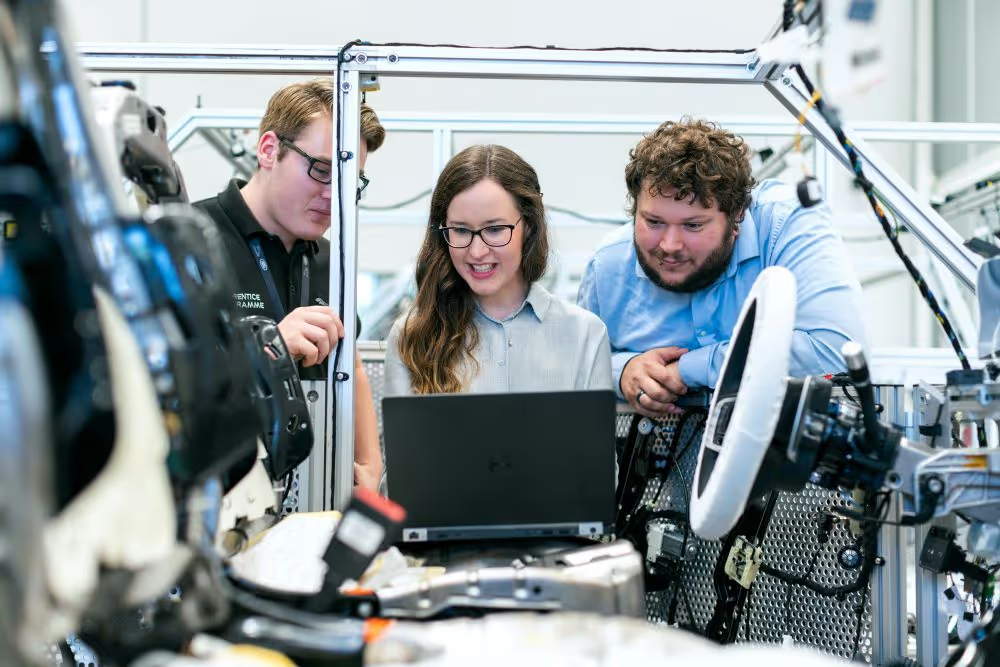


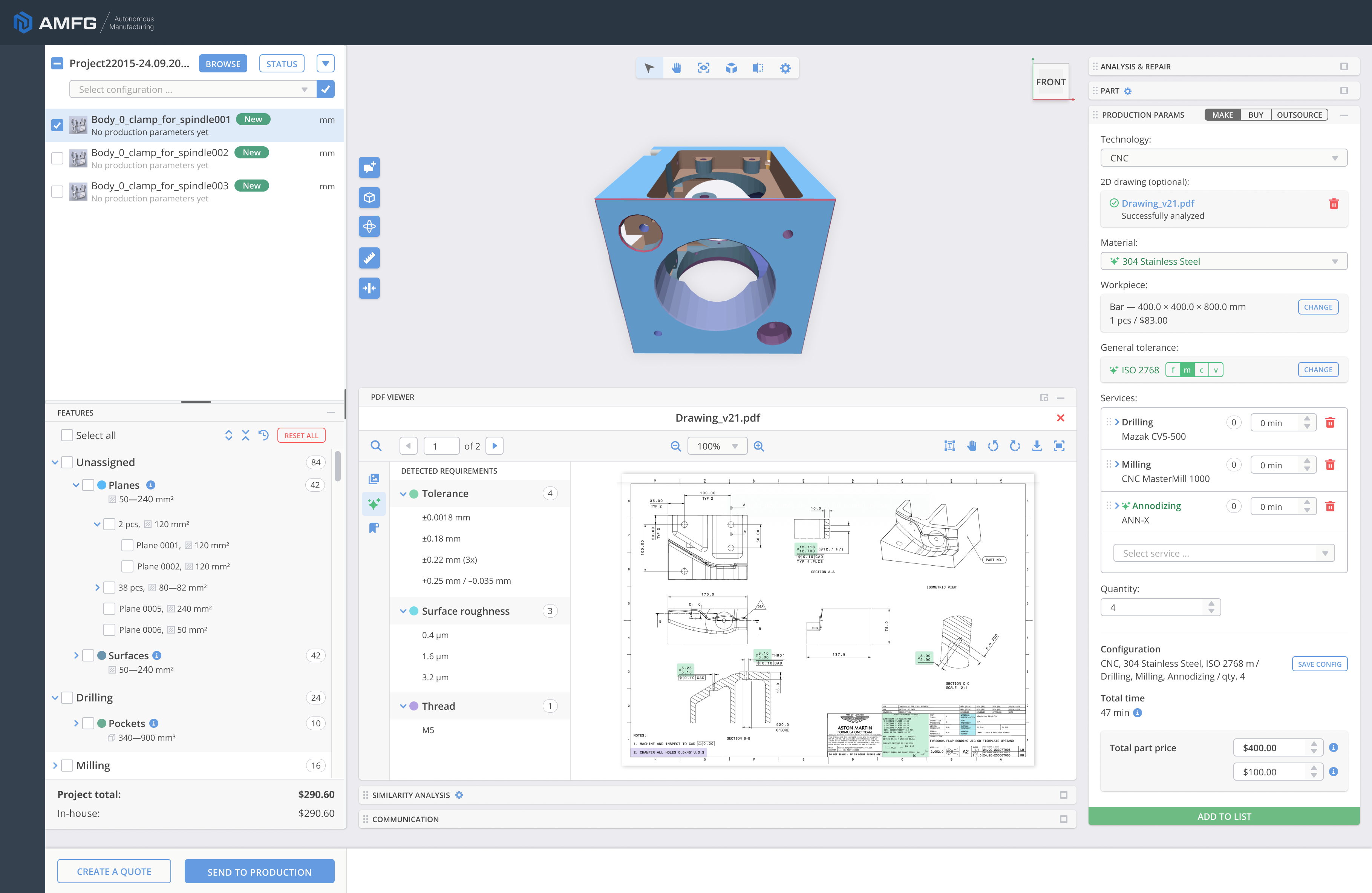
When researching our latest article on the outcomes of IMTS 2024 one takeaway pointed out by Peggy Smedley stood out to me: the theme of collaboration. It’s no secret that here at AMFG we’re excited by the possibilities of manufacturing innovations and technologies. Whether it's providing the Top Job Shop Quoting Tool, helping companies prevent costly machine breakdowns or accessing new productivity gains with the latest 5-Axis machines, we believe in the power of software and hardware to transform a business's operations.
Despite our excitement for new tech, we know that it’s the people who make manufacturing. Moreover, if the industry doesn’t find a way to attract and retain employees, the lack of people could break manufacturing. With Deloitte predicting that manufacturing could see as many as 1.9 million US manufacturing jobs left unfilled by 2033, this issue is more key than ever. Nevertheless, even without taking into account the skills shortage, studies consistently show that businesses that invest in employee well-being and development are more productive and more profitable.
Here we explore what manufacturing companies can give their employees and what they’ll get in return.
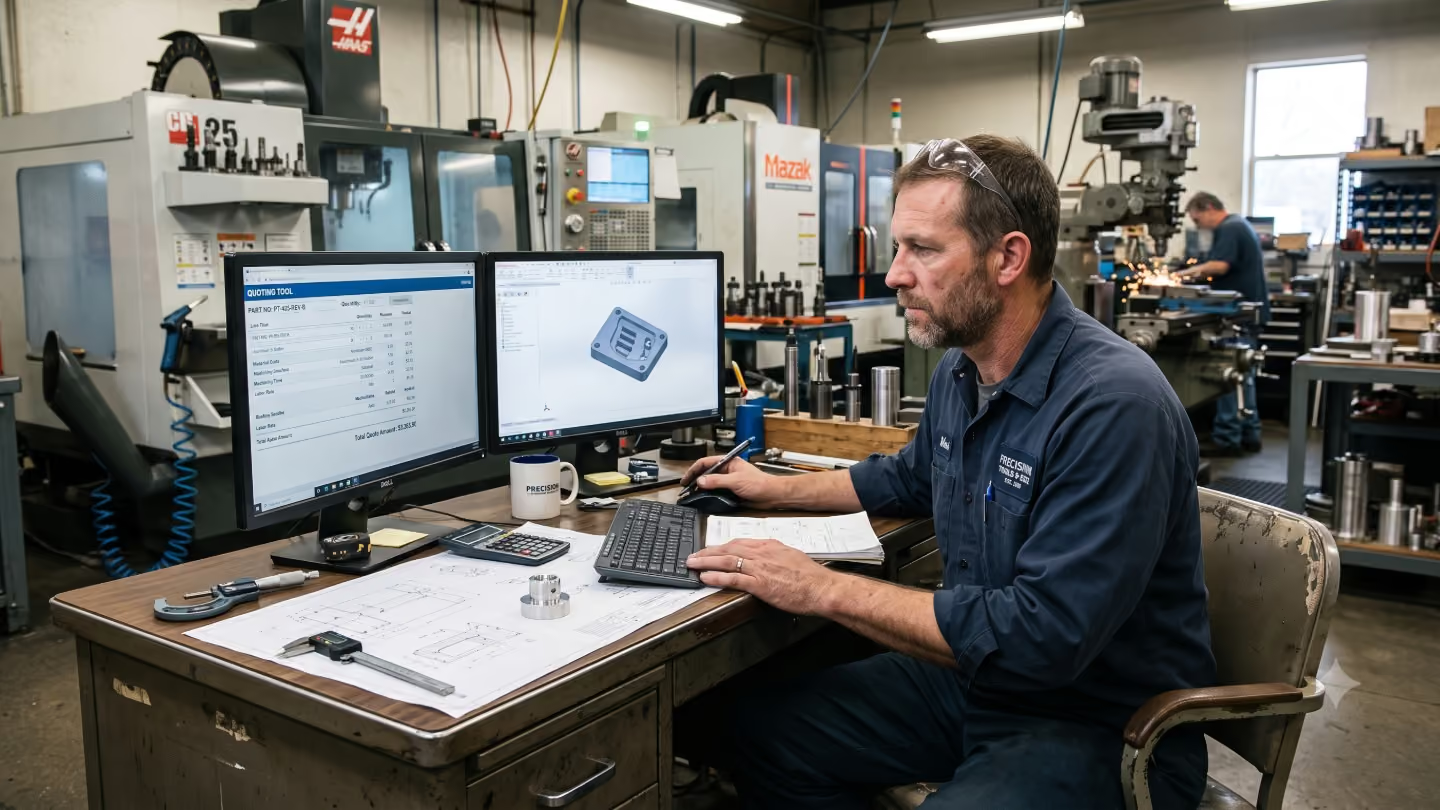
What do we want? Flexible work! When do we want it? At a time that suits around our non-work responsibilities!

Image courtesy of Christina Morillo
This week my LinkedIn feed has been dominated by a memo from Elon Musk demanding that his employees work five days a week in the office. If you look in the comments you’ll find wars waging about whether this is a reasonable request or out of touch and patronising to its employees.It isn’t an overstatement to say that the COVID-19 pandemic brought a sea-change when it came to our attitudes about work. All of a sudden, norms around working were called into question and remote/hybrid models of working were much more readily embraced. However, this remains controversial, particularly in the manufacturing space.
As we pointed out in our article on the labour shortage it’s a lot easier to commute to work with a laptop in your bag than it is with a 5-axis milling machine. Nevertheless, as the Manufacturing Institute’s Whitepaper outlines, greater flexibility for employees cannot and should not be the privilege of administrative staff only.
According to their findings, 46.8% of companies are reporting that they are now offering flexible scheduling to production workers. Those that do offer these solutions may not just be doing it out of the kindness of their hearts with flexible work options becoming an increasing priority for employees and their candidates.
As the MI points out, “42% say that flexibility is as or more important than pay. Further, according to research conducted by the MI, nearly 50% of manufacturing employees cite flexibility as a reason they stay with their employer, with 63.5% reporting that they would look for more flexibility in their next role if they were to leave their current company.”
How to offer flexibility
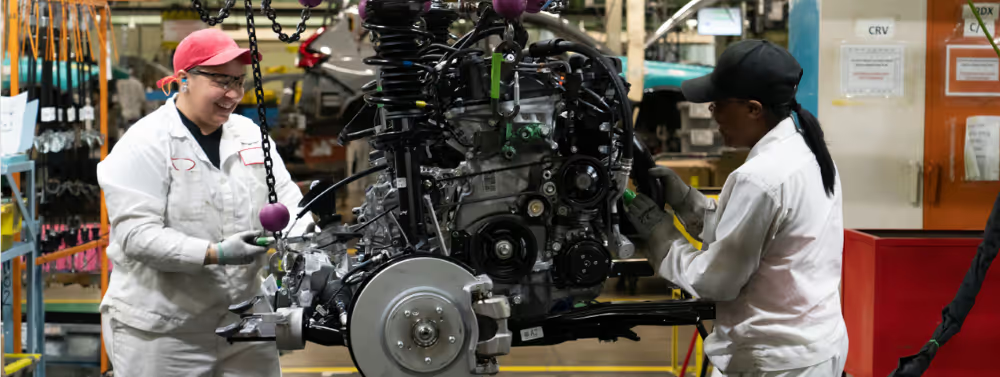
Image courtesy of the Manufacturing Institute
Businesses may be keen to offer greater flexibility options but may not be sure how to balance their staff’s desires with the requirements of the business. If that’s the case then the Manufacturing Institute has 4 key recommendations for offering flexible work patterns that boil down to the following:
Step 1: Identify challenges that your company would like to address and objectives you hope to achieve by introducing workplace flexibility.
Step 2: Define your business’s ethos regarding workplace flexibility.
Step 3: Engage your employees in the process and ask them what solutions would work for them.
Step 4: Develop a communication strategy and ensure that staff are trained to implement the new solutions.
Step 5: Track your metrics and evaluate the effectiveness of your measures.
For those wondering which solutions can even be offered to production staff, the MI outlines a few key case studies from the companies they surveyed. According to the whitepaper, one company provided “their production workers with the flexibility to work across their different business units based on production needs. As a result, they had seen a significant amount of upskilling.”
In another case, companies rolled out initiatives such as shift swapping or compressed hours, for one company “For those interested in working more or less than the standard 40-hour workweek, this company also offers workers 50-hour workweeks (5 10-hour days) and 24-hour workweeks (6 4-hour days). Additionally, every facility has the ability to set their own work scheduling options. This approach, which offers many different flexibility options, is based on the idea that there is no one-size-fits-all schedule. The company piloted their flexibility options in a Midwest city successfully and have since instituted their flexibility policies across a number of other plants.
Upskilling
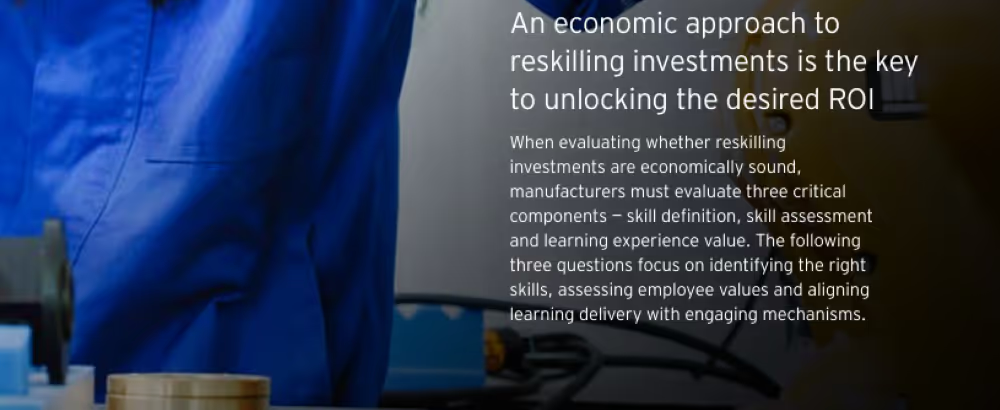
Image courtesy of Manufacturing Institute 2
In 2022 Censuswide announced that their survey, conducted with 4000 employees working in the manufacturing sector, found that 80% of employees are ready to upskill. This is a startling find when compared against the national average of 70%. The survey also finds that out of the employees surveyed, “69% want increased job satisfaction in 2022 and 67% [feel] that gaining new skills will be key to achieving their work goals. Over a quarter (28%) of workers said that progression and opportunities to learn were paramount goals in their working life.”
This is all very well and good but what skills are we involved with upskilling exactly?
A whitepaper released in 2024 by the Manufacturing Institute highlighted the importance of employers when it comes to employees’ development of adaptive skills. In other words, these are skills “that enable the workforce to transform their abilities as their demands and environment change”.
According to the MI, examples of adaptive skills include analytical acumen, critical thinking as well as communication/collaboration skills. This latter skill allows interdepartmental cooperation and visibility across operations as Magda Dexter Senior VP of Communications and Human Resources of Saint-Gobain North America describes.
Nevertheless, while these skills allow employees to flourish given a whole set of circumstances, the report still stresses the importance of developing other “priority skills”. These include technical skills such as robotics, digital skills as well as process improvement skills. To take this latter point, Tim Hosty of Nucor points out how those working on the frontline of production are key for determining how processes can be improved. In the words of Tim, “Our best or substantial (process improvement) ideas have come from our front-line teammates. When something is slowing them down, teammates are empowered to raise those issues and are incentivized to do so through a weekly bonus based on efficiencies.” This echoes a sentiment that Innovations Director of Jendamark, Yanesh Naidoo expressed to AMFG in a recent interview. According to Yanesh, “if we can drive behavioural change using data from the bottom up, we can get operators directing CEOs correctly. That’s what I hope Industry 4.0 will become so that operators are more empowered, so factories can make more money, and then CEOs will be getting their direction from operators and maintenance guys, not the other way around.”
The Companies Putting People First
To see these initiatives in practice, global manufacturer Flex, places an emphasis on supporting its employees including through education and development. According to the company, “At Flex, we’re committed to nurturing an environment of continuous improvement by investing in employee training and development so team members can build the skills, knowledge, and experiences needed to thrive in a constantly changing world.”
Flex offers a range of opportunities that bridge the gap between employment and education to ensure that they’re able to develop the next generation of talent as well as supporting their current employees to grow in their development. To encourage young talent to join manufacturing, Flex offers internships, co-op programmes as well as apprenticeships. These apprenticeships are, “structured multi-year paid [work] experiences throughout regions of EMEA, with 80% of [..] learning happening within the Flex site.”
Victoria, Australia, businesses are incentivised to invest in employee upskilling with access to funding through their Digital Jobs for Manufacturing Program. The program offers “up to $5000 to assist Victorian manufacturing businesses adapt to a digital operating environment. The program is open to businesses with a manufacturing presence in Victoria which are on a growth trajectory and are seeking to utilise their existing workforce to apply digital technology to their operations.”
One company taking advantage of this opportunity is Integra Systems a company specialising in low-volume, high-variability sheet metal manufacturing. As commercial director Erika Hughes explains, “There were a number of engineers that we wanted to upskill.”
Jarrah Leonard, a mechatronics engineer at Integra, was able to study on an AI and machine learning course which was fundamental to the growth of his role developing the automation of operations on the factory floor. As a result, Jarrah is better equipped to implement technology such as the use of vision systems or robotics.
Any downsides?
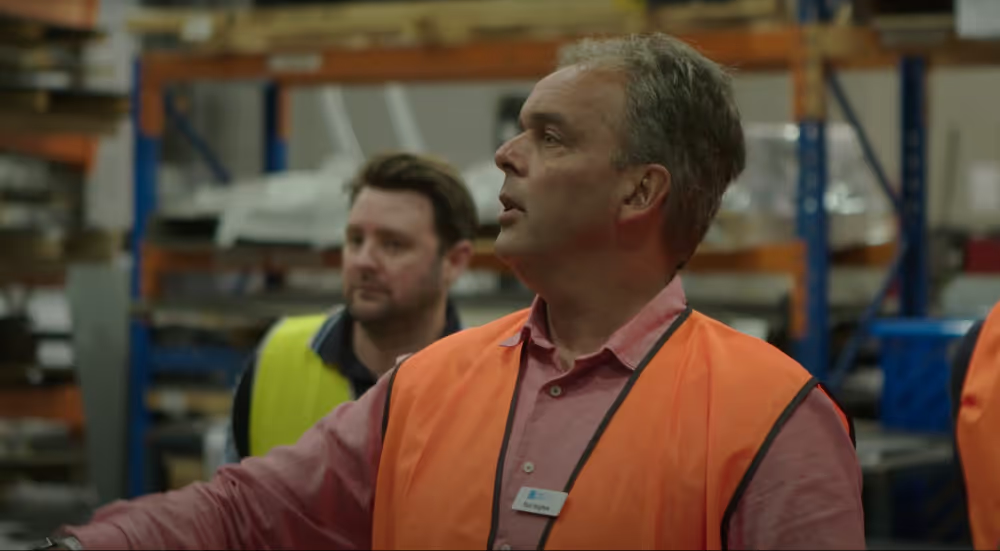
Image courtesy of Business Victoria
If the results are greater employee retention, productivity and a workforce equipped to adapt to an evolving manufacturing landscape, you might be wondering why more employers don’t take this approach. When it comes to flexible working arrangements, employers fear lack of accountability, communication and productivity especially with remote-working employees. However, to combat this, “well-organized hybrid” models, for example, when staff all have the same remote and in-office days, can productivity as well as flexibility.
In 2023, Devry University released a survey that spoke to US workers and employers about the benefits and challenges of upskilling the workforce. The survey highlights three main factors preventing employers from investing in employee training: cost and resources (43%), worker motivation (42%) and business priorities (32%). Therefore, where guidance and financial support is available to employers, employees are more likely to have access to these opportunities.
Despite the challenges posed by flexible working and upskilling, clearly the benefits are well worth the investment.
Final thoughts

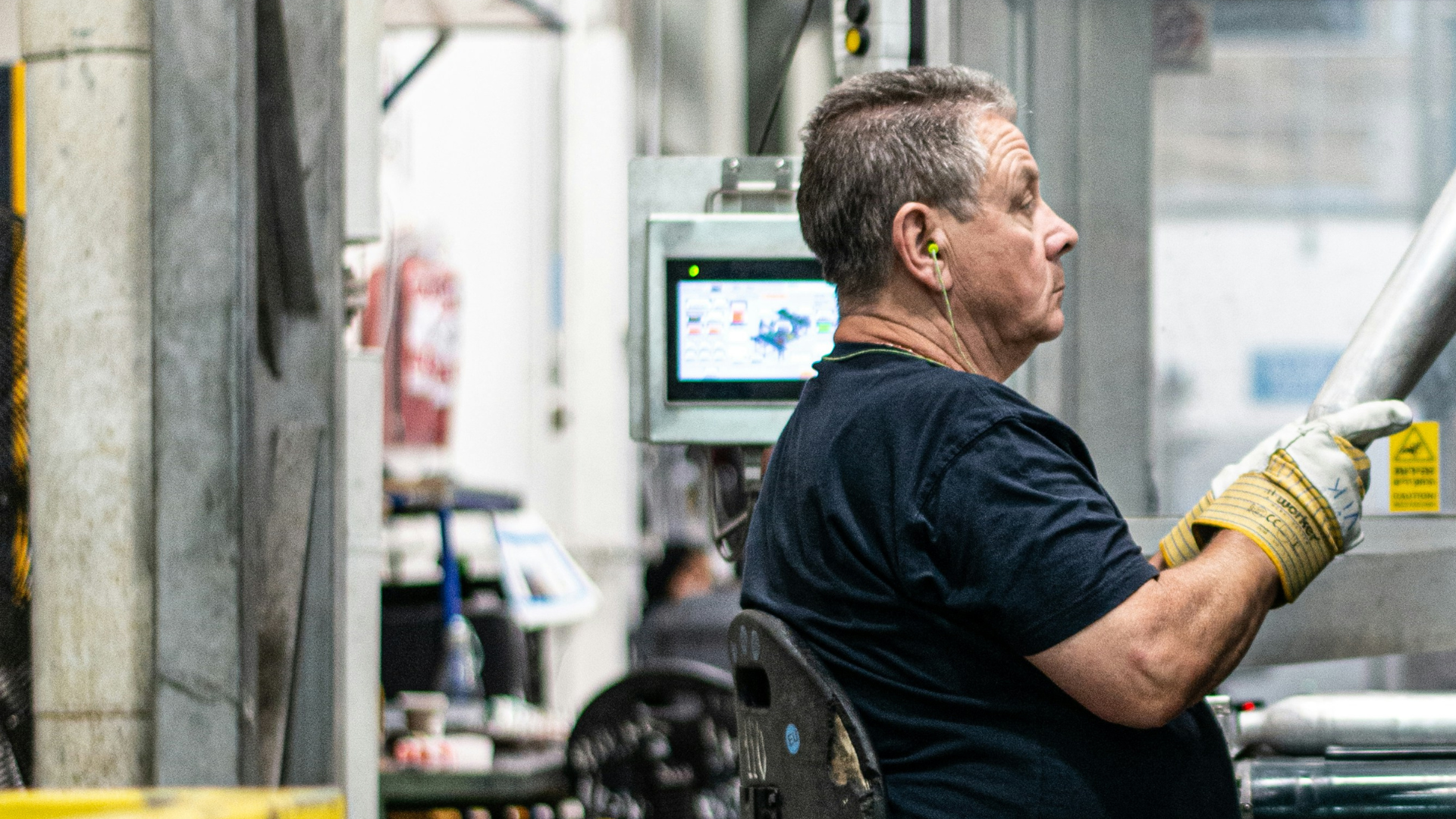
Image courtesy of Jason Goodman
While the manufacturing industry is rapidly evolving with new technologies and innovations, the human element remains at the core of its success. Attracting, retaining, and empowering employees is essential for businesses to thrive, especially in an era marked by labor shortages and changing workforce expectations. Flexibility in work schedules, opportunities for upskilling, and fostering a culture of collaboration are key strategies that forward-thinking companies are implementing to stay competitive.As we've seen, when companies prioritize their employees’ growth and well-being, they not only improve job satisfaction but also enhance productivity and profitability. By offering flexible work arrangements and investing in skills development, businesses can ensure their workforce is equipped to adapt to the ever-changing landscape of modern manufacturing. Ultimately, the future of the industry hinges on a balance between technological advancement and a people-first approach. After all, it is the people who make manufacturing possible.

.avif)
.svg)