Additive Construction 2025: How and Why Companies are 3D Printing Buildings


In the light of accumulating financial pressures, companies around the world are adapting their business models. Cheaper, more efficient solutions are being sought across industries.
Construction is no different.
Contractors are looking for better ways to build, and an increasing number of them are turning to 3D printing.
Construction has historically possessed an additive link– see this video about William E. Urschel’s foundational innovation with the tech in the 1930s as proof– but recent years have seen a renewed interest in additive manufacturing as a legitimate building method.
As AMFG has explored, 2025 has seen a steady stream of news regarding novel, ground-breaking (figuratively speaking) construction projects.
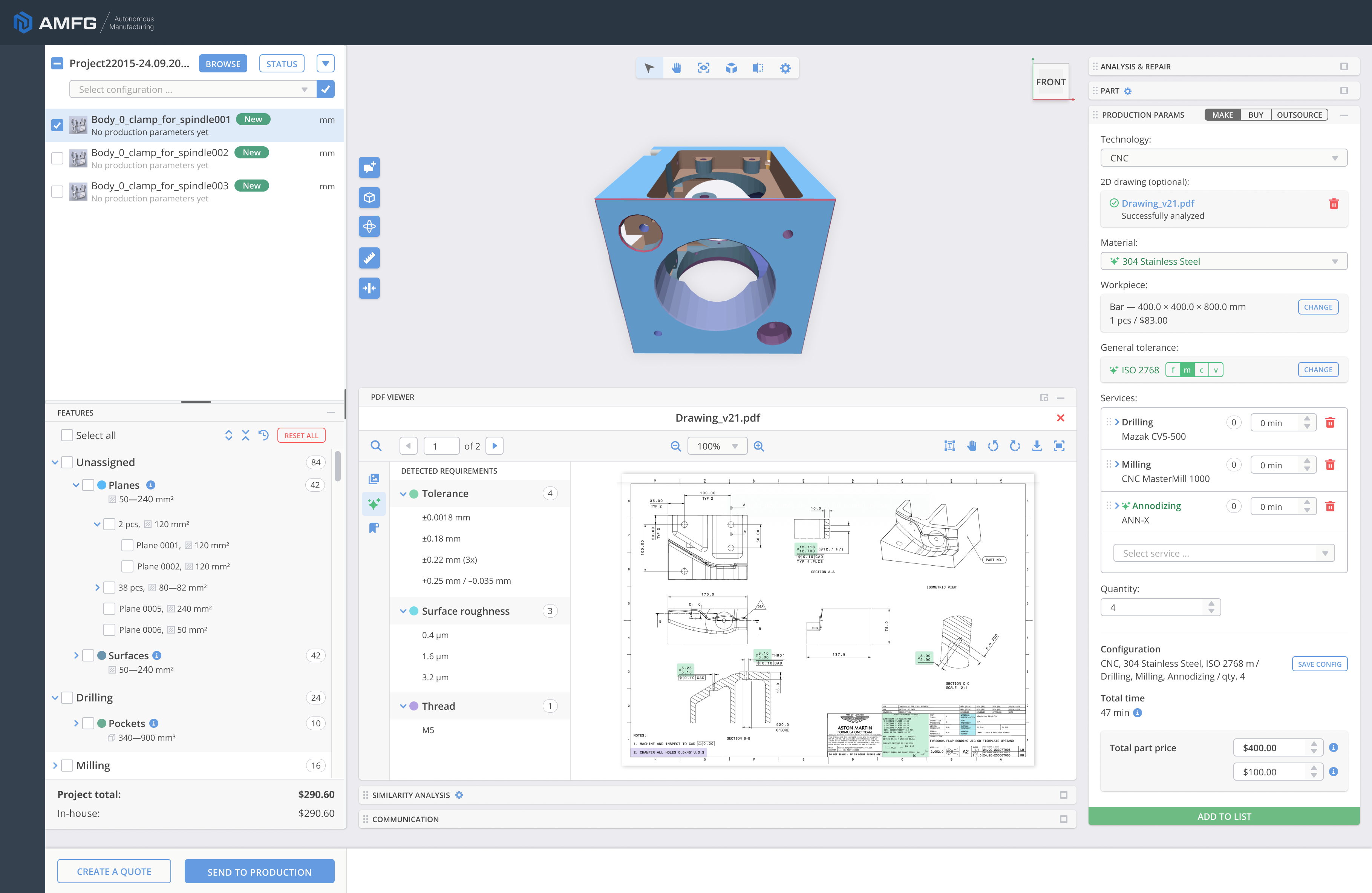
It’s clear: additive construction is a vertical market on the rise. Service bureaus and additive construction OEMs need traceable and streamlined workflows in order to meet deadlines and ensure regulatory compliance. AMFG is an award-winning MES that unlocks the full value of hybrid manufacturing through automation of quoting, order intake, and production workflows.
Read on to discover construction’s 3D printing ‘storey’– what the process is like and why companies are using the tech.
How are companies 3D printing buildings?
Additive manufacturing is already a staple in construction. Technology including robotic arm extruders, sand layers, and gantry systems can be printed, and AM has become popular for architectural models and prototypes. In addition to this, UCEM identifies how AM can be used to produce construction components and materials such as modular panels and bricks.
But AM has loftier aspirations. Small structures, micro-homes, bridges, train stations, restaurants, data centres, and even entire homes are being printed.
At the end of 2022, it was estimated that there were 129 3D printed buildings globally, yet this number is ballooning, with dozens popping up across the world.
Market predictions reflect this rise: global 3D printing construction market size was estimated at USD 53.9 million in 2024, expected to grow at a CAGR of 111.3% from 2025 to 2030.
Cities are becoming smarter and greener, and contractors are seeking modular housing that possess green certifications like LEED and BREEAM and can integrate with features like IoT devices, green roofs, energy-efficient materials.
3DPrint points out that broad adoption to this extent is rare in the world of AM. Normally, a single firm (such as Align- Invisalign) or a small cluster of firms (such as Italian orthopedics companies), yet nearly all the key names within the construction ecosystem are exploring AM solutions.
The geographical reach is extensive, as is the variety of buildings being constructed– as AMFG will explore in next week’s article.
How to 3D print a building
Construction is design-heavy– a large portion of the information needed to make the wheels turn comes from the design process. Yet existing companies already employ CAM and BIM (Building Information Modeling) technology, meaning the integration of 3D printing technologies is much less complicated.
Whereas making the shift to DfAM slows down adoption in alternative industries, in construction these processes are already part of the proverbial furniture.
So how is a building printed?
At its core, a 3D printer, with the help of a CAD or BIM program, receives information of the designs and overlays material levels accordingly. Materials are various but often come down to a mixture of concrete, geopolymers, fibre, and sand– in fact, broadly the same additives, accelerators, and plasticisers are the same.
For example, additive construction company Cobod’s flagship product, the BOD2 3D printer, is able to print with various materials, including concrete and other composite materials. The technology employs a gantry system, which in turn needs a scaffolding system, bolted to the slab or fixed on concrete blocks, upon which the printing nozzle is attached.
The gantry system is one of two main types of printer system used in additive construction. It is a contouring method, in which engineers deposit building material to form a 3D model and create large-scale structures with a smooth surface finish. It uses rails placed around the floor of the building that act as a guide in directing the robotic arm in the layered application of the concrete.
In contrast, some systems use a robotic arm– this is an automatically controlled printer that allows freedom of movement and flexibility to schedule multiple tasks. The arm is able to print from multiple angles, which enables complex geometries and curves, and larger sizes.
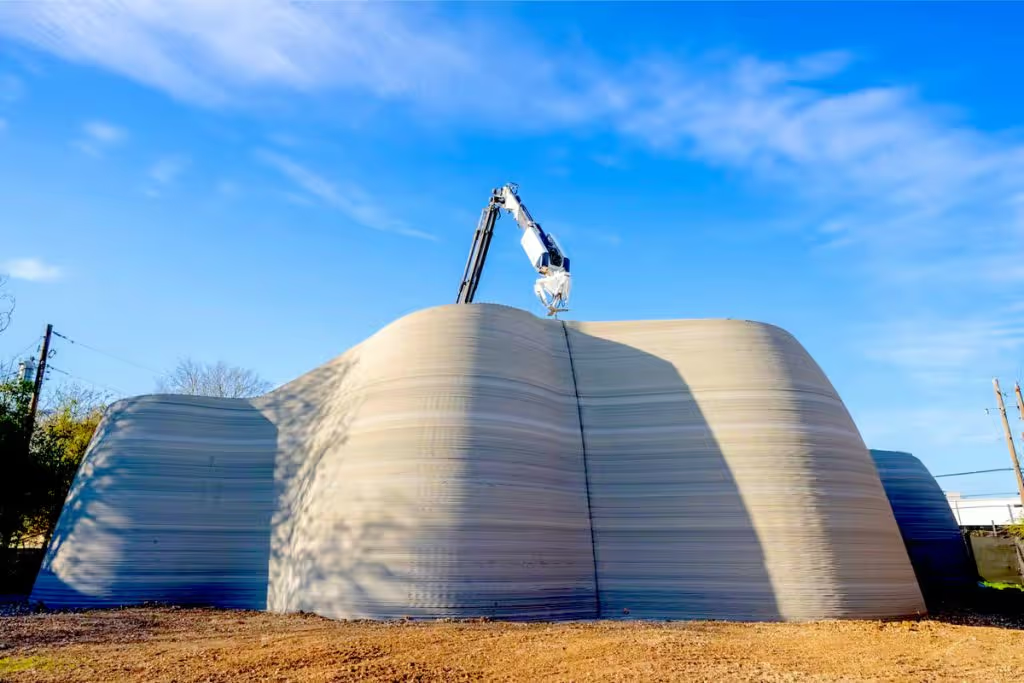
A robotic arm printing a 27-foot-high structure named Phoenix House. Image courtesy of ICON
Alternative materials include standard concrete proprietary concrete mixes, mortar, plastic, metal, and local natural materials, including stone, sand, mud, and rice waste– some of which have significant potential for sustainability.
Rice waste, for example, can be fabricated for 3D printing filaments and incorporated into polymer composites in order to act as a reinforcing filler for printed buildings. As a material, it sustainability utilises agricultural byproducts and can be found locally to builds in certain parts of the world.
In terms of processes, extrusion, the layering of material back and forth through one or more nozzles mounted on a robotic arm, gantry system, or crane, is the most common. It can be employed in almost any environment, yet powder bed jetting and binder jetting are also popular.
Spraying is also gaining traction; for this method, the autonomous robot sprays the construction material under pressure in the desired shape, repeating the process for each individual layer and filling structural spaces with concrete. This process is currently being investigated for potential use in vertical and outstanding applications, such as facades and ceiling directions.
The benefits of AM for construction
Speed
3D printers are able to fabricate construction components in a matter of mere hours, which vastly accelerates the manufacturing and building process. Every step of the manufacturing process, from design to production, is quicker and cheaper than using conventional methods. Last minute changes to design no longer incur month-long delays, but can be addressed quickly and easily.
With traditional construction methods, a project can last several months, but 3D printing’s quick turnaround allows contractors to diversify the projects on which they’re working. Structures can be made either on site or off site, permitting a level of freedom previously unheard of in construction.
No matter where companies choose to build, 3D printing is certainly quicker than other processes. At the end of March, engineers in Japan 3D printed a train station in about 3 hours.
West Japan Railway Company, one of the main groups responsible for running bullet trains, built a classroom-sized railway station to replace an existing wooden iteration. The formwork, used to mold concrete sections, was 3D printed using mortar, which were then filled with concrete and steel reinforcement to create the four parts of the building and its foundations, which were then transported and assembled.
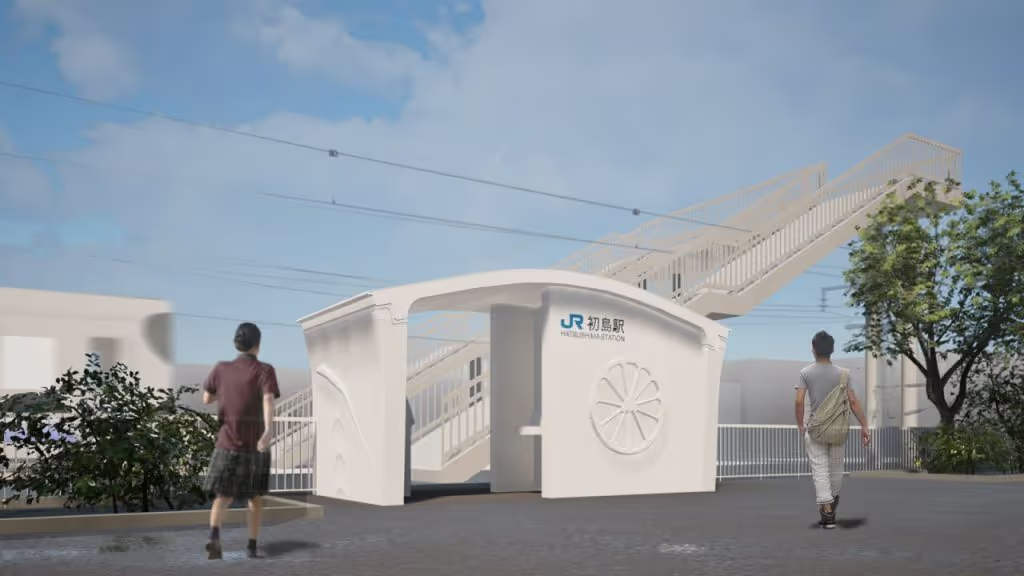
Image courtesy of West Japan Railway Group.
Minimising downtime
Unlike humans, 3D printers can be automated– in an industry like construction, which is so often restricted by weather conditions, this a major plus point.
A reduced need for manual involvement and work cuts costs, minimises downtime, and increases output– many jobs only need 2 or 3 people to manage a printer.
Fewer people on site also drastically improves safety. The US Occupational Safety and Health Administration (OSHA) reports that 1 in 10 workers on construction sites is injured each year, often from falls or wrongful contact with equipment.
Reducing material waste
3D printing is an additive process, meaning waste is kept to a minimum during the construction process. Employing additive technologies transforms the industry’s sustainability profile– an industry which currently annually expels around 100 billion tonnes of raw materials.
Recycled materials
On the theme of sustainability, additive construction leans itself to the greater use of recyclable materials. 3D printers create lattice patterns, recycled plastic, concrete, and other materials can form the base of buildings.
Surplus material is eliminated, and the material that is used can be put to use over and again.
As a case in point, researchers at the Department of Energy’s Oak Ridge National Laboratory and the University of Maine have developed a new way to sustainably produce multi-story buildings. Currently, traditional materials are rarely recycled, and usually end up in landfills.
In response, the researchers developed a single-piece floor panel made entirely of biologically based materials, as strong as the traditional steel-concrete versions and able to be constructed without assembly. They save on labour costs, can be printed in only about 20 hours and are fully recyclable, as they can be shredded and reused.
Innovative solutions
Technological expansion is a goal for every industry, and the same is true of construction. In theory, those in the industry can move away from traditional techniques, and develop structures that best fit the needs of the inhabitants and give designers and architects design freedom.
For example, Dutch firm Losberger DeBoer is advancing demountable construction in order to best fit the needs of their clients. The company rents out large tents and temporary buildings, including containers, tents, and prefab modules, to be used at everything from week-long pop festivals to year-long apartment contracts.
Similarly, Chattanooga company Branch Technology provides lightweight, rapidly assembled shelters that can be set up in an hour or two. They are secure, possessing lockable doors, self-levelling feet, and HVAC, and providing a dignified housing solution that can be sanitised and reused in homeless encampments, natural disaster relief zones, and refugee housing.
Reducing the risk of human error
Humans are wonderful, but they frequently make mistakes– a printer completing automated work significantly reduces the risk of human error during the construction process, minimising delays and lost resources– which translates into financial gains.
Barriers to broader adoption
Price
Rome wasn’t built in a day, and nor is a 3D printed house. Complex equipment is necessary for additive construction, and this will need to be scaled up and simplified in order to satisfy growing demand on an industrial scale. These machines are a significant financial burden; they cost a hefty amount and initial investments are expensive.
Likewise, the size of the parts for buildings are limited to the sizes of the printers themselves.
Skilled workers and construction professionals who can design the blueprints, then produce, maintain, and operate these machines must be on hand, and enough capital needs to be available for them to continually maintain the machines.
Logistics
Although 3D printing may solve some of the problems associated with supply chain management, these effects are only seen once the machines are installed. Installation of these printers could prove costly, but once they are implemented, production can take place in a matter of days.
Furthermore, although additive construction processes can lower the need for a human presence on building sites, retraining and reskilling those currently in the industry will incur a cost for companies.
Strict standards require continuous monitoring of machines and materials– human intervention will be necessary to some extent. However, the amount is drastically secondary to the investment required by current construction methods.
Aesthetics
At least in the UK, systemised construction, panelisation, and prefabrication have been criticised for their aesthetic features, with some citing the structures as ugly or monotonous. Even in the US, where Starbucks collaborated with PERI 3D Construction and COBOD International to produce a drive-thru store in just six days, reactions were mixed.
Some argued that 3D printing offers unlimited design freedom, yet this structure (like many others) fails to live up to expectations.
These cultural attitudes towards architecture may provide a barrier to global adoption– even though systemised construction may provide a solution on paper to housing crises and growing populations, people must want to live there.
A shift in cultural attitudes or a rethinking of the design of additive construction builds would be needed to shift the barometer of public opinion towards general residential AM houses.
The additive construction landscape in 2025
One of the greatest roadblocks on additive construction’s path to acceptance is regulatory hesitance. Many printed buildings currently still follow international building code standards for CMU (masonry) builds.
However, a new building code standard for 3D printers (AC509) is being developed by the International Code Council. Similarly, in February 2025, they announced the development of ICC 1150, the first ever proposed standard for 3D Automated Construction Technology for 3D concrete walls.
Planning regulators have historically been hesitant to accept 3D printed buildings, but following this research stage, they realise that these buildings do not differ too greatly from those produced with traditional construction techniques.
The legislative landscape bears well for additive construction, too; construction companies and even governments are recognising the value of 3D building.
In Dubai, 25% of buildings must be additively manufactured by 2030. For example, a restaurant in Dubai recently broke the Guinness World Record for the world’s largest 3D printed structure by volume, producing 23 large 3D printed structures including interior and exterior façades, counters, planters, and caves.

The US was the first country to bet big on additive construction, leading the pack with companies like ICON in Texas and large organisations like the Navy and NASA. Yet additive construction applications are popping up all over the world.
Final thoughts
Additive construction is on the rise in 2025. In an upcoming article, AMFG will explore 10 instances of 3D printing revolutionising the construction industry in 2025.
Make sure your company is ready– AMFG’s mission is to help manufacturers streamline their operations with our cutting-edge software platform. By automating quoting, order intake, and production workflows, we enable high-value manufacturers to adapt to complex demand with efficiency and precision, securing their place at the forefront of the manufacturing industry.
Want to learn more? Speak to one of our experts here: Book a demo


.avif)
.svg)