Additive Manufacturing A Game Changer for Sports



The plays, the passion, the printers? As a tool, additive manufacturing has many different advantages from distributed manufacturing, and complex geometries as well as being highly customisable. It should come as no surprise that sports is getting in on the action. We’re already seeing the significant role of 3D printing in the shoe market, valued at $1.64 billion in 2023.
Now the use of this technology is growing. From the smallest part to printed sculptures, manufacturers of sports equipment are signing up for additive manufacturing to give athletes that extra edge.
We outline the top 10 uses for additive manufacturing in sports.
1. Sports Helmets

Image courtesy of Carbon 3D
As we all know, for some sports helmets are a key protector against serious head injury. With your brain at stake, there are few opportunities for error. Using additive manufacturing (AM) technologies, producers can get it right every time. One example of this is the ZERO2 Matrix, a collaboration between football helmet company VICIS and AM company Carbon.
According to Carbon, “The ZERO2 Matrix features custom 3D-printed, interchangeable fit pods, optimized to provide the ultimate in both player fit and protection. This is achieved by combining Carbon’s latest iteration of impact-damping material with VICIS’ proprietary lattice design. The result is a first-of-its-kind custom fit system, a key component of the top-performing helmets in the NFL.”
Football isn’t the only sport getting ahead with AM, earlier this year saw Ogle and Curventa release their snowboarding helmet, SCAR, which was produced using a number of techniques including, SLA, SLS, Vacuum casting, Paint & Finishing. The helmet was designed to overcome “high altitudes and freezing temperatures while often performing dangerous stunts.”
2. Mouthguards
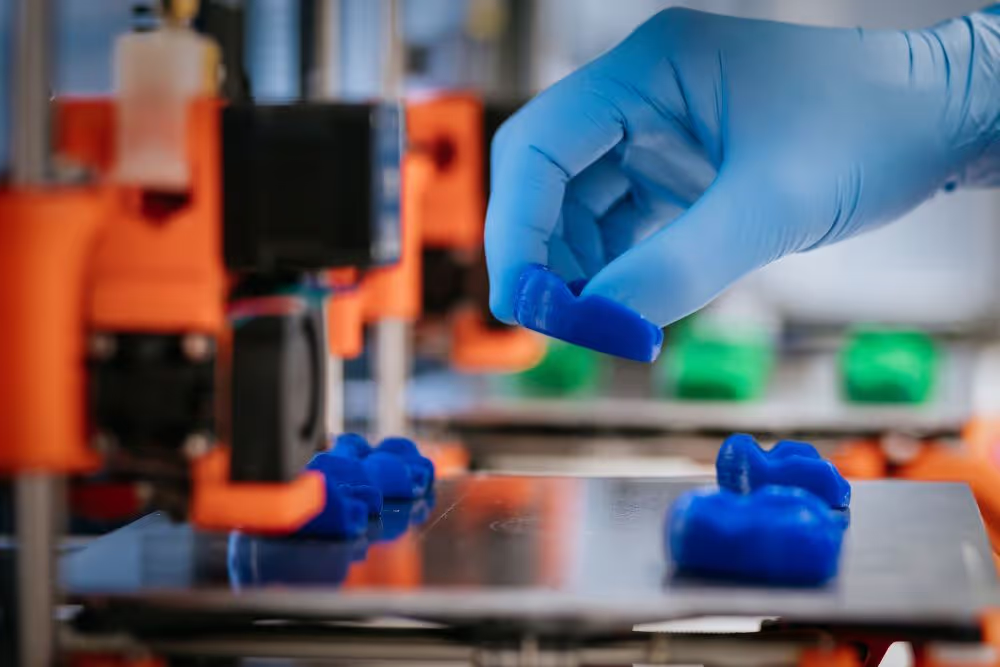
Image courtesy of Sportsguard
As AMFG has discussed before, the customisable potential of additive manufacturing technologies makes it the perfect fit for medical technology. Additive manufacturing allows producers of lots of medical equipment including orthotics and prosthetics devices to save time on production etc.
This same principle applies to mouthguards. Whether you’re in the boxing ring or on the rugby field, athletes can now benefit from a 3D-printed mouthguard that fits their mouths perfectly. Companies like Sportsguard or dima Print Mouth Guard use 3D scans to produce guards that fit a range of specific needs and sports.In fact, Sportsguard claims that their mouthguards both allow normal speech and breathing and offer “21% more protection than rival custom fit mouthguards”.Custom 3D-printed mouthguards are certainly something to get your teeth into.
3. Sports Masks
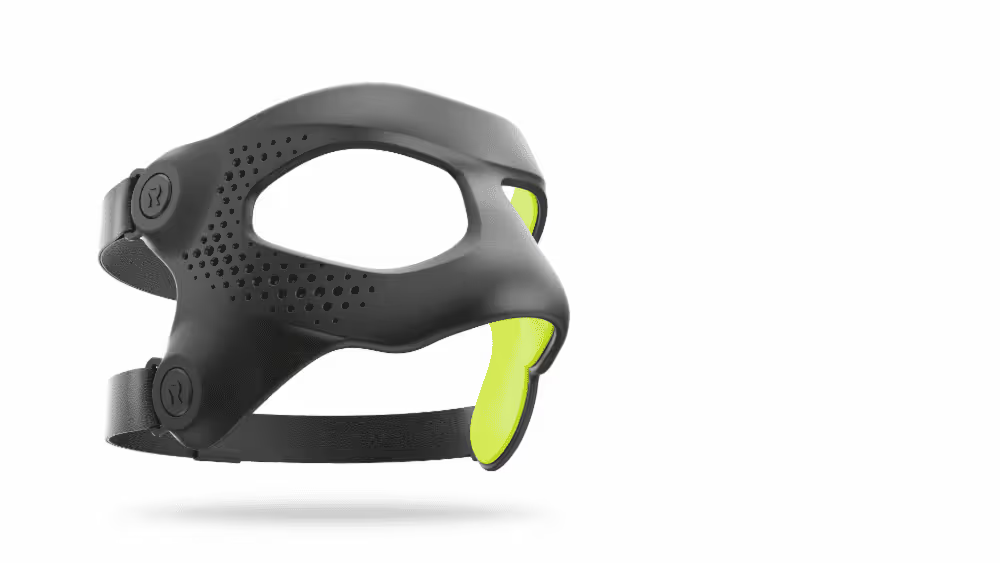
Image courtesy of Raptor Mask
If you’re like me, then you might have thought that the Raptor Mask was something that you might wear to your friend’s Jurassic Park-themed birthday party. However, like me, you would be very wrong.
Sports masks support recovering players to “protect a laceration or unstable part of the face”. As Cavendish Imaging points out, “Typically, they are used to guard against further injury to lacerations to i.e. the chin or lip, or fractures to the nose or cheekbone.”
That’s where the Raptor Mask comes in. Made by AM orthotic and prosthetic manufacturer Invent Medical the Raptor Mask helps to treat a range of conditions including facial fractures, lacerations, soft tissue injuries and nasal injuries. The mask is completely bespoke made from 3D scans of an athlete’s face and totally customised to their needs.
Don’t just take it from me, in 2020, the Raptor Mask was awarded the Red Dot Design Award for its innovative design. Clever … designers.
4. Wheelchair Racing Gloves
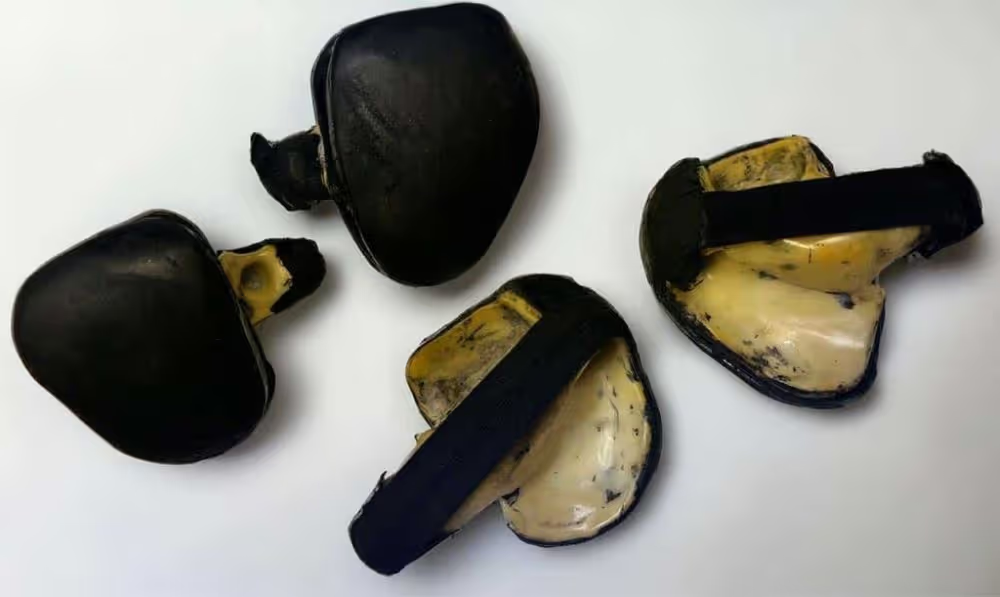
Image courtesy of Windform
Tatyana McFadden is an American Paralympic athlete with a whole horde of medals under her belt for wheelchair racing. Wheelchair racing gloves (or push gloves) are crucial to the sport protecting the athletes’ hands from the shock and friction generated by the sport. A high-quality pair of gloves empowers athletes like Tatyana McFadden to shave off those extra seconds off of their time.
Additive manufacturing is increasingly used to give racers a competitive edge. To take one example, 3D printing company CRP USA used Selective Laser Sintering (SLS) and Carbon fibre-filled composite material Windform XT 2.0 to produce a pair of race-ready gloves.
According to Windform, “Before adopting CRP USA’s solution, the 8-time Paralympics Gold medallist Tatyana McFadden used standard mould kits for her gloves, finding the quality inadequate. Traditional methods struggled to produce gloves that could withstand the intense stress of wheelchair racing while maintaining precision and comfort.”Now, Tatyana can race with gloves that are lightweight, durable and most importantly comfortable. Truly these gloves help to keep their athletes on track.
5. Archery Grips
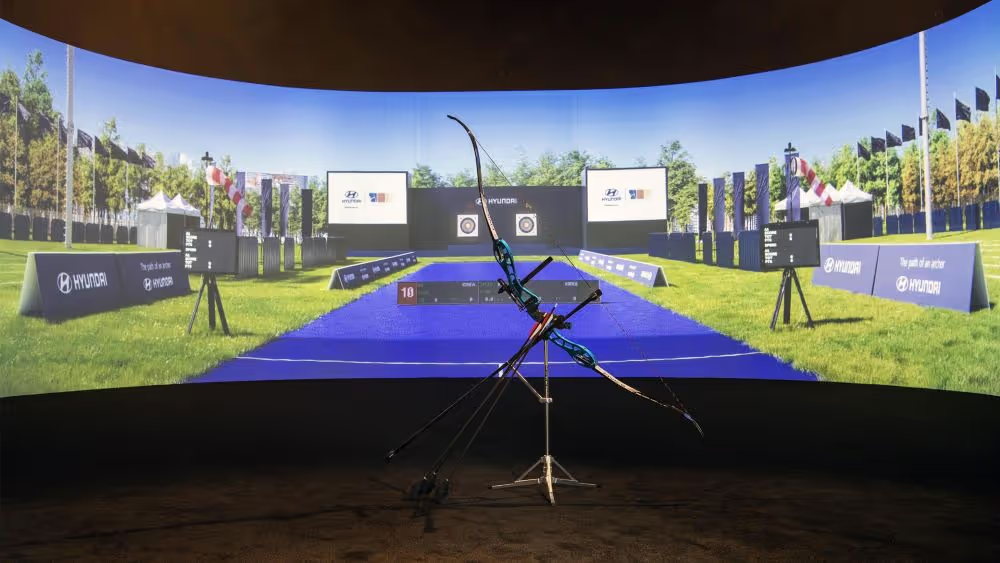
Image courtesy of Hyundai Motor Group
What’s the first thing that comes to mind when you think of the Korean car manufacturer Hyundai? I’m going to assume that archery wasn’t the first thing that came to mind. Nevertheless, the company has been instrumental to the success of the Korean archery team which dominates the sport in the Olympics.
Hyundai helps the team to stay on target with the 3D printed customized 3D-printed bow grips. According to the company, “the grips are made to fit each athlete's hand shape and minimize tolerances to unify the bow and the archer’s hand, maximizing performance as a result."
If you were lucky enough to be in Goyang, South Korea between July 26 to August 18 you might have had the opportunity to visit The Path of An Archer exhibition at Hyundai Motorstudio Goyang. The exhibition was “an innovative and immersive archery experience showcasing the fusion of sports and technology.” Additive manufacturing never misses the mark when it comes to archery equipment.
6. Shoes
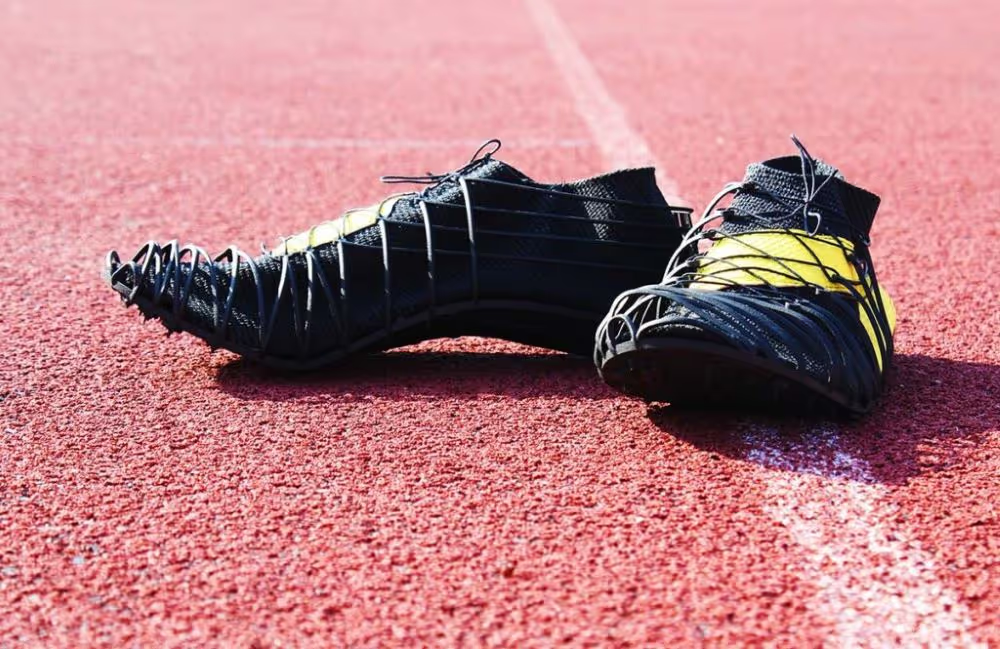
Image courtesy of Windform
For many sports, the right footwear is at the heart of the athlete’s performance. With additive manufacturing, athletes can ensure that their shoes are not only comfortable but give them the extra edge.
One example of this is Pleko. These spike shoes combine composite and additive manufacturing technology allowing athletes to “develop as much strength as possible, without losing energy.”
Developed by Venetian middle-distance runner Miro Buroni, the shoes come with a ribbed structure which “embraces the athlete’s foot “like a cage”, which envelops the foot and facilitates improvements in the running technique. The ribs are responsible for carrying the kinetic energy released from the biomechanical movement during the track race, and preventing its dispersion.”As well as the racetrack, Athos shoes are pushing climbers to the next level. The shoes were born from the fact that climbing shoes are often incredibly tight and can cause foot injuries. The team aimed to design, “the first customized climbing shoe to provide better adaptability and better performance to each user.”
7. Sailing
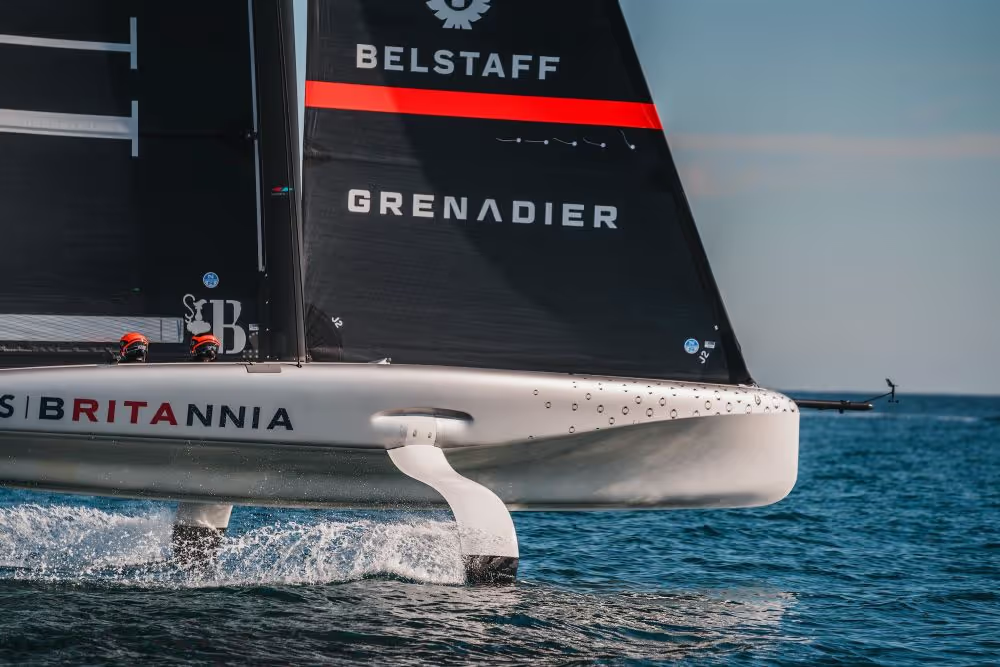
Image courtesy of Renishaw
As I write this the Louis Vuitton 37th America’s Cup is underway. According to the Organisers, “It is the oldest international sporting trophy – dating back to 1851 – and stands as one of the hardest sporting endeavours.”
Dubbed “the race with no second place”, competition is understandably fierce. This year team INEOS Britannia is hoping to finally win the Cup for Britain. To do this they have enlisted the help of Renishaw and their AM expertise.
To ensure smooth sailing for INEOS Britannia, each component of the boat needed to be optimised for efficiency including the boat's runner, flap fairings, bowsprit and outhaul sheave box.
Renishaw achieved this by introducing a design for additive manufacture to ensure part geometry was optimised for AM.
Moreover, according to Renishaw “Effective engineering was crucial to designing all these components for AM production to achieve the complex geometries required without adding any residual stress during printing or adding weight that reduces performance.”
Good luck to INEOS Britannia!
8. Motorsports
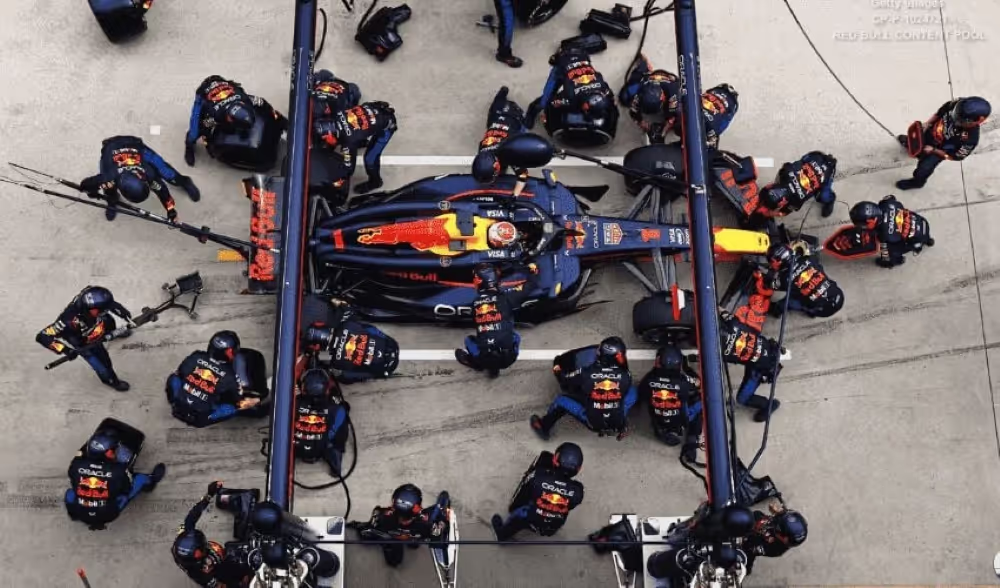
Image courtesy of 3D Natives
AMFG already explored the precise manufacturing requirements necessary for motorsports from a CNC machining perspective. Nevertheless, manufacturers use every technological innovation that they can to optimise their vehicles including using AM.
Companies like additive manufacturers Prototal UK harness the marriage of strength and weight offered by additive manufacturing processes to ensure that the cars are strong and speedy.
As Prototal points out, “Motorsport teams to create replacement parts rapidly, significantly reducing downtime and lowering costs.” The company goes on to say that, “Materials like Carbon PEEK and Carbon Filled Nylon are not just robust; they are tailored for the motorsport environment, offering unparalleled strength, insulating properties, and chemical resistance.”
One such team is Red Bull which leverages additive manufacturing in the production of their vehicles. According to 3D Natives, “After evaluating the digital models, Red Bull employs stereolithography 3D printing to produce physical prototypes. This cost-effective method significantly accelerates the development process.”
As if that wasn’t enough, even the drone that the team uses to film and evaluate the car’s performance in action was 3D-printed and developed by video production company Dutch Drone Gods.
9. Biking
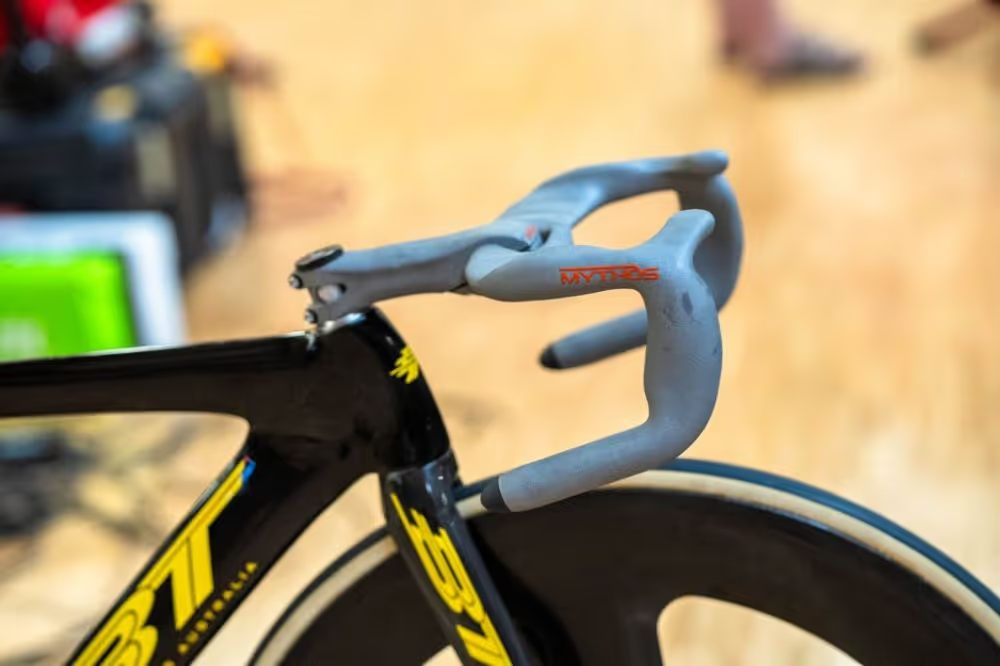
Image courtesy of Metron Advanced Equipment
This year marked a significant moment in the niche yet important history of bike parts used in the Olympics. Paris 2024 marked the 9th trip of Metron Advanced Equipment’s printed bike parts to the Olympics.
The company’s humble beginnings can be traced back to the early 1990s in a Greek garage where its founder, Dimitris Katsanis started producing carbon fibre bicycle frames. Eventually, Katsanis graduated to metal additive manufacturing and started producing components from materials such as Titanium.
From then Metron A.E has become a giant in the world of cycling components. According to the company, “The TX-1 family of 3D-printed endurance track cycling drop handlebars have already been ridden to four victories and 10 podium positions at the Glasgow 2023 World Championships. For the Paris 2024 Olympics, MYTHOS components are expected to be raced by up to 13 national teams in the track cycling events.”
Metron A.E. is truly an innovator when it comes to bike components, let’s see what strides they make in the cycling manufacturing technology in the next 9 Olympics!
10. Skatepark
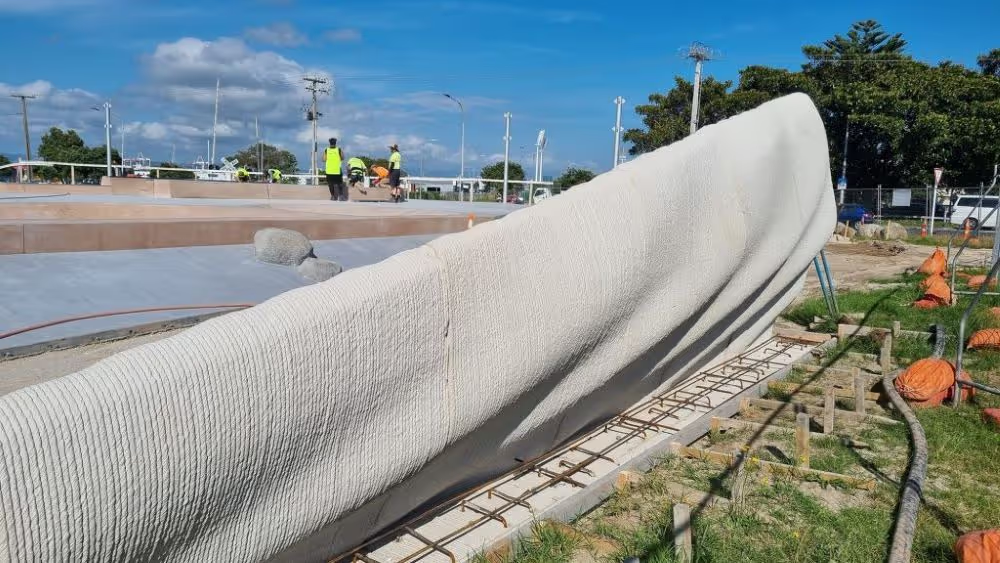
Image courtesy of QOROX
AMFG has discussed large-scale Additive Manufacturing projects in the past and we’re looking forward to the day when you can 3D print your own home. This final use of AM in sports demonstrates the ambitious potential of the technology - and let’s face it, it’s pretty cool.
New Zealand is home to beautiful landscapes, Taika Waititi and now the world’s largest 3D-printed skatepark in Tauranga. The park was developed by concrete 3D printing company QOROX in partnership with Tauranga City Council.
According to QOROX, skaters can now take advantage of “quarterpipe, skateable art ledges and the largest feature, The Wave, which is almost 12m long and 2.9m high! The Wave was made up of seven segments and only took around five hours to print in total.”
The skaters of Tauranga certainly are lucky to have access to this iconic skatepark.
Final thoughts

Image courtesy of Renishaw
From boats and bikes to mouthguards and motorsports, the use of additive manufacturing is growing in sports equipment. AM technology allows the production of parts which maximise strength without piling on the pounds. At the same time, equipment can be produced prioritising the most important thing - the athlete’s comfort.
From custom-fit helmets and mouthguards to advanced wheelchair racing gloves and high-performance bike parts, 3D printing is revolutionizing how equipment is made and tailored to the specific needs of athletes. Whether it’s on the racetrack, in the skatepark, or on the field, this technology is pushing the boundaries of what’s possible. As its influence grows, the only question left is: what will be printed next?

.avif)
.svg)