Additive Manufacturing Advances so far in 2024
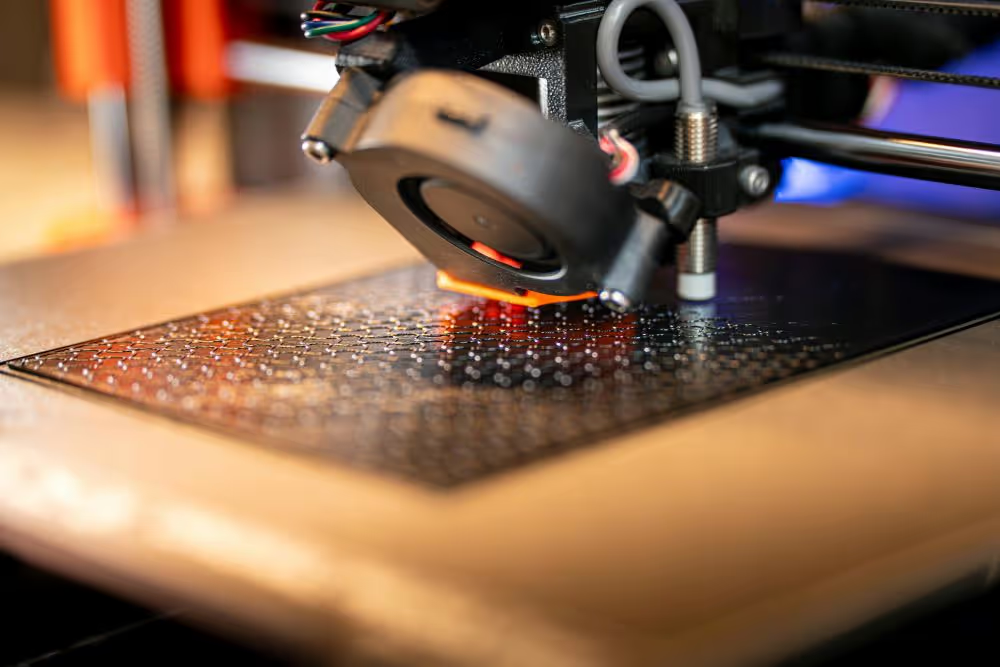


Additive manufacturing, commonly known as 3D printing, has revolutionized the manufacturing industry by offering unprecedented design freedom, material efficiency, and customization capabilities. Over the past few decades, significant advancements in additive manufacturing technologies have transformed the landscape of production, moving from prototyping to full-scale manufacturing in various sectors such as aerospace, healthcare, automotive, and consumer goods.These innovations have not only enhanced the quality and complexity of products but have also enabled more sustainable and cost-effective production processes. As additive manufacturing continues to evolve, its potential to disrupt traditional manufacturing methods and contribute to the development of new products and materials is becoming increasingly apparent.
1. IndyCar's 3D Printed Top Frame Increases Driver Safety
[caption id="attachment_42013" align="alignnone" width="1000"]
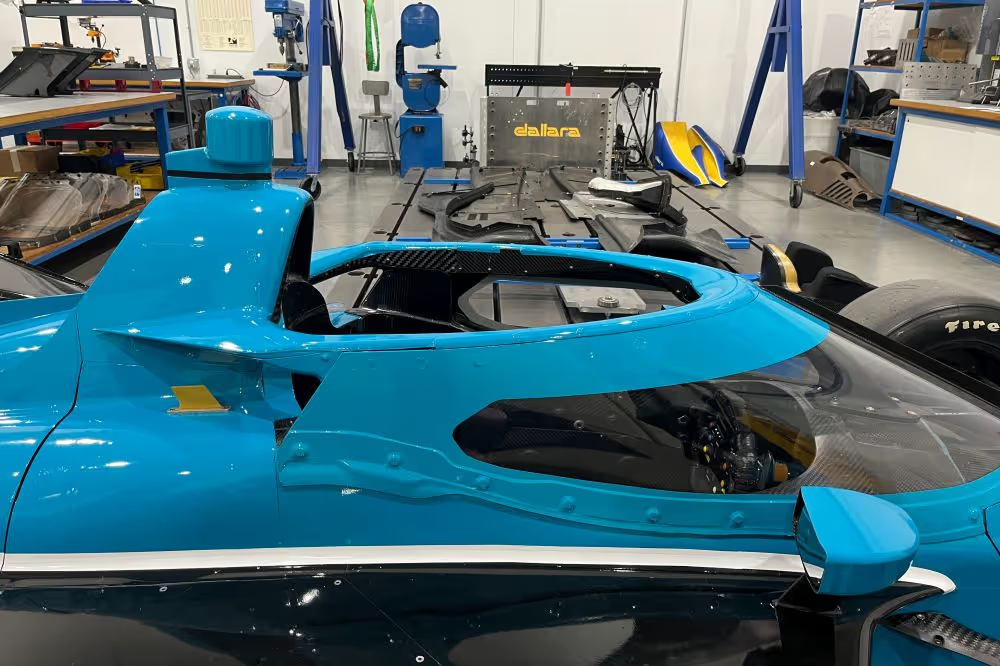
Image courtesy of Additive Manufacturing Magazine[/caption]Earlier this year saw the news that IndyCar was going to be implementing additive manufacturing to increase safety measures in its vehicles. IndyCar is the “Indianapolis-based governing body for North America's premier open-wheel auto racing series, the NTT INDYCAR SERIES.”In an article for Additive Manufacturing magazine, the company explained how additive manufacturing had been used to develop certain features of the car and crucially, ensure their safety. To take one example, “The additively manufactured top frame is one such built-in feature. In addition to holding the car’s aeroscreen in place to protect the driver from debris, it can potentially save a driver’s life in the extreme case of a rollover.”IndyCar chose to use additive manufacturing as the process “enables a variety of unique shapes and wall thicknesses that are available much more readily than traditional forms of manufacturing, especially factoring in the tight time limit the IndyCar team was working with.”As we see further growth in the automotive industry, it will be worth keeping an eye on how additive manufacturing plays a role.
2. Spherene Creates Metamaterial with Geometry Derived from Spheres
[caption id="attachment_42015" align="alignnone" width="1000"]
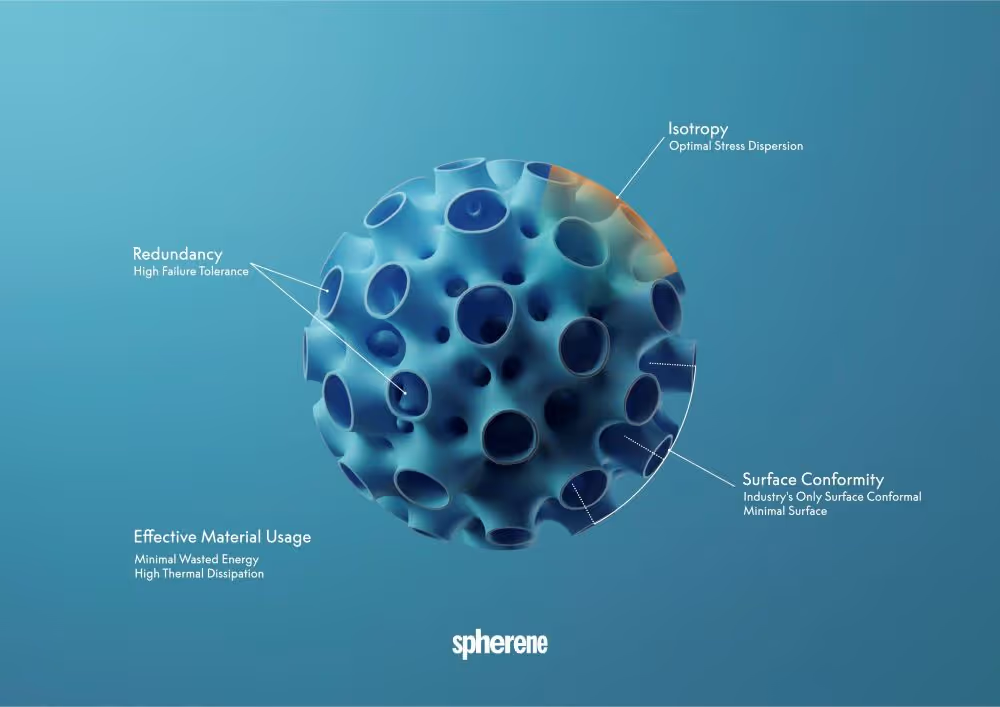
Image courtesy of Spherene[/caption]If complex geometries are in your sphere of interest then you’ll be delighted to hear that spherene’s first release candidate became available via Rhino in May.Spherene is the company behind the metamaterial of the same name. According to the company, a spherene is “a groundbreaking and patented metamaterial. It embodies a new class of minimal surface, the Adaptive Density Minimal Surface (ADMS), marking a pivotal innovation in our field.”In an interview with Additive Manufacturing magazine, Spherene outlines the advantages of the metamaterial. “Their shape translates to isotropic strength throughout the part volume, and they are self-supporting to manufacture with most 3D printing technologies. According to the company, the surface conformity and controllable envelope condition also enable seamless assembly integration with these structures.”These developments mark a bold step forward in the world of AM metamaterials and we would recommend exploring Spherene’s work further (although sufferers of typophobia must do so at their own discretion).
3. How Machining Makes AM Successful for Innovative 3D Manufacturing
[caption id="attachment_42017" align="alignnone" width="1000"]
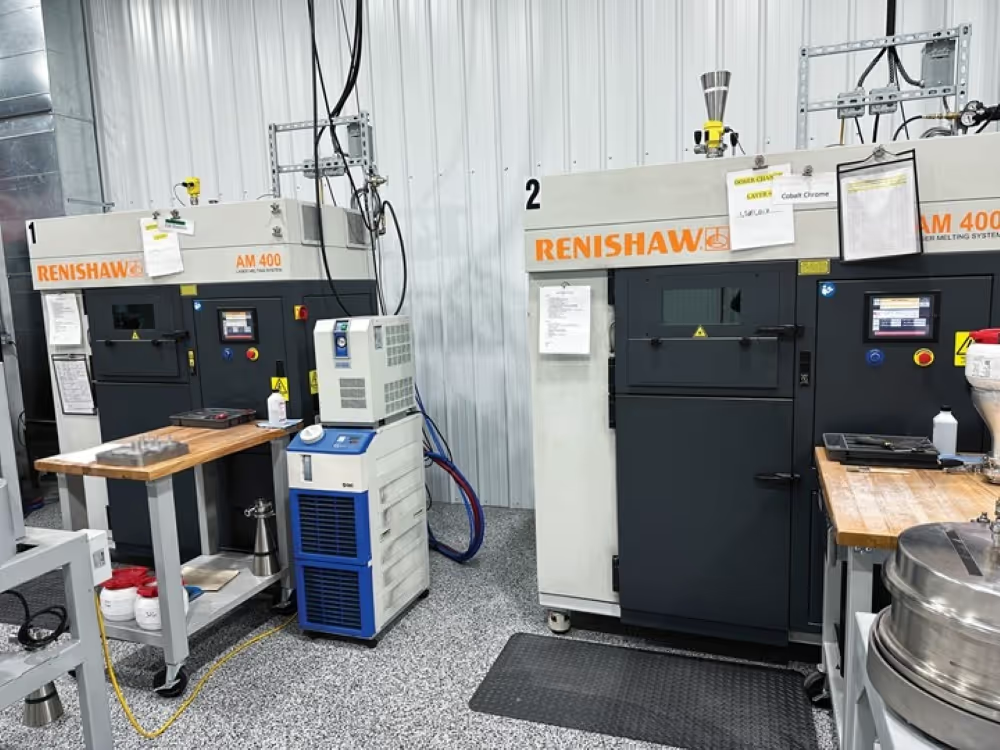
Image courtesy of Additive Manufacturing Magazine 2[/caption]AMFG is inspired by both the possibilities of additive manufacturing and more traditional production processes such as CNC machining.Earlier this year, Peter Zelinski sat down with US-based additive manufacturer Innovative 3D Manufacturing to learn about the role that CNC plays in their production processes. The company has a unique approach to their builds, routinely overspecifying part features. While this may be surprising, the reasons behind it are fairly simple.“Even additive parts that are heavy with extra stock still are nearer to net shape than many comparable castings, with less machining work than a casting might require — meaning the extra stock guards the part’s value without imposing significant extra cost or effort downstream.”This story is a great example of how hybrid manufacturing offers the best of both worlds, with additive manufacturing offering a part that’s closer to the net shape than cast parts with CNC machining providing the finishing touches.Critics of hybrid manufacturing have pointed to the fact that these methods have yet to become mainstream, it will be interesting to see how AM and machining processes used in tandem become common in the future.
4. All Design Labs and Protolabs's 3D Printed Tennis Racket Collaboration
[caption id="attachment_42003" align="alignnone" width="1000"]
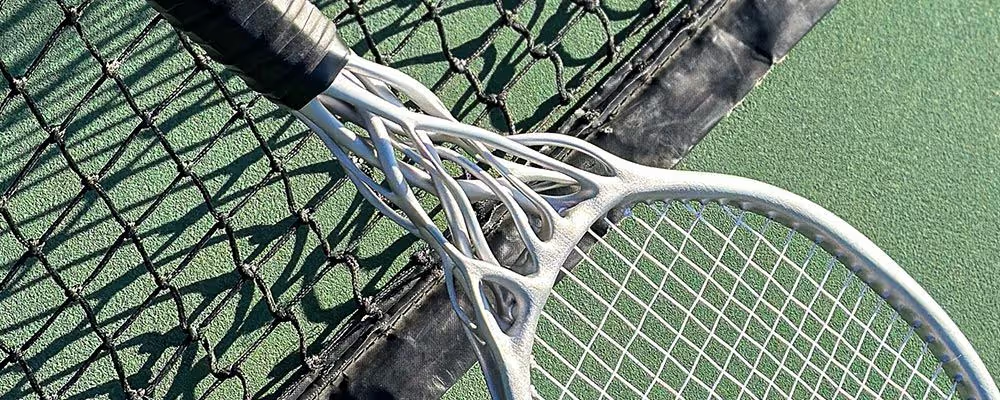
Image courtesy of Protolabs[/caption]If you were in Paris this summer you might have witnessed some truly gripping sporting moments. You may have even visited the Musée du Luxembourg and seen the Match exhibition which, “explores the role of design in the progress of sport and the ties forged between these two fields, as well as potential developments.”As a part of this exhibition, US-based industrial design company, All Design Lab teamed up with Protolabs to produce a 3D-printed aluminium tennis racket prototype: Hìtëkw.According to All Design Lab, “Advancements in technology have led to improved equipment that is lighter and more durable, aiding athletes in their performance. This pursuit of performance is especially true in tennis, where rackets have become lighter and more robust due to new materials and manufacturing techniques.However, there’s still room to explore a racket that leverages new technology to depart from conventional designs and further improve the sport. This is where Hìtëkw comes into play.”The company goes on to describe how its “tree-like structure that connects the handle to the head, setting it apart from any other racket. Inspired by generative design, Hìtëkw seeks to redefine what a tennis racket can be.”
5. Oerlikon Unveils Breakthrough Additive Manufacturing Solutions for Semiconductor Equipment Manufacturing
[caption id="attachment_42005" align="alignnone" width="1000"]
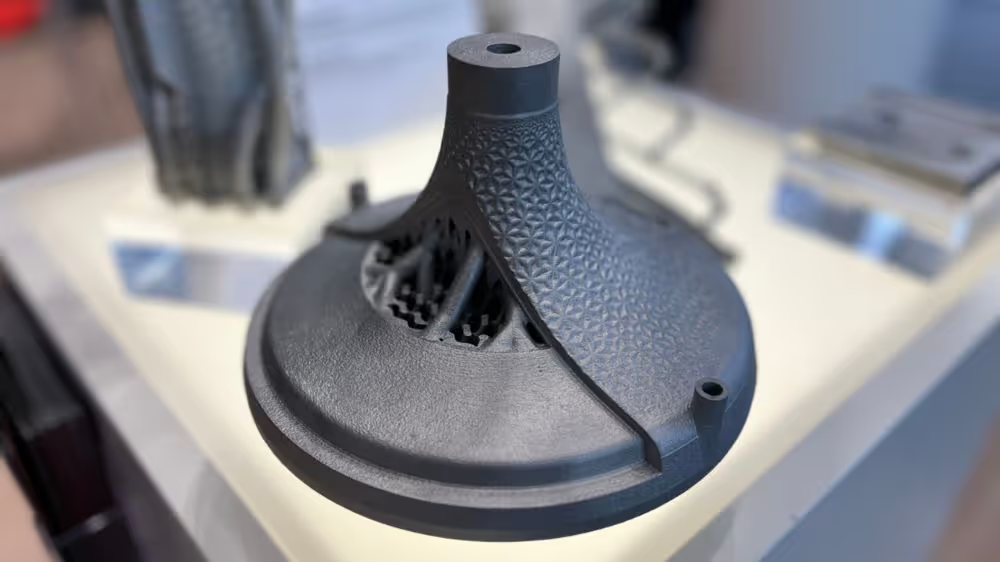
Image courtesy of Oerlikon[/caption]As any tech buff knows, semiconductors are all around us from smartphones and digital cameras to televisions, washing machines and refrigerators.2024 saw Swiss additive manufacturer, Oerlikon make major strides in additive manufacturing’s role in producing these components.According to the company, “One of the standout advantages of Oerlikon AM is the improved thermal management of critical components, such as pedestals or chucks. This enhancement leads to greater equipment accuracy, faster processing speeds, and increased overall lifecycle value. Additionally, Oerlikon’s AM technology is optimizing fluid flow within complex manifolds, further elevating equipment performance.”According to Dan Haller, Head of Commercial, Additive Manufacturing, “Oerlikon's pioneering AM solutions represent a game-changing advancement for the semiconductor industry," "We're setting new standards for efficiency, precision, and innovation, and we’re excited to bring these innovations to the semiconductor market."
6. RAPID + TCT Returned to the West Coast
[caption id="attachment_42007" align="alignnone" width="1000"]
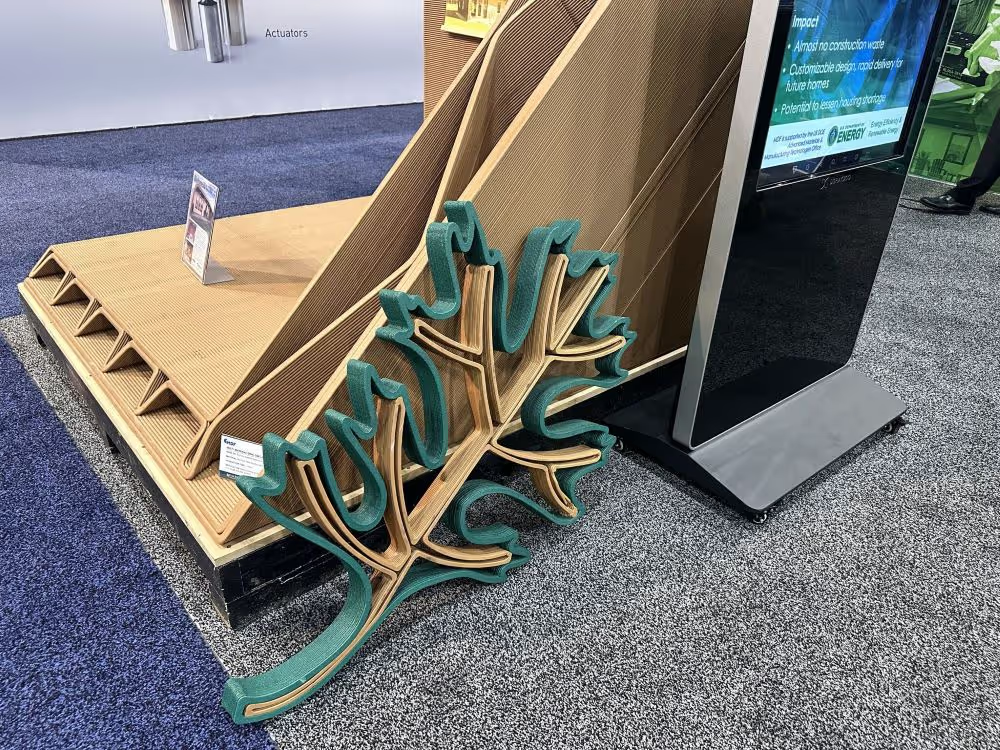
Image courtesy of Rapid + TCT via LinkedIn[/caption]Industry leaders, unmissable events, groundbreaking technology - these are just a few things that you might have caught if you were lucky enough to attend RAPID + TCT.RAPID + TCT is North America’s Largest AM and industrial 3D printing event and boasted almost 10,000 attendees at the Los Angeles Convention Center. According to the organisers, “Speakers, exhibitors, and attendees enjoyed a dynamic three-day program, which showcased more groundbreaking ideas, advancements, and opportunities for collaboration and discovery than ever before.”The recap goes on to explain how the industry had its sights set on the future of additive manufacturing including the need to collaborate and consolidate. “While panellists agreed on AM's potential, many cautioned against overhyping the technology at the risk of eroding trust and credibility in the broader manufacturing sector. Instead, they said, companies should direct their attention toward problems only AM can solve.”If you missed it this year, don’t worry, RAPID + TCT returns in April at Huntington Place in Detroit for more of a look into the cutting edge of additive manufacturing.
7. Nikon Corp. Opens California Technology Center to Provide Customer Support
[caption id="attachment_42019" align="alignnone" width="1000"]
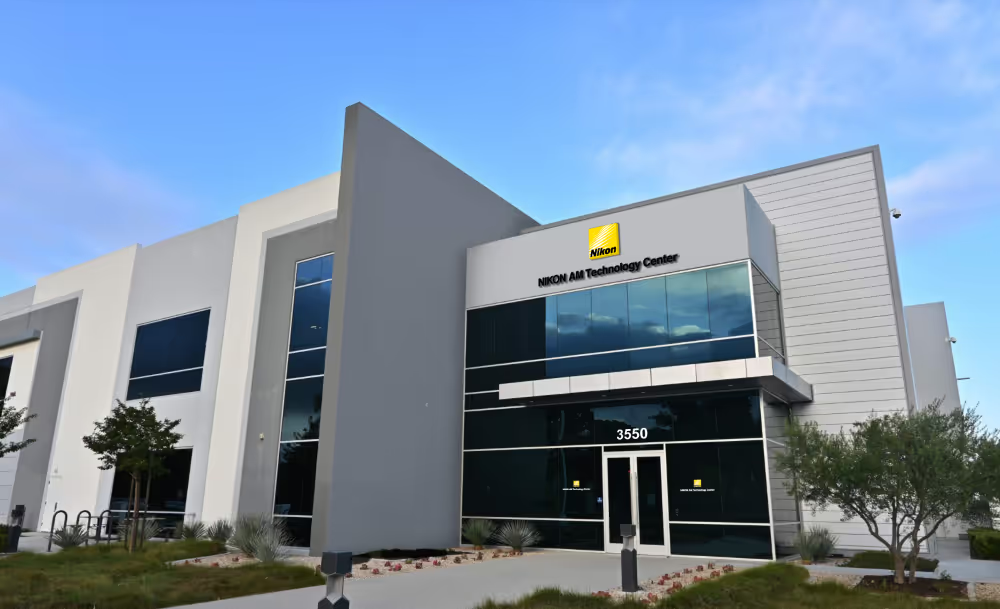
Image courtesy of Nikon SLM[/caption]Our recent articles have discussed how Nikon is making partnerships to advance the development of additive manufacturing, for example through its investment in Hybrid Technologies Global.Last month saw Nikon unveil a new Technology Centre in Long Beach, California. According to Nikon, “This cutting-edge, 90,000-square-foot facility marks the next critical step in the Nikon Vision 2030 plan, aiming to revolutionize manufacturing and establish digital manufacturing (DM) as a growth pillar for Nikon. Strategically located to serve aviation, aerospace, and defense clients, the facility is already operational, setting new benchmarks in advanced manufacturing.”The company goes on to explain the work that will be central to the technology centre, “Offering a holistic and customer-centric approach, the Nikon AM Technology Center provides comprehensive Design for Additive Manufacturing (DfAM) services, engineering and manufacturing solutions, as well as prototyping and production capabilities. These services are designed to meet critical customer needs for adoption, scaling, and supply chain capacity.”We’re looking forward to seeing what new innovations come from the centre.
8. Hitachi Rail Uses Roboze's Pioneering Technology to Manufacture Spare Parts
[caption id="attachment_42009" align="alignnone" width="1000"]
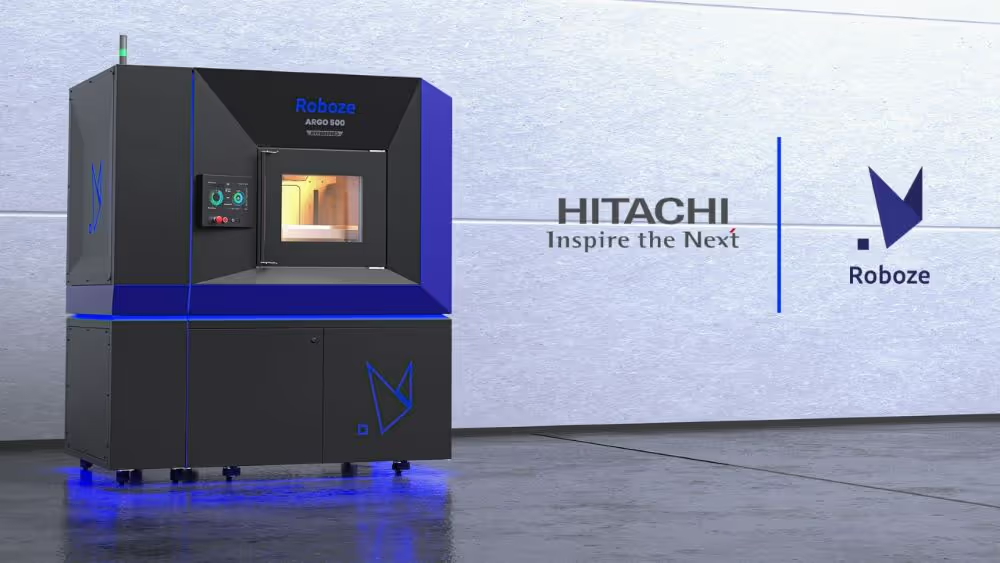
Image courtesy of Roboze[/caption]In the railway industry, the availability and cost of spare part production has been a major issue. Hitachi Rail’s partnership with ROBOZE aims to address this and keep railway systems on track.According to ROBOZE, “The solution enables Hitachi Rail to implement industrial 3D printing technology, using materials such as ULTEM™ 9085 and Carbon PEEK for the production of spare parts for its trains.”ROBOZE goes on to explain how their “additive manufacturing technology [...] enables faster and more cost-effective production compared to traditional machining methods. With the implementation of the ARGO 500 solution, Hitachi Rail can now replace traditionally machined metal parts, significantly reducing costs and delivery times.”According to Luca D’Aquila, COO of Hitachi Rail Group and CEO of Hitachi Rail Italy, “Our partnership with ROBOZE underlines our commitment to delivering advanced, high-quality manufacturing for our customers. The partnership will enable us to harness 3D printingto improve operational efficiency and reduce costs for producing prototypes and railway spare parts.”
9. Health-threat ‘forever chemicals’ removed from water with 3D-printed ceramic ink
[caption id="attachment_42011" align="alignnone" width="1000"]

Image courtesy of the University of Bath[/caption]We know that additive manufacturing can be a game changer when it comes to the medical industry. To take one example, 3D printing O&P devices allows clinicians to provide their patients with tailored care efficiently and cost-effectively. But can additive manufacturing improve our drinking water?According to researchers at the University of Bath, the answer is yes. In July of 2024, the University announced that “Engineers have invented a new way to remove health-harming ‘forever chemicals’ from water – using 3D printing.”These forever chemicals in question are perfluoroalkyl and polyfluoroalkyl substance (PFAS) which can take over 1,000 years to break down. PFAS have the potential to cause us real harm, having been linked to issues with reproduction and cardiovascular health as well as increasing the risk of diabetes.This new technology works using “ink infused with the ceramic indium oxide, the 4cm monoliths are created by extruding the ink from a 3D printer – like squeezing toothpaste from a tube – and forming it into a lattice shape. Because indium oxide bonds with PFAS, the chemicals immediately stick to the monoliths and can be removed from the water in under three hours, which is compatible with current water treatment plants in the UK and abroad.”The results have been promising with the monoliths removing up to 75% of PFAS from water.As this technology develops, we may soon raise a glass to additive manufacturing as it works to make our drinking water safer and healthier.
Conclusion
[caption id="attachment_42021" align="alignnone" width="1000"]
Image courtesy of Jakubzerdzicki via Pexels 2[/caption]The world of additive manufacturing continues to push boundaries and redefine what’s possible across a range of industries. From enhancing safety in motorsports to innovating sports equipment, and even revolutionizing semiconductor manufacturing, 3D printing is proving to be more than just a tool—it's a game-changer.As we look to the future, it's clear that the blend of traditional techniques with cutting-edge technologies will drive the next wave of innovation, making once-impossible ideas a tangible reality. With so much potential on the horizon, it's an exciting time to be part of the additive manufacturing journey. Here's to seeing where this ever-evolving technology takes us next!


.avif)
.svg)