Are Robots the Future of CNC Milling?
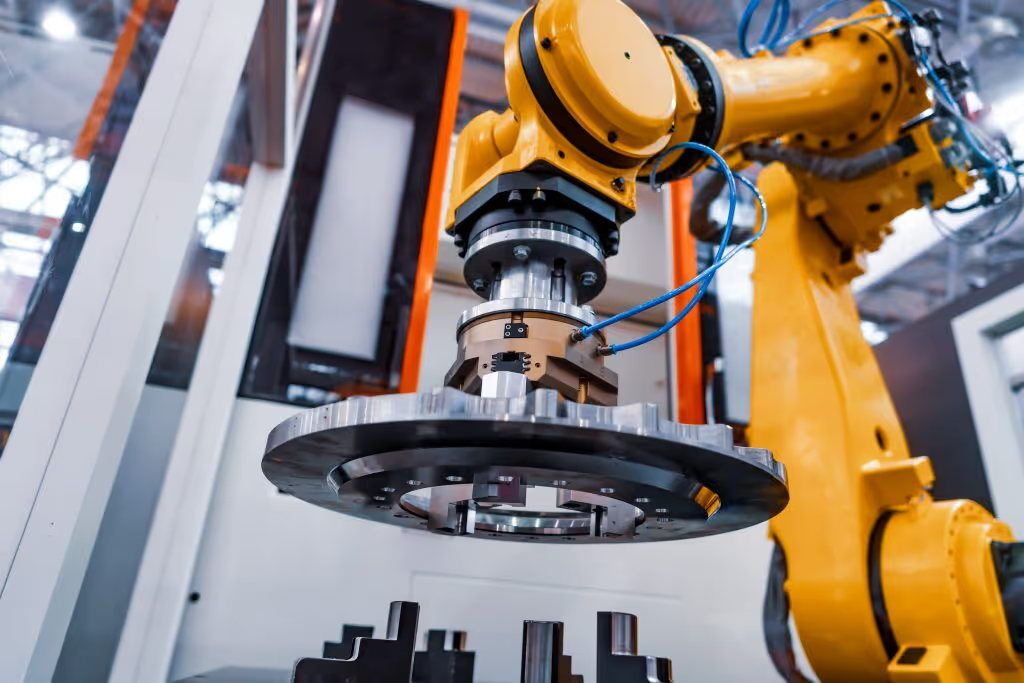


(Image courtesy of Get It Made)
As anyone who attended IMTS 2024 this year can tell you, robots continue to be all the rage. As we’ve pointed out, not only can the use of robotics improve a job shop’s productivity and profitability, in the midst of a skills shortage, robots can help bridge the people gap.
While there’s no doubt that robotics will become increasingly common on the shop floor, could they ever take over from more conventional CNC milling machines?
In today’s advanced manufacturing world, both CNC (Computer Numerical Control) robotic machining and CNC milling play pivotal roles in creating high-precision parts. While they share common ground in terms of automation and material processing, these two technologies have distinct characteristics, capabilities, and applications. Here we explore the differences and advantages of CNC robotic machining and CNC milling, providing insight into their respective strengths in the manufacturing landscape.
The Pros of Robotic Machining
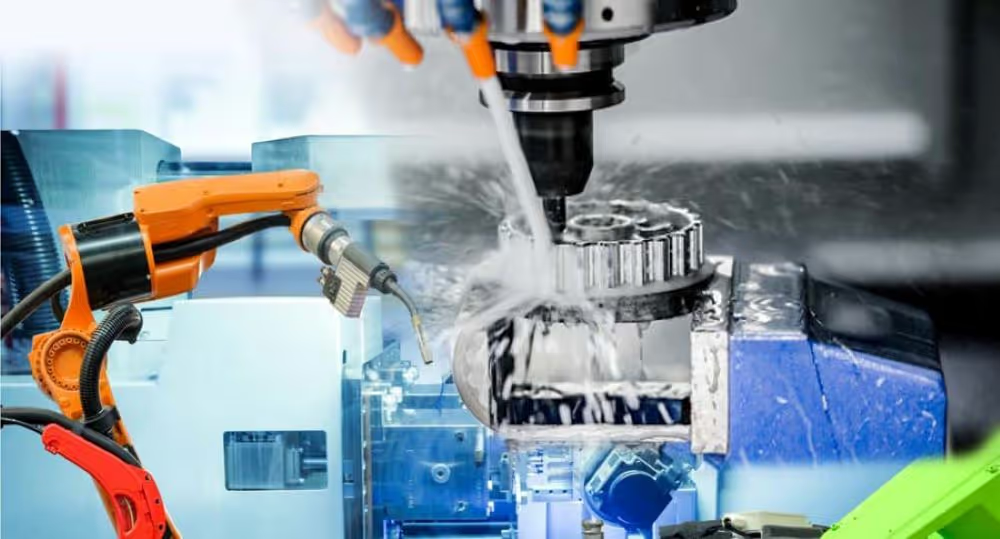
Image courtesy of SANS Machining
CNC robotic machining involves the use of industrial robots equipped with milling tools to perform various cutting, shaping, and material removal tasks. The main advantage of these robots is the range of motion afforded to job shops as these robots are programmed to move along multiple axes (typically six), giving them an exceptional range of motion.
As RobotsDoneRight points out, the work area of industrial robots is a particular draw owing to their large spherical work envelopes. “CNC machines have a much smaller work envelope than robots, consisting of a stationary cube. CNCs cannot access difficult angles or positions the way robots can.”
CNC robots can be more versatile than conventional milling centres as they can handle a variety of tools and processes, making them useful for not only milling but also cutting, polishing, deburring, and more.
Phoenix Robotics agrees, pointing out the disadvantages of more traditional CNC machines. In comparison to robot machines CNC machines require more resources to introduce to the shop floor with huge upfront costs and substantial space required. Phoenix Robotics also points to the changing landscape of machining as another potential upside of robot machining. According to Phoenix Robotics, there are “No skilful CNC machine operators and it is hard to find them”, adding, “technology is moving to smart factories instead of manual operations.”
Is CNC Robotics the Future of Machining
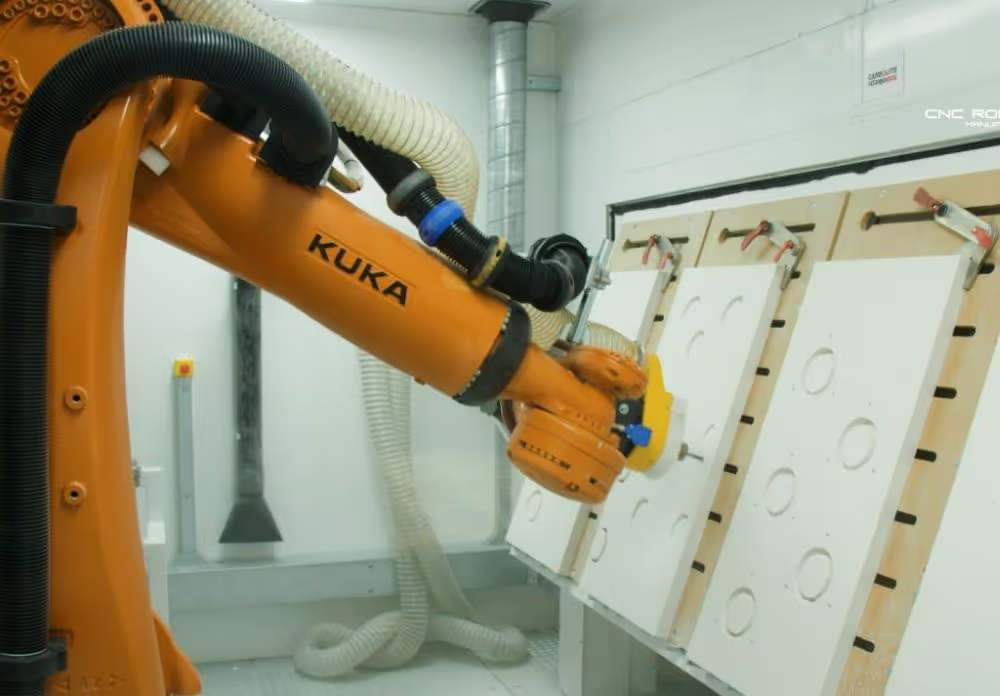
Image courtesy of The Manufacturer
CNC Robotics is a company with a unique backstory. As their website claims, CNC Robotics was founded in 2010 as “a solution to a pressing need in the manufacture of large-scale props in the creative industry.” Since then, the company has gone from strength to strength, offering a full services from CNC robotics consultancy, implementation and maintenance.
The accessibility of robotics programming has been the key to more mainstream adoption of these systems. As CNC Robotics claims, “The combination of the robot and the software gives the equivalent benefits to those gained when programming machine tools. These include the ability to develop a wide range of toolpath strategies directly from CAD models, together with options to simulate and optimise the program on the computer. These options help to ensure that the robot will operate efficiently and safely, giving the desired productivity across all types of manufacturing.”
Taking Up Arms
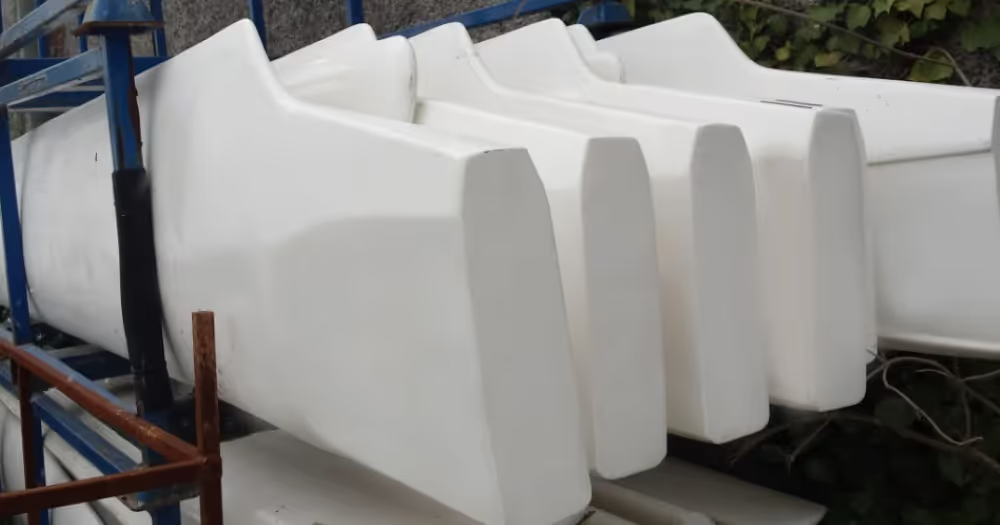
Image courtesy of Complete Composites
In a 2020 article for The Manufacturer, CNC Robtics pointed out to the unique benefits of using CNC Robotics in machining composites including fast and accurate finishing capabilities. With CNC robotics’ unique ability to process large parts as “the size of part they can handle can be extended by placing them on rails.
The latter approach is often the only way to process the larger items needed for wind turbines or for the marine industry.”
Complete Composites is one company that worked with CNC Robotics to install their systems. According to CNC Robotics, “The company wanted to position itself as a European manufacturing leader and were seeking a competitive solution to machine large wind turbine parts and composites with the main aim to reduce the reliance upon manual processes which were labour intensive.”The investment has seen success with Complete Composites reducing lead times and ensuring the “delivery of high accuracy parts.”
Any Downsides?
Will all these upsides to robotic CNC, you be tempted to (with great difficulty) throw your current machining centre in the trash and invest in one of these robotic systems. However, as with any technology CNC robotics is not without its downsides.
Programming robotic arms can be more complex and requires specialized skills, particularly in coordinating six-axis movements. The learning curve for operating robotic systems can be steeper than for CNC mills. In comparison, CNC mills are typically easier to program and operate, especially with modern software interfaces. G-code programming is standard in CNC milling, and operators with experience in traditional machining can easily transition to CNC mills.Job shop owners also have to bear in mind which technology is suitable for which application. Robots are ideal for large-scale machining, complex 3D contours, and tasks requiring flexibility. Industries like aerospace, automotive, and shipbuilding often use robotic systems to machine oversized parts or perform multi-functional operations.
Whereas, traditional CNC milling is best suited for smaller, intricate parts that require tight tolerances, making it indispensable in industries like medical device manufacturing, electronics, and precision engineering.
Final Thoughts
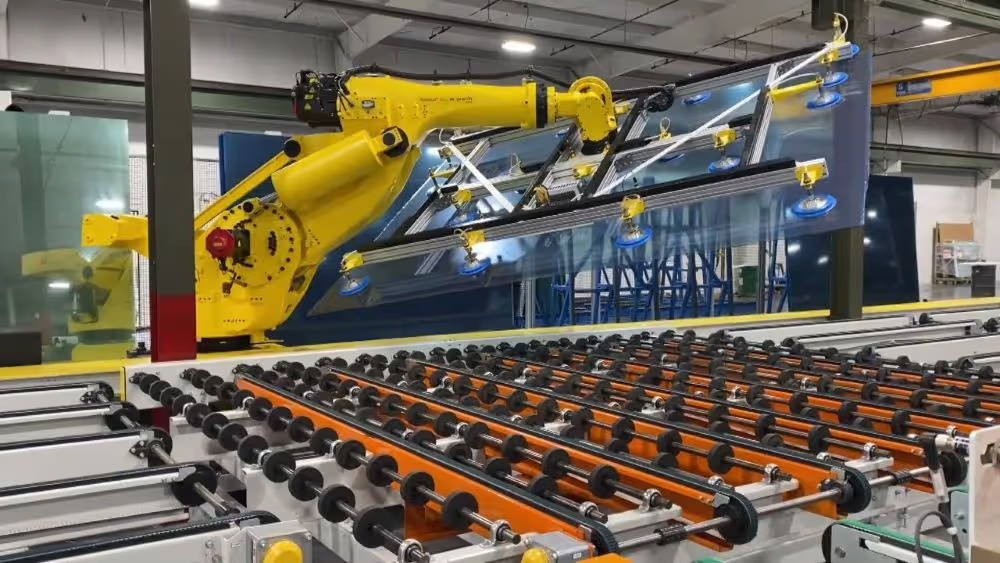
Image courtesy of Glassline
Both CNC robotic machining and CNC milling have their unique strengths and limitations. CNC robotic machining offers unparalleled flexibility, a larger work envelope, and multi-functionality, making it ideal for industries dealing with large, complex parts and operations requiring versatility. On the other hand, CNC milling remains the go-to technology for high-precision, repeatable manufacturing, especially in small- to medium-scale production runs where accuracy is critical.
Choosing between the two depends on the specific requirements of the project, such as the size and complexity of the part, precision requirements, and production volume. While CNC robotic machining represents the future of flexible manufacturing, CNC milling continues to be an essential technology for precision-driven industries.


.avif)
.svg)