Expert Interview: Howard Sheldon on Championing British Manufacturing
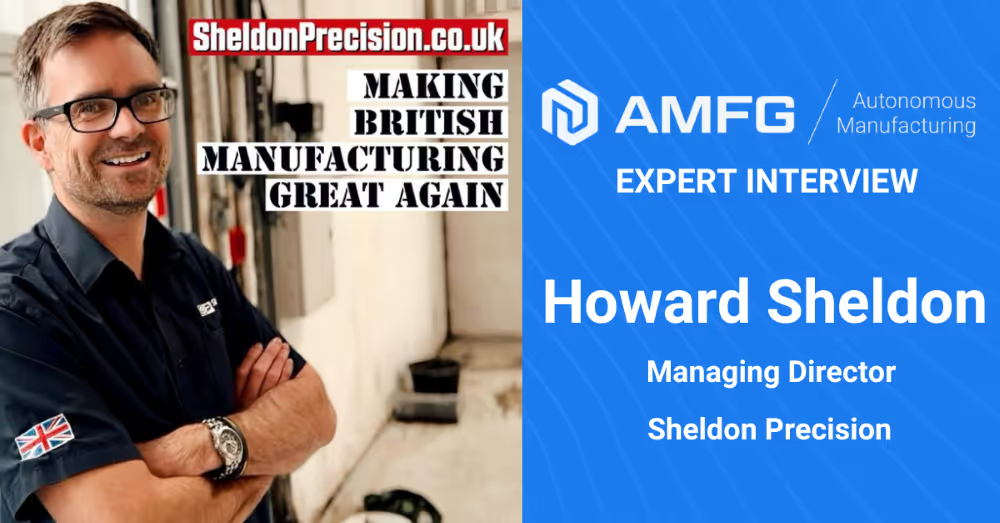


You may know him as the Managing Director of Sheldon Precision or as Mr CNC. Either way, with a lifetime of machining and thousands of followers under his belt, Howard Sheldon is a champion of British machining. Following in the machining legacy of his father and grandfather, Howard founded Sheldon Precision over a decade ago in 2014. The company provides sub-contract CNC Turning services to all industries including automotive, defence as well as bespoke requests. Sheldon Precision prides itself on delivering a high-quality product every time with Swiss-style CNC sliding head machines and a culture of innovation at its disposal.
AMFG sat down for an interview with Howard to discuss the growth of his LinkedIn platform, what’s next for Sheldon Precision and why British machining needs more patriotism.
I usually ask everyone how they got into manufacturing but both your father and your grandfather had their own engineering companies. What was it like to come from a machining family?
Yes, I'm third generation. My father and grandfather both worked in manufacturing so going into the family engineering business was a natural progression. I didn't have a strong ambition to do anything else apart from becoming a race car driver! But that was just a schoolboy pipe dream. I saw that my dad did well out of engineering and he encouraged me to work there so I thought, why not give it a go?Growing up, it was good because I got a summer job every year so I could get some pocket money. Running an engineering business always looked like hard work but it did also seem rewarding and that's still true today.
Obviously, I got all the boring jobs when I was young. But when I started in it full-time, I enjoyed it - there's always something to learn in manufacturing.
You describe yourself as “third generation”, did each generation have its own philosophy or is there a Sheldon way of doing things?
Hard graft is number one and true for all of us.
Having said that, I think each generation looks at the previous generation and thinks, “I'm going to do it slightly differently.”
My father worked very late into his life, he was in his seventies before he stopped working and that was only down to ill health. I have the benefit of seeing how he did things and deciding what I don't want for myself.
He was 100 per cent into the business and gave it everything; late evenings, weekends… all the time. He could never get the business to a position where he could do less and have people help him run it. I think he always felt like nobody could do it better than him so he had to be there for everything and have his finger on everything, which wasn’t true.Times have changed, and people are more conscious of their work-life balance these days, especially since 2020. You've got hybrid working, remote working, flexible hours, four day weeks, which we do. It's a different landscape to run a business in.
Image courtesy of Sheldon Precision
Aside from work culture, how has the industry changed since you joined?
It's got cleaner, it's more high-tech and software is playing a huge part in manufacturing now. It’s very cutting-edge. You don’t have the old “spit and sawdust” places, as my dad called them, where we'd go in and there was sawdust on the floor, it was oily and noisy and smoky.The shop floor environment has changed and the equipment has changed, you've got air filters on the machines now. A lot of places have clean painted floors and good lighting these days.
The culture has changed too, my father used to run his business with an iron fist and you can't do that these days, it's also not my personality. I run my business differently, focusing more on accountability and processes.Every business’s USP is their people because the machines are the same and it's the leaders that set the culture and the direction of the company. I do try to make Sheldon Precision a nice place to work - we have doughnuts on Wednesdays and bacon sarnies once a month - I treat people with respect.The industry has changed but I don't think it's got any easier. I still think that we're underpaid for the level of investment that we have to make and it's still one of the most challenging businesses to run.
What do you think has been slow to change in the industry?
The UK government often releases information about how we're not a particularly productive nation per head. Since 2008 we have plateaued, in other words, we have stopped making gains in efficiency. This could be down to the slow adoption of robotics and automation. A lot of it comes down to price. Robotics and automation have become more affordable but we've lacked a real industrial strategy from the government to assist manufacturers in making progress so we can take on the lower-wage economies.
As a nation, being able to make something and sell it to the world is so important. Unfortunately, the focus has been on financial services and other areas.I feel like we could have really maintained our position as one of the biggest manufacturing nations. We've slipped down due to a lack of focus and incentives from the government to help with modernisation.
When I spoke to Alan Arthur, CEO of the GTMA, he said that when we saw the hike in energy prices, we thought a lot about consumers and how that's going to affect them. On the other hand, manufacturers use a lot of energy and are hit especially hard by that.
The energy crisis was a scary time, if you were unlucky enough to have your contract up for renewal during this time it could have been the end of your business. My electricity has risen 50% and my father's Business has risen 100% which is an ongoing dent to the bottom line.Obviously, this has had a knock-on effect. In order to stimulate productivity, there needs to be some kind of governmental support.
We need to be more like the French and the Americans. We're not patriotic enough. We are paranoid about looking fair. Government contracts should be awarded to our own UK companies. It’s crazy! We need to take care of ourselves first and nobody should begrudge us that.Why don't we keep all national contracts in-house? Of course, you can't go to the extent of countries like China who deliberately subsidise materials and electric cars to boost sales.
Historically, we're a powerhouse of manufacturing, we’re an industrial nation. It makes me cross that we could do so much more and we're not.
I’ve read that there’s been a recent appreciation for supply chain stability since events like COVID or when the Ever Given got stuck in the Suez Canal. I’ve even seen a lot of discussion surrounding reshoring, what’s your take on that?
I had high hopes that we would see a big reshoring effort but as far as I can see, it hasn’t happened which has been very disappointing. We were primed for this influx and growth but it never came.
I get the feeling in the US that there's been more of an influx. They're a more patriotic nation, they love flying their flag with pride.
They've got people like Titan Gilroy who’s championing US manufacturing and showing people how to get more efficient and stay competitive. He's also speaking for the world, his videos are available for everybody. So he's not just speaking on behalf of the USA but he's talking to all nations.
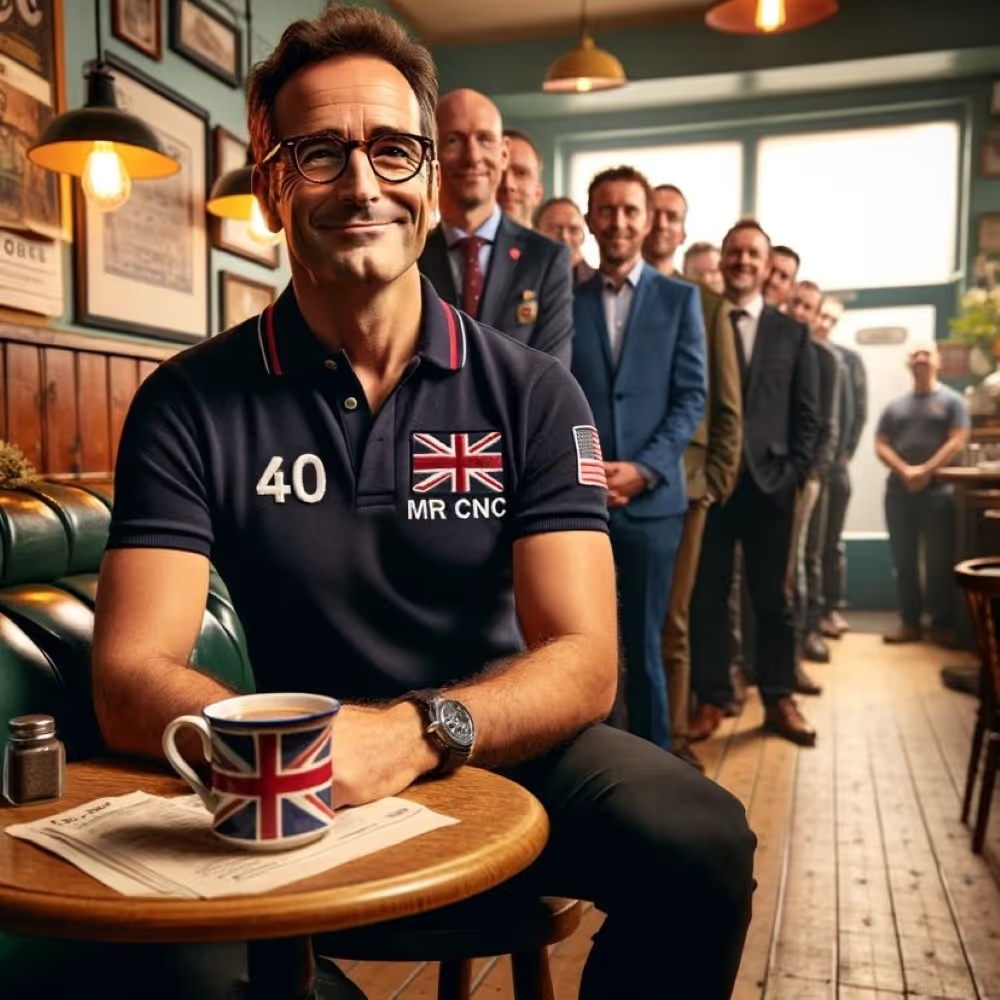
Image courtesy of Howard Sheldon
Looking through your media channels, you have a huge LinkedIn platform, how did that come about? And second of all, why do you think it's important for Britain to have that kind of figure?
Titan Gilroy has done so much for manufacturing, he has gained real momentum; he is training a generation of new engineers and encouraging people to sign up to a bright future in manufacturing which is desperately short of workers.
We could do with someone as outspoken and passionate here in the UK. There was a petition running to push for a Minister for Manufacturing but due to the election being called it was no longer valid and had to close down. We need a voice at the table, we need to lobby the government and get them on board with this idea of putting the “great” back in Great Britain.
I developed my LinkedIn platform because I started working with a business mentor who’s very active on social media. He came down to film a video and in every clip I had a mug of tea in my hand. I pointed out to him and he said, “Oh my God. That's it. That's your hook. Powered by tea!”
I'm not really a natural extrovert. It takes confidence to put yourself out on social media and do a post, especially if you start opening up a bit and being more transparent and honest about things. But I just started posting. Then I got into ChatGPT and started creating some images and I was having a lot of fun with it and coming up with quirky, funny posts.That's just my style, I don't want to be too serious about it. I saw the benefits of gaining a following and raising awareness of the company through my page as well as the business page.
My LinkedIn feed is filled with people in my industry, but it's almost like a news feed. You see what people are doing, what they're investing in, what new products are coming out, what events are coming up etc.
Absolutely, machining social media is beneficial for expanding your reach online as well as giving people insight into the industry. The machining industry does seem close-knit, what’s your experience been of that?
There's a strong community. I'm a member of the British Turned Parts Manufacturers Association (BTMA) and everybody shares their problems and everybody's willing to help each other.
Yes, we all compete but we all feel like we're all in it together. It's nice when you've been in the industry for a long time and you go to a trade show, for example, MACH at the NEC you spend so much time catching up with people. They're friends that you've got to know over the years.
There's this mutual respect among your peers and everyone's happy to help anybody.
What challenges is the community facing?
The labour shortage is on everyone's lips; you can’t grow your business without a labour force, simple as that. I have almost given up on believing I can hire skilled machinists, my plan is to find smart, hungry trainees and create skilled machinists in-house.
In general, manufacturing is stagnant, we entered a short recession at the end of last year and currently, it’s ticking over. We’ve had an election and the new Government is painting a gloomy outcome for the October budget with tax rises so it's time to keep belts tight, I can’t see a pickup for a while.
My plan is to look for an acquisition next year so I can grow the business this way.
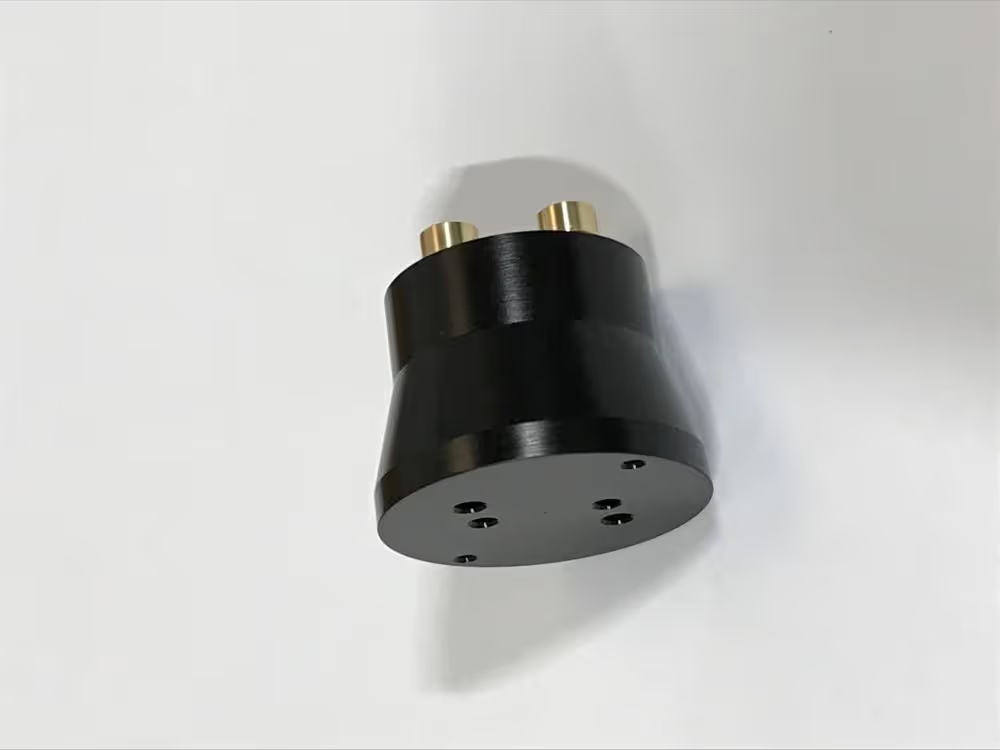
Image courtesy of Sheldon Precision
There’s a lot of buzz around industry 4.0 technologies, AI-powered software or 5-Axis machines, how do you view these innovations?
One thing I am excited about is my next phase of investment in software and hardware.
When you buy a machine you get X amount of automation in that package. I see that the key to being more efficient and better at unmanned machining is software.
Software is going to play a big part, especially in the automation of things like programming and quoting. A big thing I'm excited about is monitoring software on machines. Some machines already have this to a degree but you can add sensors to machines that monitor tool wear or if a tool's broken. So if that machine is running unmanned it will stop before making loads of scrap or before a tool breaks.
We also need more programming aids. There's a company that I'm looking at now that sells a machine and they’re developing their own 3D simulation. A newbie can come along, write a program and see the simulation at his computer desk away from the machine. And it's not a £20,000 CAD/CAM package, this is going to be provided free or at a very low cost. This is the direction that I believe the OEMs should be going in. They've got to simplify how their machines are used.
Take Mazak, they've had conversational programming on their machines since I was in my teens 30 years ago. There are still machine tool builders selling machines where you've got to have a skilled programmer to program them. It's crazy, they've got to invest in making their machines as easy to use as possible.
I recently had an interview with Yanesh Naidoo, Director of Innovation at Jendamark who said that manufacturers are good at looking at a chart and seeing what went wrong yesterday and the reasons behind that, but they're not so good at looking at a chart and thinking about how to stop it, that problem from happening tomorrow. One of the benefits of machine monitoring is being able to predict “tomorrow’s problems”.
Absolutely, if you've got the information that a drill broke and just before it broke, the load meter went up to 40 per cent and it's a continuous job, you can say, “Let's put the same drill back in, I'm quite happy with the tool life. It did make quite a few parts, but let's stop the machine at 30 per cent load. We can change it so we won't have the same tool breakage and we might even be able to regrind the drill, put it back in and get more out of it.”
It's an area where machine tool builders have not focused their efforts and they’re missing a trick. There are companies working on it so you can retrofit these things. But if these things were available from the OEMs, it'd be a much simpler integration.
What would you say to encourage someone to join manufacturing?
There’s a lifetime of learning. If you stagnate in your job you're going to get bored. You won't get bored of manufacturing.
And there are so many roles, you don't have to be on the shop floor forever, you can progress to the office, purchasing operations, quality health, safety, and sales - there are loads of roles within engineering.
The culture is changing, it's not a horrible place to work. It's very satisfying and very rewarding. You get to play on expensive machines and make parts.In a nutshell, very few industries offer the variety and the lifetime of learning that manufacturing does.

.avif)
.svg)