Expert Interview: Jesse Casto's BetterCNC Mission
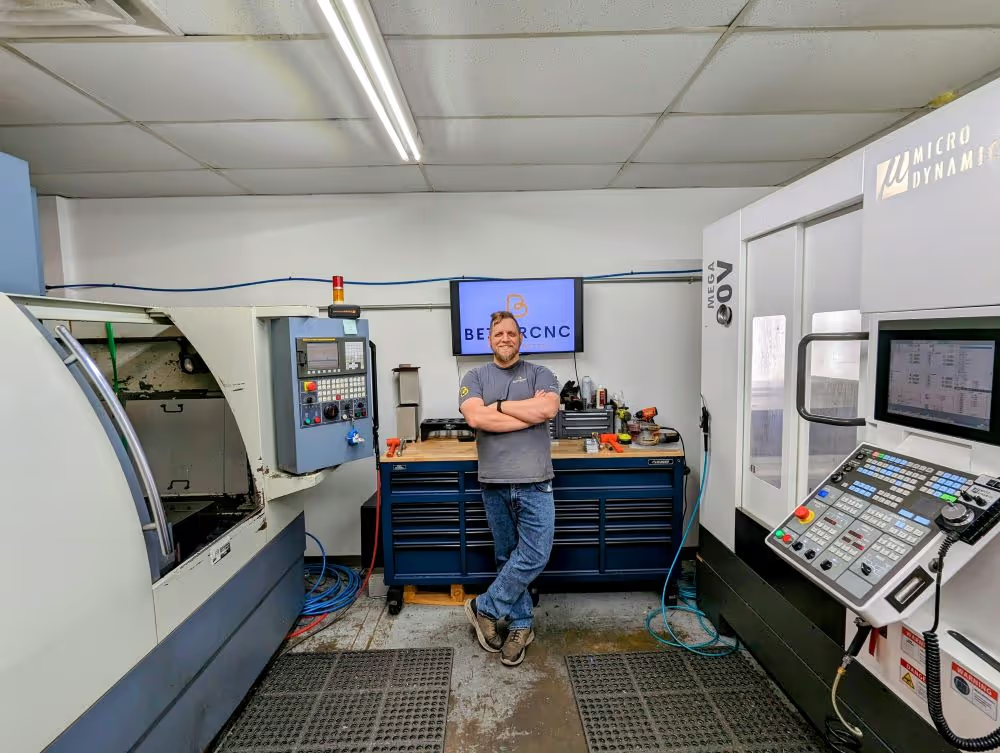


Jesse Casto in the current BetterCNC workspace - a 1100 sq.ft. warehouse. Image courtesy of Jesse Casto.
Jesse Casto is on a mission to machine better. After a lifetime spent in machine shops, Jesse knows the industry inside and out. He’s passionate about challenging the traditional attitude of some shops and constantly improving his operations.
“BetterCNC” is both his philosophy and the name of his Texas-based job shop established in 2021. Serving a range of industries including aerospace, defence and robotics, BetterCNC prides itself on offering big shop quality with small shop attention.
We sat down with Jesse to talk about robotics, job shop social media and how he owes his career to “reverse nepotism”.
Usually, I start my interviews by asking why people were drawn to the industry - but I saw that you grew up in your dad’s machine shop. Was that how you got into the industry
My dad is a mechanical engineer. He was working at a company called Texas Instruments and he started doing design projects on the side. Eventually, his side projects overwhelmed all the local machine shops so he bought a machine and grew his company from there.
He started all that when I was about 6 years old, I actually started learning AutoCAD and got my first clock-in number when I was about 10 years old. At that point CAM software was still earlier on so I would basically convert physical paper drawings into geometry you could program off of.
At 10?
Yep, around 10 or 11. I remember sitting in the evening, I would be on AutoCAD while my dad was working away. He also sent me to task doing assemblies or things like that or basic load and go stuff on lathes when I was a little bit older.I started formally working at 18 as a shipping clerk and literally worked my way from back to front. I always tell people that whatever nepotism is, he did the opposite, which I’m grateful for, it worked out well for me!I started out in [my dad’s] shop but then I hopped around a few other companies in various positions from quality, to production planning to quoting and shop management. Then, he sold his company about ten years ago and I kicked mine off in my garage about 3 years ago.
You said that you wanted to revolutionize the way things are done in the industry, what do you think needs to be done differently and how are you making those changes?
A big part of BetterCNC and why I called it “Better”, and why our tagline is “Build It Better” is because I don’t believe in “best”. There’s no such thing as “best”, there’s always a better way.
Machine shops, particularly job shops, tend to be very “old school” in their mindset. “We do it this way because it’s the way that we’ve always done it,” or “Why change something that works?”
Everywhere I’ve worked I’m always looking at how we can do this better. How can we make it faster? How can we make it more efficient? For me, that’s kind of the fun part of it, I like seeing how hard can we push things.
I’m building the company around that concept, for example, with our ISO implementation. ISO talks about process improvement but if you look at quality manuals that most businesses put together, they tick the boxes so that they can hold the cert but they don’t really dive into the meaning of it.
So I want to set it up to where process improvement is integrated into the business.. I don’t want to just say, yeah we improve things as we go, I want it to be just what we do naturally.

Image courtesy of Better CNC
Are job shops/machine jobs sceptical about new technologies?
I don’t think that the industry is sceptical, I think that when a lot of those technologies come in they focus on the bigger companies, they focus on production lines. It’s been a little bit since I’ve done in-depth market research but I know the majority of manufacturing companies, at least in the US, are companies under 20 employees - they’re smaller businesses.
A lot of the technology is focused on the bigger companies where it’s easier to implement, robots are easier to implement into production automation things like that.
I’ve started talking with a couple of manufacturing organizations out here, at some point in the future we’re going to work together because they want to work out how to make a robot better fit in a job shop environment.
Would you say that that kind of technology isn’t accessible to job shops at the moment?
Right now it’s being built and directed towards bigger companies. I’ve got a friend, he’s got a small shop in Canada with two robot arms. He’s more technologically apt than I am, he can code and actually engineer things and he’s working on a hand project to see if he can make something a little more nimble, that’s easier to acclimate to the different variety of parts.
Are there robotics in the future of BetterCNC?
Oh yeah. I’ve looked into it, I’d like to get into it because, as I say, it’s a small shop, it’s just me. But say I get a 100-piece order, it will be a 6-hour run and if I had a robot where I could set it up at the end of my day and let it run through the night that would mean absolute leaps and bounds for me.But I need a robot that I can fit into my small space, I can set up within a pretty short amount of time and not have to get a unique gripper for every single job I do.
How has the industry changed over the time that you’ve been working in it?
The biggest change I’ve seen is just the actual machining approach, as in, the programming techniques like the methods used for cutting into parts. I think with YouTube and everything that’s come out and just social media at large, tooling companies have really been able to reach out a lot more and that’s led to a lot of changes in the techniques used to machine.
When I was first coming up, programming was very traditional. Machining high-efficiency wasn’t really that common yet and now that stuff is every day for most shops.
I’ve seen that BetterCNC is active on social media, especially Instagram. Why did you want to incorporate social media into the way that you ran your job shop?
I’ve had the idea of building my shop in my head for a long time but a part of doing things better and doing things different than normal is most shops don’t really invest that much in social media and things like that.
When I first started out, I was working out of a two-car garage that had two cars inside of it but I didn’t want my customers to know that. Before I even had a machine on the floor, I had all my social media pages and my website.
I didn’t want to present as just working out of my garage. I wanted to present as a larger company, it just seemed professional to me to have that presence. It’s so easy to have that stuff and nobody does it, just having that puts you a step ahead of everybody else who won’t take part in those things.
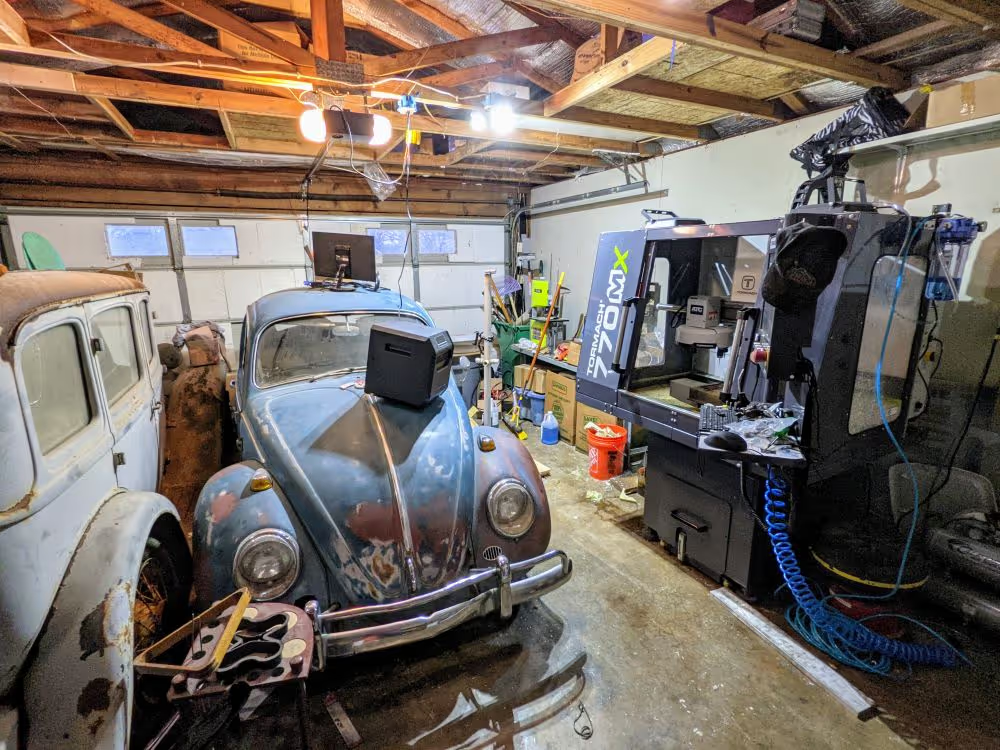
How BetterCNC looked like when it first started up out of Jesse Casto's garage. Image courtesy of Jesse Casto.
Were you a social media savvy person before?
For me it’s part of the brand, I wouldn’t call myself social media savvy. I’m getting better at it, the past couple of months I’ve been doing a lot more on YouTube. I’m forcing myself to do it, I want it to be part of the company.
Once we can get somebody doing social media on our payroll and our service, we’ll be doing that. Nobody else does it, I want to make sure that stays part of our brand.
What’s something that makes you excited about the future of machining?
On my own journey, I’m just looking forward to growing the company. I’ve got a vision of an empire so to speak. I’ve got other, larger concepts that I’m looking forward to getting to try and experiment and play with as I get bigger.
The plan for BetterCNC specifically, isn’t for BetterCNC to be a 200-employee 50-million-dollar company. I actually want to cap it off between 5 and 10 million a year with 30 to 40 employees and then the goal is to turn BetterCNC into the golden shop.
We’re going to have the perfect processes, the perfect flow, everything. And then I’m going to begin to acquire other fabrication technology businesses, a sheet metal shop, a fabrication shop, a finishing shop, take those processes and apply them there.
By keeping it in smaller business units, we can stay nimble. Big companies tend to get slow with bureaucracy and it makes things harder to flow quickly. But I want to stay nimble and by keeping smaller units, and coming up with that golden process, we’ll be able to do that.
Speaking of adding other processes to BetterCNC’s capabilities, would you consider incorporating additive manufacturing into your operations?
That’s definitely something I want to get into at some point, I think it’s got a specific place and a specific industry right now, it’s not really that large yet. I think that a lot of the designs out there are still a little more readily produced on traditional machinery, but I think that there is a place for complex parts.I have outsourced 3D metal printing before where we brought it back and did some finishing on stuff. That was more just a concept so we can get a feel for it, what’s it like to do this part of it but I think it will get a place eventually. I don’t think that it’s going to overtake traditional machining or anything like that - I think that it’s just going to be another process.
It’s just going to be another piece in the puzzle, another tool in the box.
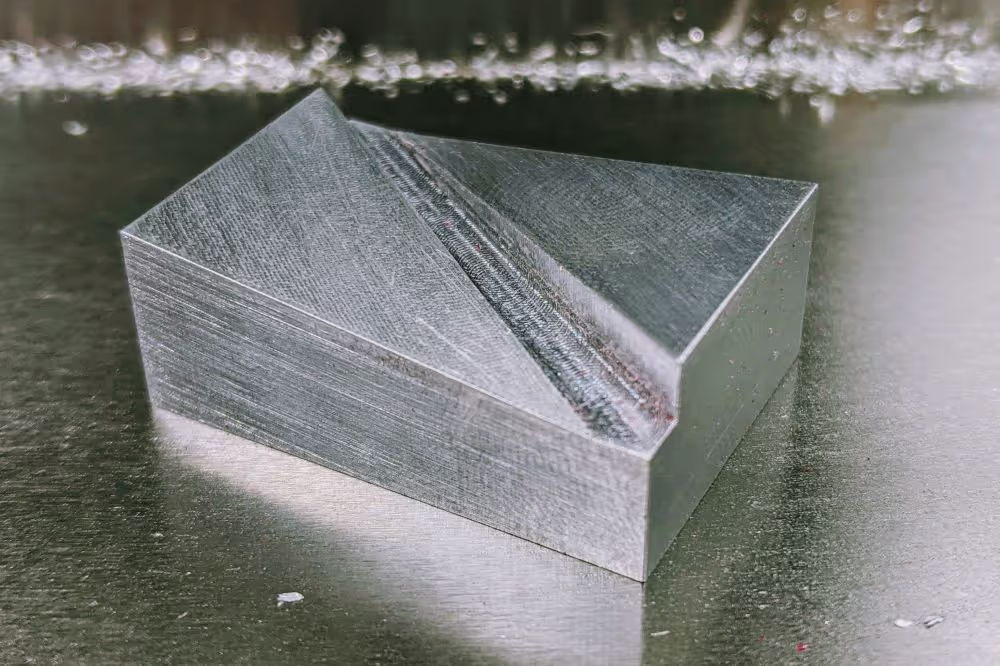
The first part Jesse made as BetterCNC. Image courtesy of BetterCNC.
Each process has its place.
Yeah, because if you get parts like this (Jesse holds up a machined part), just a block with a slot and a couple of holes and you need 20 of them, I don’t see additive manufacturing doing this faster than a mill could.
There will always be cases for one and there will always be cases for the other. Everyone was afraid that it was going to take everything out but it just doesn’t make sense for a lot of things.
How long would it take to make the part you just held up?
On my machine, this would be four to five minutes.
Do you have any 5-axis machines?
Not yet, right now I have 2 3-axis milling machines. My goal is to get a 5-axis by the end of the year.
The way I program and run machines, in other shops where I’ve programmed I scare the machinists. I don't “run it to break it and then back off” - I don’t like breaking tools - but if my machine can run fast I’m going to run it fast, if it can take heavy cuts, I’m going to take heavy cuts.
I’ve done some 5-axis in my career, but not a whole lot. I’m really excited to get that playground to see what else I can do, how far I can push it.
What challenges do you think the industry is going to face in the future?
One thing that people are always talking about is that there aren’t enough people coming into the industry.
I agree with that and a lot of the approach that I see around here is outreach programmes like the local colleges or high schools trying to do outreach. I think it’s a great way to get new people in but I’ve actually run a couple of polls, one on LinkedIn and one on the machining group I’m in, on how other people got into the business.
The vast majority, 50-60%, got in because they already knew someone else who was working in the trade. And so I think one of the challenges to get more people in is to help smaller businesses grow.
The best access point to get people in is smaller businesses like mine. The first people I call on when I need some help, when I need some extra muscle in the shop, is my personal network.It doesn’t even need to be someone who’s ever worked in a shop. If I’ve got a friend who I know is mechanically minded and I think that they’d be a great fit, I bring them in. Suddenly the industry has a new person in the trade.
I think efficiency within the shop will help a lot of that. Getting rid of that old-school mindset where we just need more bodies, we need to improve to where we don’t need that same requirement.
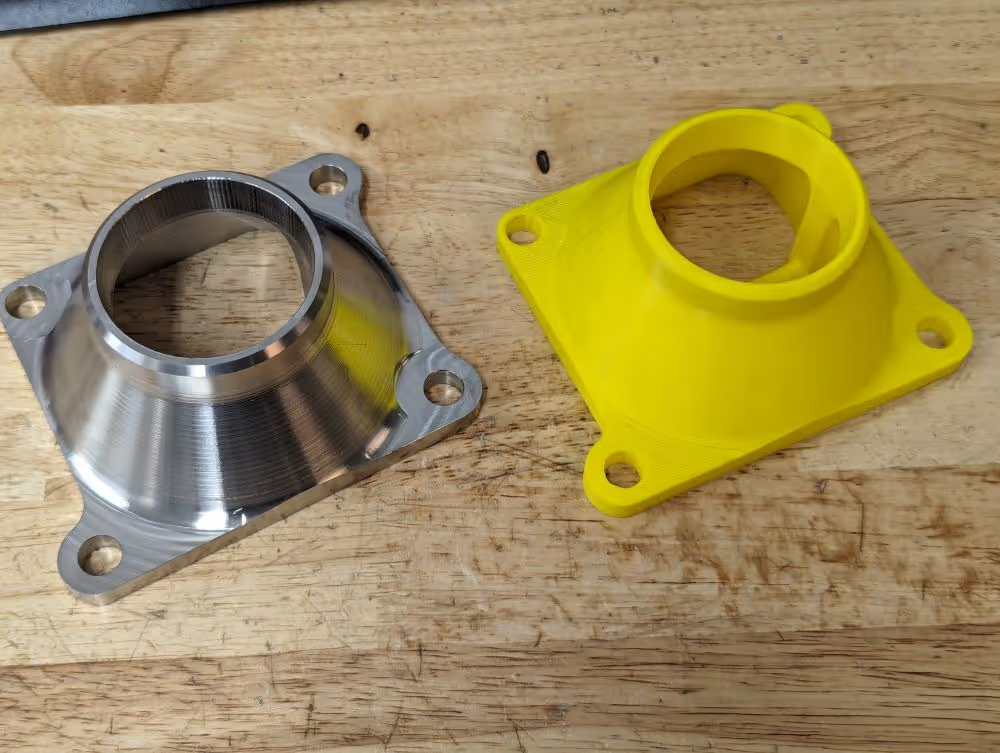
A part Jesse Casto designed, 3D printed to do a fit/function check then machined out of 316 SS. Image courtesy of Jesse Casto.
What would you say to a young person who was interested in becoming a machinist?
I would talk to them and ask them what specifically do they like about it. Do they like just the science end of it, do they like putting something together and seeing it work? I would emphasise that this is the side where you see that become reality.
You have an idea you can model it in CAD and all that but this is the piece of it where you actually see something come to fruition. I’ve done design work and to me, it’s the coolest thing when you design something but then get to actually have the finished part in your hand…That’s cool to see because you think, “This is my brainchild. I thought of this.”
Every once in a while I think about it and I just realise that yeah just working to the thousands of an inch. It’s pretty stinking cool!
Before I let you go - how would you talk up machining? What about it keeps you excited?
For me, the most exciting part is just that never-ending chase for better. Anytime I get repeat work or programme something, I’m always looking for new ways, I’m always experimenting and I get a high off of finding a new way of doing it.
I’ll look at a part I ran a month ago and I’m like, “Oh man, that’s stupid, I can do this a lot better.” And I’ll knock 30% more off the programme. To me that’s the excitement, it’s just that, there’s never a set way of doing it, there’s always a faster way, a better way and what keeps me going is that the hunt never ends.


.avif)
.svg)