Giant of CNC - A Look into Large Scale Machining
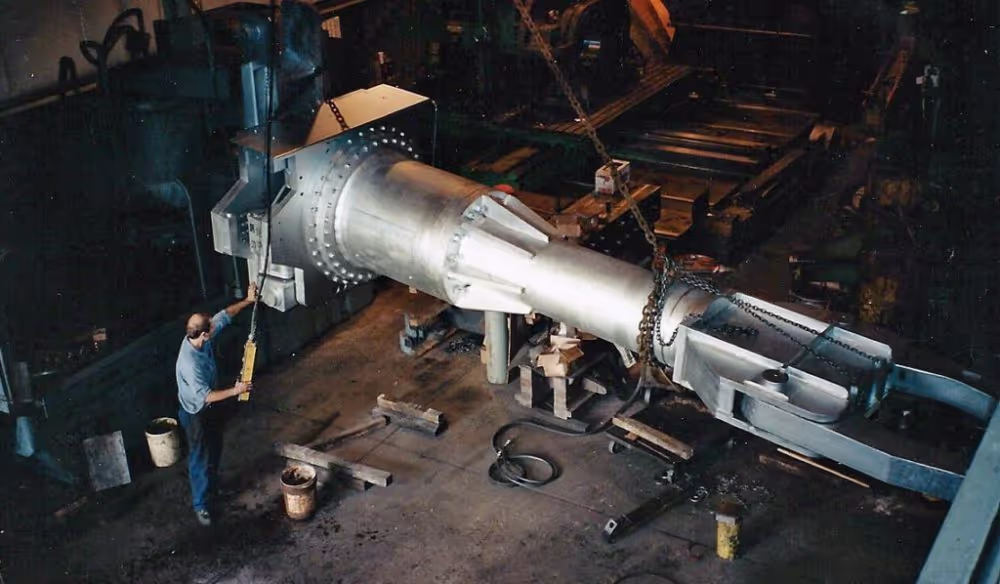


Image courtesy of Rapid DirectThe longest lathe in operation is 36 m - longer than a blue whale.In the world of manufacturing and heavy industry, bigger really is better—at least when it comes to large-scale machining. This process is all about creating and working with giant metal parts, often the size of small buildings, and making sure they’re as precise as the gears in a watch. These processes are impressive (and fascinating to watch on Titans of CNC) but what makes them so crucial to infrastructure and industry?Here we explore the world of supersized machining and the role that heavy duty CNC plays in manufacturing.
What is Large-Scale CNC Machining?
[spacer height="50px"][caption id="attachment_42077" align="alignnone" width="1000"]
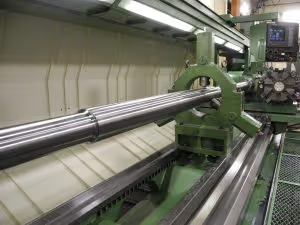
Image courtesy of AT Machining[/caption][spacer height="50px"]Imagine trying to create a part that’s longer than your car and heavier than a truck. That’s at the heart of large-scale machining. This process involves using specialized tools—like gigantic milling machines and CNC (Computer Numerical Control) systems—to shape and refine huge metal components. These parts are used in everything from aircraft engines to bridges and need to fit together perfectly, despite their massive size. It’s like putting together a jigsaw puzzle, except each piece weighs several tons and must be machined to precise measurements.Heavy industries, like mining, construction, and energy production, rely on enormous machines and structures. As AT Machining points out, when it comes to energy generation, “There is a need for large parts of energy generation to be sufficient. Only large CNC machining has the capability of manufacturing these parts. The application of Large CNC machining in the energy and power generation industry includes the production of wind turbine casing and power generation engines.”Similarly, in the mining industry, “Equipment used in the mining sector usually has a large size for optimal lifting capacity. They also have high strength, which allows them to withstand mining stress without breaking down. This makes large CNC machining ideal for use in this industry.”Without large-scale machining, we wouldn’t be able to build or maintain these colossal machines. This machining process is like the backbone of heavy industry, holding everything together—literally and figuratively.Nevertheless, machining at this scale requires a whole host of specialised requirements.
Requirements of Heavy-Duty CNC
[spacer height="50px"][caption id="attachment_42075" align="alignnone" width="1000"]
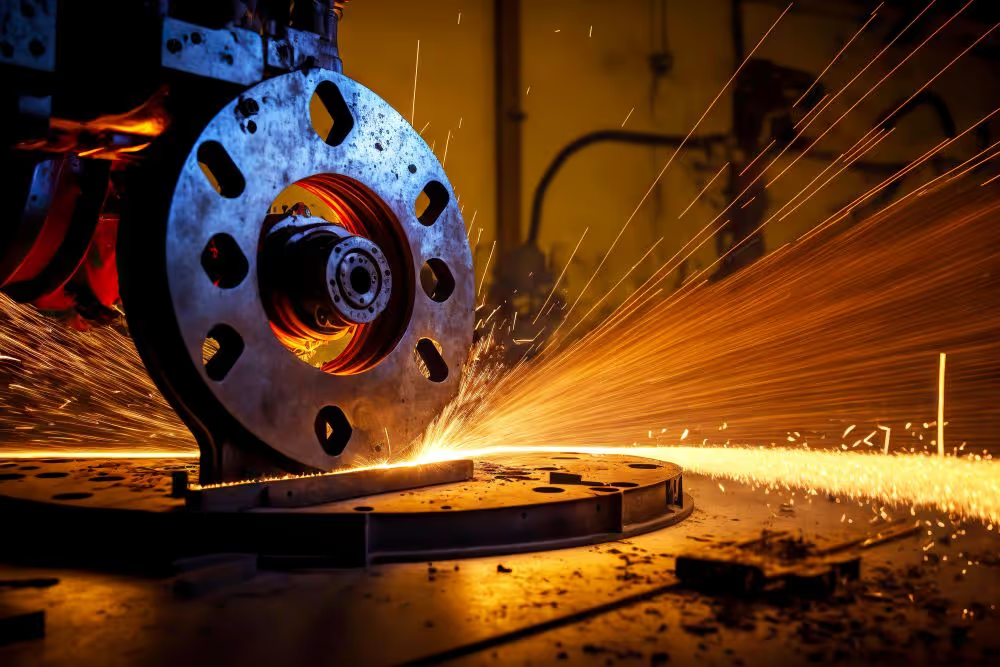
Image courtesy of HARtech[/caption][spacer height="50px"]As CNC Machine Buyers Guide, Gowico points out, “In CNC machining, size indeed matters. It affects not only the choice of machinery but also the design, efficiency, and cost of production.”As mechanical engineering specialists HARtech point out, large-scale machining requires many considerations. “Large part machining presents distinct challenges and demands the use of tools and processes that differ from those for smaller, lighter parts.”The company goes on to outline that “factors that typically negatively influence machining accuracy for smaller parts are magnified when dealing with larger parts.” As such, “special attention is required to monitor and correct these potential flaws.”Moreover, the size and weight of these parts can pose potential safety concerns as can the high temperatures generated by machining on this scale. According to HARtech, “Machining parts of any size generates heat, which can affect the quality and integrity of finished components. More heat is produced machining large parts, and preventative measures must be taken to avoid potential problems.”Navigating these issues is one thing but doing it without sacrificing quality and prolonging machining time is another major challenge.
The Companies Going Big
[spacer height="50px"][caption id="attachment_42073" align="alignnone" width="1000"]
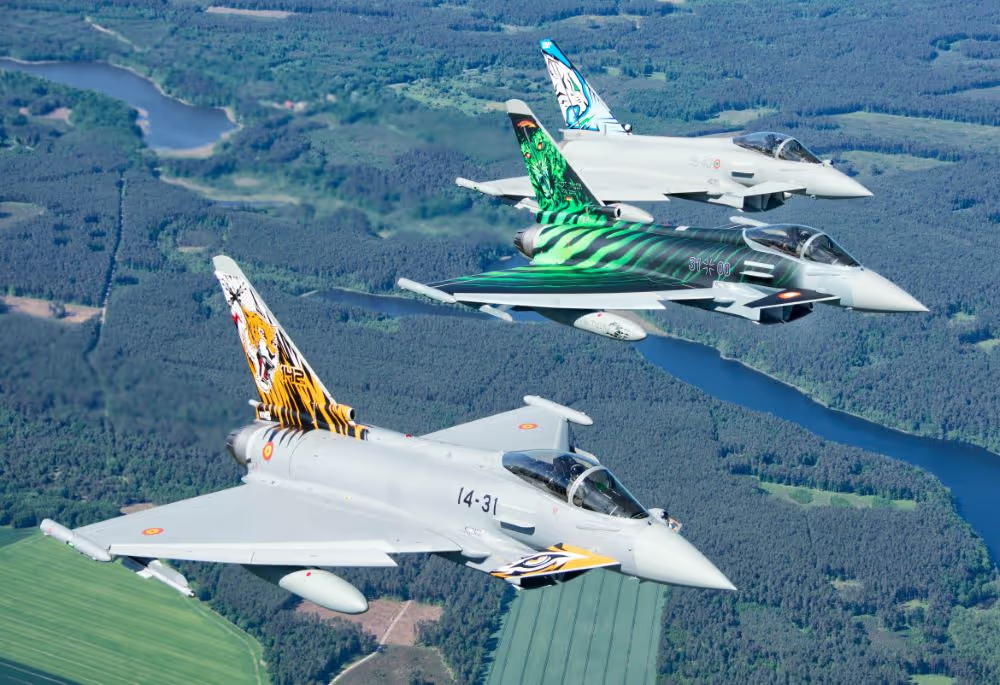
Image courtesy of Eurofighter[/caption][spacer height="50px"]While the sheer scale at which CNC machining can operate is impressive - it’s worth taking a look at how exactly this technology is used. To take one example, AMFG has also explored machining’s key role in the supply chain of F35 production. As ongoing tensions continue around the world, demand for jets like these has only grown. It is the same case for the production of Eurofighter Typhoon Cockpit Equipment. According to Eurofighter, the Typhoon is “a twin-engine, canard-delta wing, multirole fighter.”When R E Thompson was approached and asked to break down the design of a wide-body civil airliner, they had the idea of “breaking the casting design down into a mosaic of machined parts to achieve the mechanical specifications, replacing a machined casting with a construction from machined panels.”As a result, RET managed to achieve, “Production rates brought in-line to support the Typhoon programme over the forthcoming decade” and “Overall weight for the mechanics was reduced from the cast version.”Another great example of large-scale machining is for ship parts - a look through at the Titans of CNC channel it isn’t long until you hit upon a huge part. One is a “Ball Valve for a HUGE Super Yacht” which is worth $100k and over half a tonne of steel removed from the stocks.
The Future of Large-Scale Machining
[spacer height="50px"][caption id="attachment_42071" align="alignnone" width="1000"]

Image courtesy of Xebec[/caption][spacer height="50px"]Looking ahead, the importance of large-scale machining is only going to grow. As industries push for greater efficiency and innovation, the need for large, precise components will increase. AMFG has already outlined the challenges and opportunities facing job shops and predicted how job shops will operate in the future. These same technological advances and moves towards automation are as key for large-scale machine shops as they are for standard-size machining.Robotics and automation are two ways in which CNC processes will be updated argue deburring specialists, Xebec. When it comes to robots, “[they] can do the heavy lifting when you need to move a part from one phase to another. They can also be integrated as tool and fixture changers for the CNC machine. In some cases, they can even act as alternatives to CNC machining altogether, performing the necessary work in robotic deburring cells.”This could be a game changer, especially by creating a safer environment for the people working with these large and heavy parts.We can also expect to see advancements like artificial intelligence and new materials making the process even more sophisticated. And with the ongoing drive towards renewable energy, large-scale machining will be essential for building the massive infrastructure required to support these initiatives.
Final Thoughts
[spacer height="50px"][caption id="attachment_42069" align="alignnone" width="1000"]
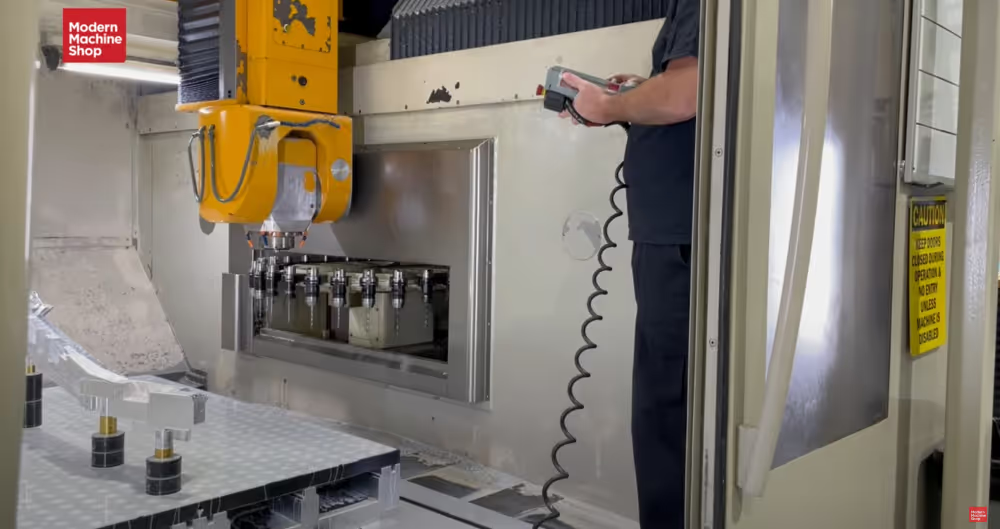
Image courtesy of Modern Machine Shop[/caption][spacer height="50px"]In conclusion, large-scale CNC machining is like the unsung hero of modern industry, quietly working behind the scenes to create the massive, precise parts that keep everything running—from wind turbines to fighter jets. As technology keeps advancing, so will the amazing capabilities of these giant machines. With robots, AI, and new materials joining the mix, large-scale machining is set to become even more impressive, making the big stuff we rely on every day even better. It’s clear that in the world of heavy industry, bigger is better.


.avif)
.svg)