Is Additive Manufacturing the Future of Orthotics and Prosthetics Production?
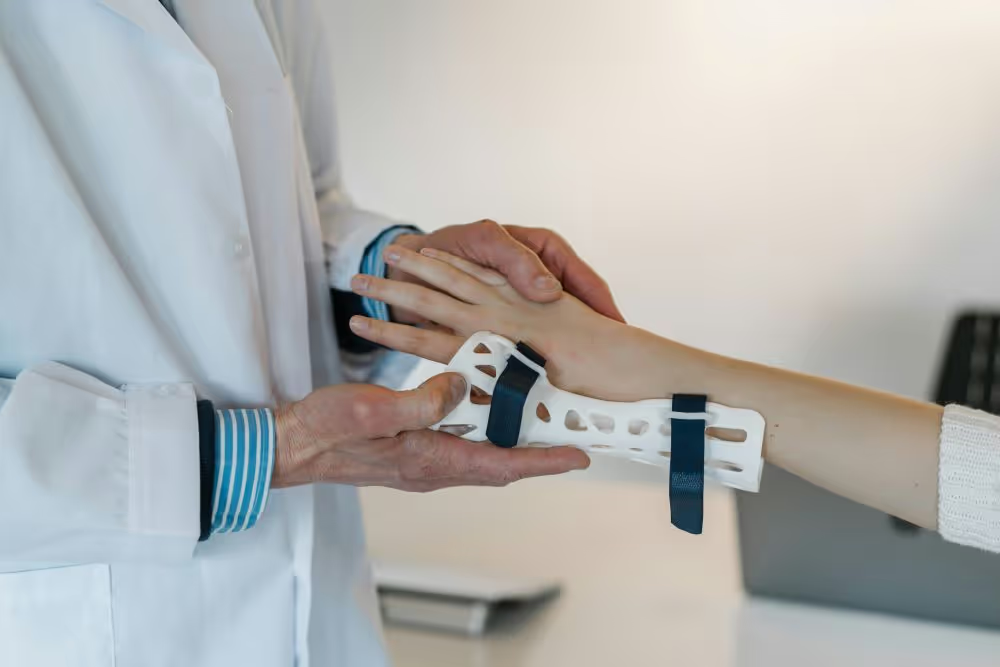


1 in 10 people will require either an orthotics or a prosthetic device at some point in their lives. This huge demand for orthotics and prosthetics (O&P) devices is reflected in the huge size of the market which was valued at $6.76 billion in 2023. Beyond the huge financial potential of the market, O&P devices can be life-changing for patients.From simple pre-fabricated shoe inserts to custom-made prostheses, O&P devices support millions to avoid pain or injury or live with lifelong limb loss. Correct O&P support can even reduce the need for surgical intervention or social care.With patient outcomes at stake, clinicians are under pressure to meet demand, and provide these devices as quickly as possible without sacrificing quality and meeting the specialisation required for each patient.How can additive manufacturing support clinicians rise to this challenge?
Built with you in mind
[spacer height="50px"][caption id="attachment_40896" align="alignnone" width="1000"]

Image courtesy of cottonbro studio via Pexels[/caption][spacer height="50px"]When it comes to O&P devices, it shouldn’t come as a surprise that tailored devices are much more effective than over-the-counter solutions. As The Medical puts it, “you'll only get a perfect fit and optimal pain relief with a pair of prescription orthotics.”One of the primary advantages of additive manufacturing in orthotics and prosthetics is its ability to create highly customized devices tailored to the unique anatomical and functional needs of each patient. Traditional manufacturing methods often involve time-consuming and labour-intensive processes, which can result in less precise fits and lower levels of comfort for the user.It’s not difficult to see how traditional O&P production workflow needed an upgrade. As Techmed3D outlines, “using traditional fabrication, a cast mold is obtained by using plaster bandages around the body part and then a positive mold is constructed by pouring plaster into the negative cast.”However, this method is far from perfect. As well as being labour and time-intensive, as Techmed 3D goes on to point out, the patient is at the mercy of the clinician’s skills to get a decent product. Additive manufacturing updates this process with a digitized and more consistent approach. Clinicians can break the mould and use body scanning technology to create CAD files of the required devices and print them. Moreover, this data can be stored to print further orthoses or adjust the design as needed. Using additive manufacturing to produce O&P devices saves time across the board for the clinicians, manufacturers and, most importantly, the patients.
Innovative Design
[spacer height="50px"][caption id="attachment_40898" align="alignnone" width="1000"]
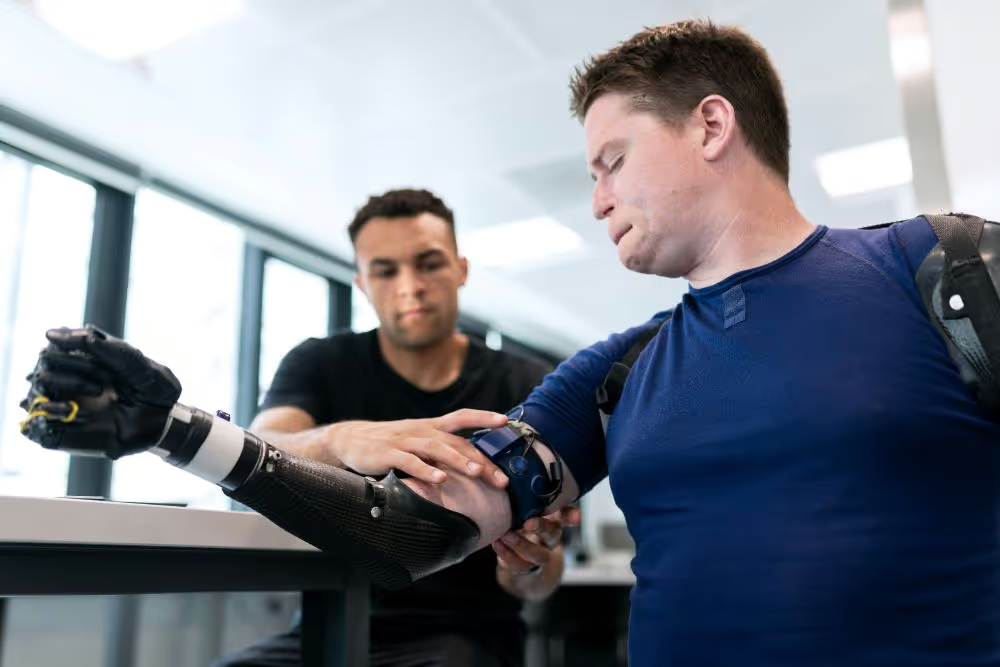
Image Courtesy of ThisIsEngineering on Unsplash[/caption][spacer height="50px"]The design freedom offered by additive manufacturing is another significant advantage. Complex geometries and intricate designs that are difficult or impossible to achieve with traditional manufacturing methods can be easily produced using 3D printing. In fact, this is one of the key features of HP’s multijet fusion technology. As Medical Plastics News points out, “MJF is known for its compatibility to the healthcare and medical sectors due to its ability to quickly produce biocompatible custom one-off parts. In particular, custom-made orthotics and prosthetics have seen a significant rise over recent years, as MJF can create detailed lattices that can be matched to the user's body shape and skin tone.”This capability enables the creation of orthotic and prosthetic devices that are not only more aesthetically pleasing but also more functional. For instance, the incorporation of lattice structures can provide the necessary strength while reducing weight, and customized surface textures can enhance grip and comfort.Additive manufacturing opens up new possibilities for material use in orthotics and prosthetics. Unlike traditional methods that rely on a limited range of materials, 3D printing can utilize a diverse array of materials, including thermoplastics, metals, and composites. This flexibility allows for the creation of devices that are lightweight yet durable, offering improved functionality and comfort. For example, prosthetic limbs can be printed using lightweight but strong materials, reducing the overall weight of the prosthesis and enhancing the user’s mobility.
Speed and Efficiency
[spacer height="50px"][caption id="attachment_40900" align="alignnone" width="1000"]
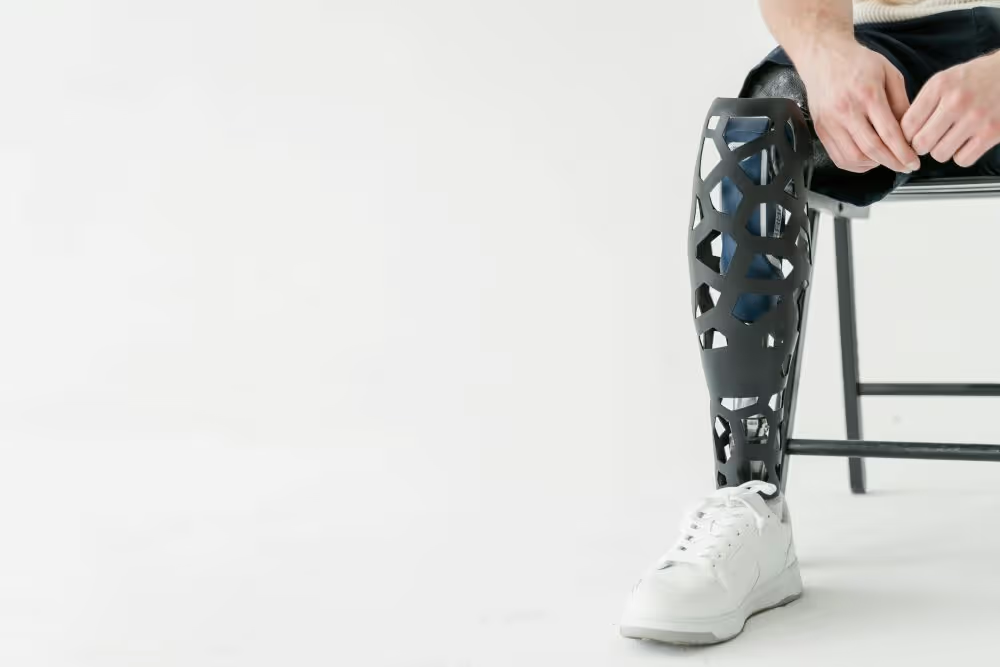
Image courtesy of Mart Production via Unsplash[/caption][spacer height="50px"]The traditional fabrication of orthotics and prosthetics can take several weeks, involving multiple fittings and adjustments. Getting patients the care they need means improving their quality of life by reducing pain, keeping people mobile and independent and preventing more invasive and expensive interventions like surgery, amputation or the need for social care.With these benefits on the line, it’s vital to limit the delays in getting people the support that they need.Additive manufacturing significantly reduces this timeline. Once a digital model is prepared, a 3D printer can produce the device in a matter of hours or days. This accelerated production process not only benefits patients by providing quicker access to necessary medical devices but also enhances the efficiency of healthcare providers and reduces overall costs.One study found that using additive manufacturing to produce orthoses can reduce production time by up to 53%. Using additive manufacturing, manufacturers and clinicians can increase capacity and get their patients the care they need more efficiently.Ralph Hermanns, Founder and Managing Director of Podotherapie Hermanns found massive success with using additive manufacturing to produce insoles. Hermanns was so impressed with the efficiency and speed of 3D printing his orthotics that he called for an industry-wide adoption of the technology.“I do not understand why podiatrists do not use 3D printing as the standard method of producing insoles. Everyone should. 3D printing has cachet, is cost-efficient, saves on manual labor, is faster, production is cleaner and safer, and uses less material. [..]I really don’t get it; why doesn’t everyone do this?”
Why doesn’t everyone do this?
[spacer height="50px"][caption id="attachment_40902" align="alignnone" width="1000"]
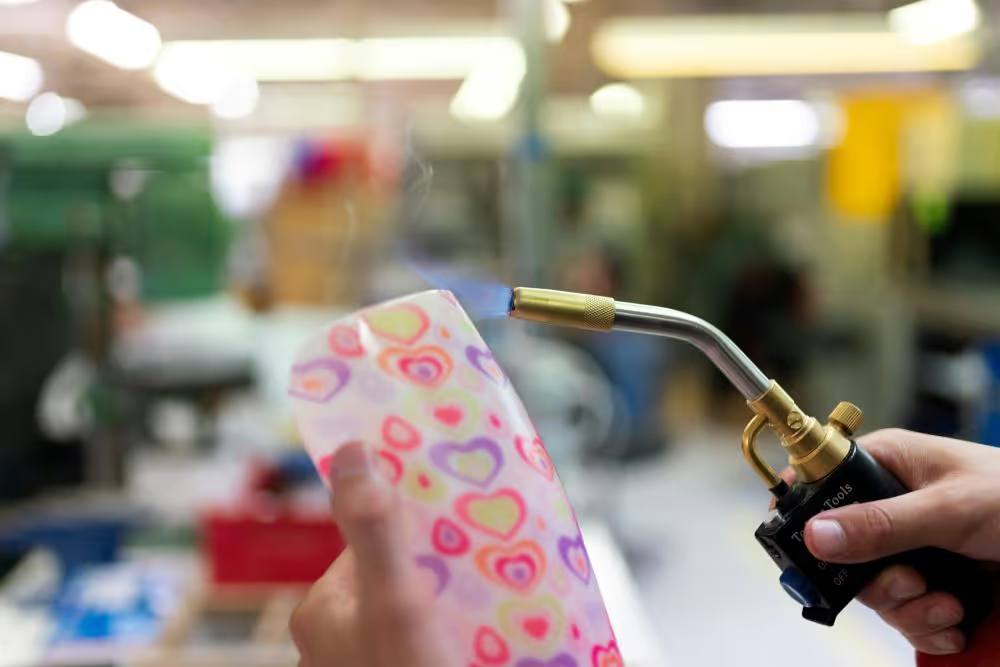
Image courtesy of ThisIsEngineering on Pexels[/caption][spacer height="50px"]Despite the clear benefits of incorporating additive manufacturing into the production of O&P devices, the industry can still be slow on the uptake.In a roundtable interview for Podiatry Magazine, industry experts explain that one of the major barriers to increased adoption of AM is the initial cost of the equipment. As the article outlines, “while certain desktop 3D printers are available for well under $10,000, Dr. McGuire says the mass production of orthoses would require multiple printers or larger printers, which can cost over $100,000. He notes this is not to mention the cost of the scanning hardware and computer-aided design (CAD) software required to create the 3D printable model.”While this would be a significant investment in itself, as Dr. McGuire points out, many orthotics labs have already invested in CNC Milling equipment for their orthotics and prosthetics equipment. CNC Milling can also produce equipment much more quickly than additive manufacturing. Despite these downsides, Dr Langer is confident about the future adoption of additive manufacturing in orthotics.“I think we are approaching the tipping point where this technology will be more rapidly adopted in clinics and in retail,” says Dr. Langer.
Conclusion
[spacer height="50px"][caption id="attachment_40904" align="alignnone" width="1000"]
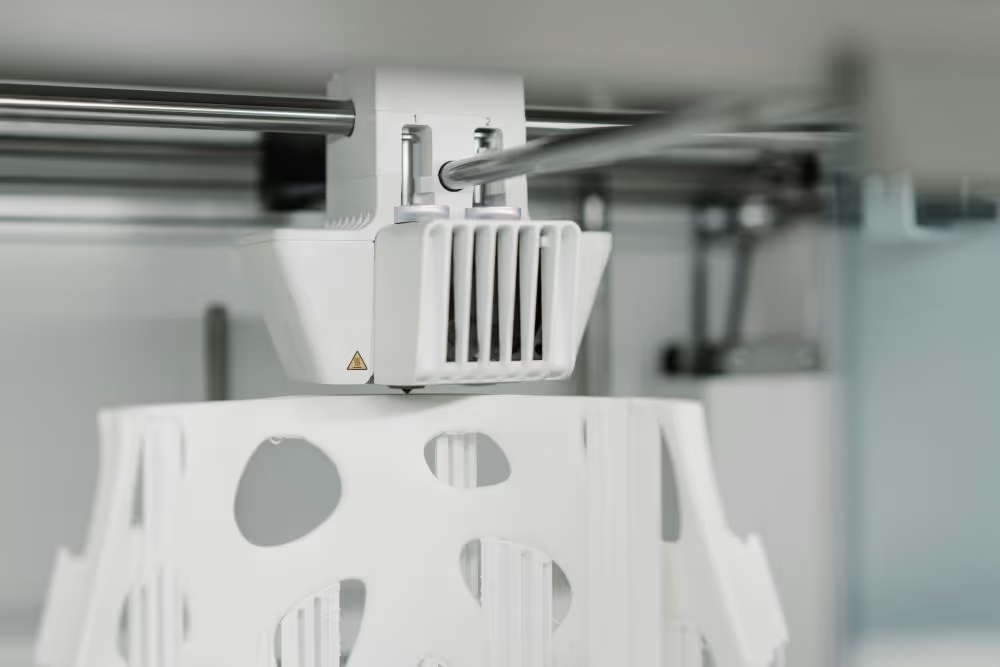
Image courtesy of Tom Claes on Unsplash[/caption][spacer height="50px"]It’s not too extreme a statement to say that a well-fitting orthotic or prosthetic device can change a life.It’s critical to limit delays for patients to receive these devices as well as maximizing the quality of the fit. Additive manufacturing is revolutionizing the field of orthotics and prosthetics, offering unprecedented levels of customization, speed, and efficiency. By enabling the creation of lightweight, durable, and highly functional devices, 3D printing is significantly improving the quality of life for individuals with mobility impairments. While challenges remain, the continued advancement of this technology holds great promise for the future, paving the way for more innovative and accessible healthcare solutions. As additive manufacturing continues to evolve, its impact on orthotics and prosthetics is set to expand, heralding a new era of personalized medicine and enhanced patient care.


.avif)
.svg)