The Legacy of Industry 4.0
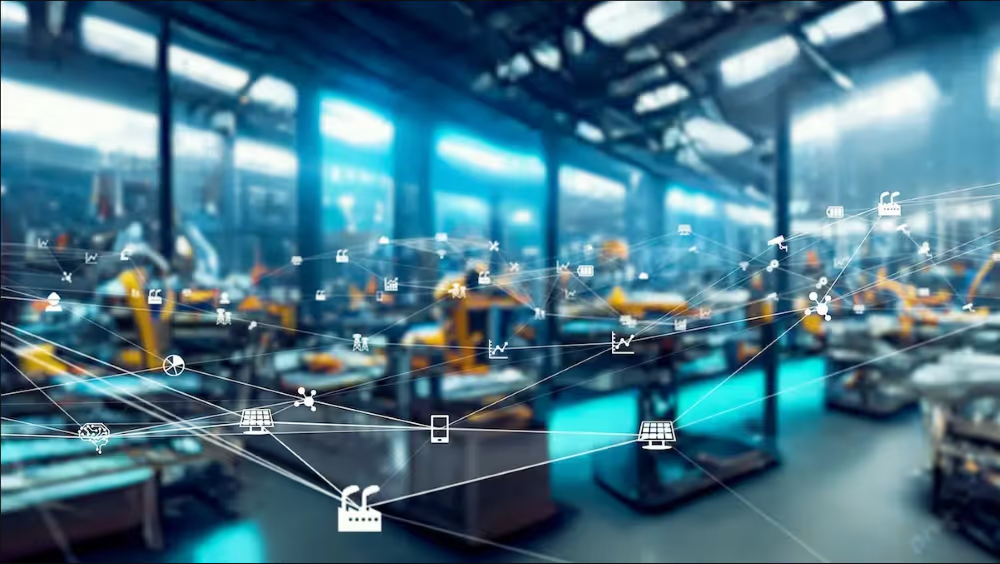


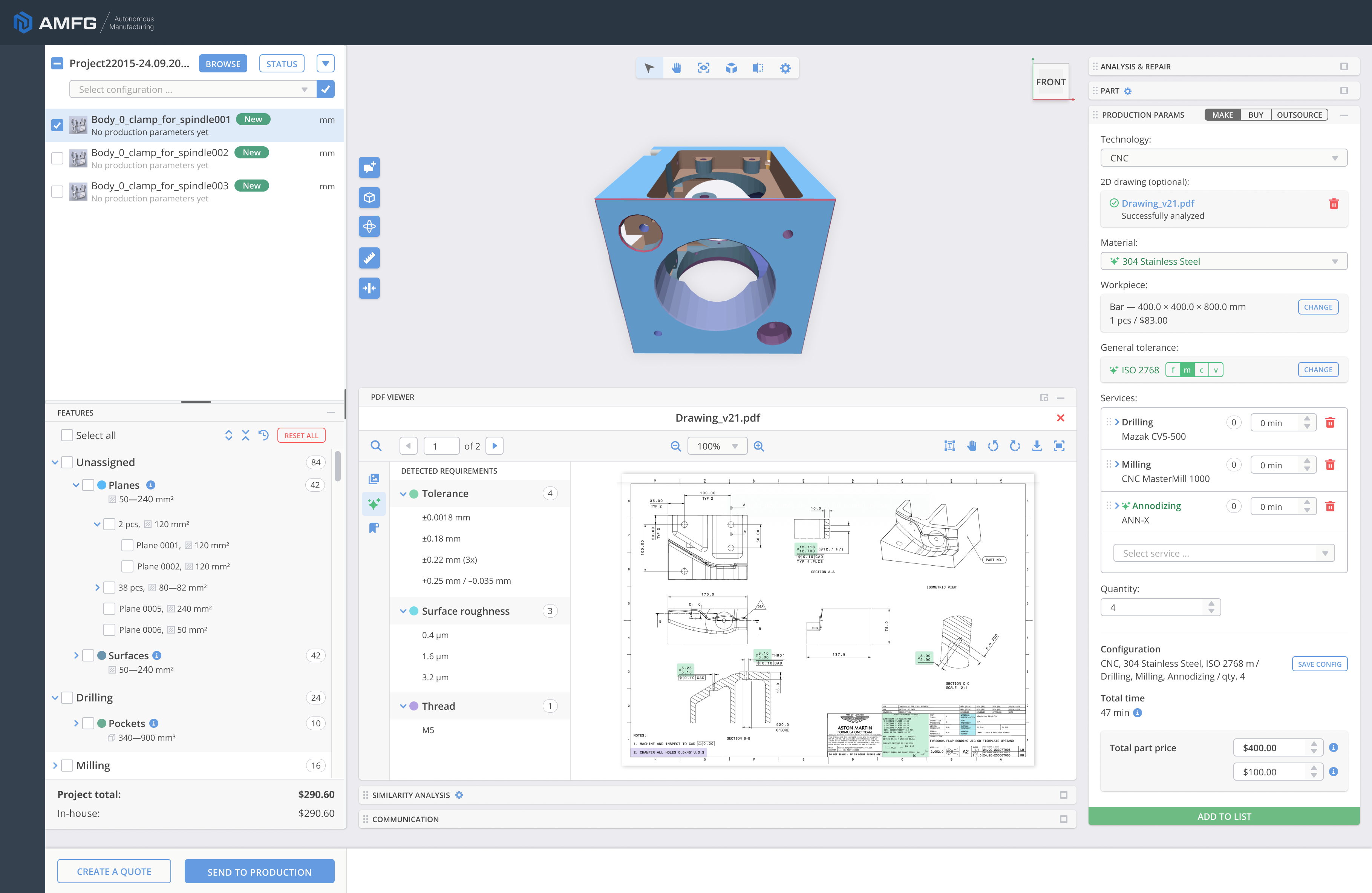
Image courtesy of BoomiData-driven, AI-powered, automated industry.This was the future of manufacturing as promised by Industry 4.0 (or The Fourth Industrial Revolution or 4IR). Industry 4.0 promised big things when buzz started around the movement over a decade ago in 2011. It promised to herald a new age for manufacturing, defined by the greater adoption of advanced technology on the factory floor. Smarter machines would provide manufacturers with greater insights into their production processes with software that could point out gaps in operations, predict machine malfunctions and support their journey towards automation. Productivity would skyrocket as a result of these slicker and more efficient manufacturing operations. Lights-out manufacturing and robotics would increase production while lightening the load for human workers.The opportunities were endless.Over the past decade, Industry 4.0 has evolved from a buzzword into an industry-wide movement with the Industry 4.0 technologies market reaching $114.01 billion in 2022. With Industry 5.0 around the corner, let’s explore Industry 4.0’s legacy in manufacturing. Industry 4.0 may have made big promises but did but did it keep them?
What is Industry 4.0?
[spacer height="50px"][caption id="attachment_41191" align="alignnone" width="1000"]

Image courtesy of Pexels[/caption][spacer height="50px"]Let’s explore what we’re talking about when we talk about Industry 4.0.Each of the previous Industrial Revolutions has been defined and characterized by a singular theme. The first three industrial revolutions were defined by coal, mass production and electronics respectively.Industry 4.0’s USP is the ongoing transformation in the manufacturing industry through the integration of advanced technologies. One example of this may be the use of artificial intelligence to analyze data and suggest improvements to processes. Similarly, the increased use of augmented reality (AR) and virtual reality (VR) could enhance maintenance, training, and design processes. Those with their finger on the pulse will be familiar with these through The Meta Quest Pro.Moreover, the Internet of Things (IoT) features heavily in discussions around Industry 4.0. Put simply, the IoT involves a network of devices that can talk to each other without the need for human intervention. Think wearable technologies, self-driving cars and even smart homes.Smart Factories encompass all of these technologies and more to create highly efficient, self-optimizing production environments.Ultimately, the goal of Industry 4.0 is to create a more flexible, efficient, and sustainable manufacturing environment where systems can autonomously exchange information, trigger actions, and control each other independently. Ideally, this ensures a better-performing service for customers and fewer administrative headaches for manufacturers. This is especially valuable for industries like manufacturing as it faces a labour shortage across the board.
The companies leading the charge
[spacer height="50px"][caption id="attachment_41199" align="alignnone" width="1000"]

Image courtesy of Freeport[/caption][spacer height="50px"]For those interested in the future of manufacturing technologies, Industry 4.0 presents itself as an exciting new frontier of production and manufacturing, however, the key question remains: where are we seeing these changes take place?In 2023, McKinsey released their digital transformation how-to-manual Rewired: The McKinsey guide to outcompeting in the age of digital and AI. Concurrently, the company released an accompanying series of case studies outlining the success stories of the Rewired approach. One such company was Freeport-McMoRan which “[unlocked] new mining production through AI transformation”.Freeport was looking to increase copper production and wanted to improve their operations with advanced analytics. However, the company lacked the technology skills and capabilities to design and deploy AI at scale. With the assistance of McKinsey, Freeport built a digital roadmap “using AI, advanced analytics, and agile work methods” to enhance productivity across the board.The impact of this initiative shows jaw-dropping results with a 200lb increase in annual copper production across mines and a $350-500M EBITDA improvement by scaling AI.Reading the other case studies, two major themes jump out. Firstly, digitisation has brought significant benefits for these companies from a 30-50% reduction in operational costs for Allianz Direct to 26% year-on-year growth for Banco de Crédito del Perú (BCP). Nevertheless, the second theme that jumps out is that most of the companies featured here operate in the financial sector, where are the manufacturers?
The Lighthouses
[spacer height="50px"][caption id="attachment_41193" align="alignnone" width="1000"]

Image courtesy of Agilent[/caption][spacer height="50px"]The manufacturers harnessing Industry 4.0 technologies are recognised as a part of the World Economic Forum’s Global Lighthouse Network (GLN). According to the WEF, the GLN is a “community of manufacturers [showing] leadership in using Fourth Industrial Revolution technologies to transform factories, value chains and business models, for compelling financial and operational returns.”One of these “lighthouse” companies is German laboratory equipment manufacturer Agilent Technologies. Agilent introduced radical measures onto their shopfloor including a “no-touch shopfloor scheduling system and a predictive cost modelling and digital product simulation”. They also introduced AI-powered solutions, such as a predictivity quality testing system and an AI computer vision toolkit and solutions library. The results were impressive leading to a 47% rise in labour productivity, a 36% increase in production output and a 49% decrease in defect rate.Similarly, logistics company DHL saw success when they established a “Fourth Industrial Revolution site” in Memphis, Tennessee. The site is “equipped with a control tower for centralized planning and execution and oversight to manage and control E2E operations.” Thanks to the innovations of the site including the the integrations of “robotics, analytics and a flexible staffing solution” the company was able to cut overtime by 50%, cut shipment cycle time by 57% and achieve a 28% (CAGR) since 2019. No matter what the business or industry, the success stories are consistent across the board. If Industry 4.0 technologies have such a powerful impact on a company, what’s stopping them from being more widely adopted?
Delays to Adoption
[spacer height="50px"][caption id="attachment_41195" align="alignnone" width="1000"]
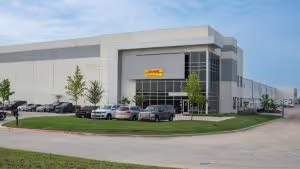
Image courtesy of DHL[/caption][spacer height="50px"]When discussing Industry 4.0’s impact in manufacturing, there’s a palpable sense of excitement for this new era. This excitement often goes hand in hand with warnings for companies lagging behind the curve.“To wrap it up, Industry 4.0 is here to stay and you'd better be ready to adapt or risk being swept aside by more tech-savvy competitors, who will be the first to build and control Industry 4.0 platforms,” warns software development company Globalluxsoft.Bernard Marr agrees pointing out, “I suspect that the early adopters will be rewarded for their courage jumping into this new technology, and those who avoid change risk becoming irrelevant and left behind.”With the writing so clearly on the wall you may wonder why anyone would be hesitant to implement their smart factory. However, as the GLN points out, “The global manufacturing community is lagging in its adoption of Fourth Industrial Revolution (4IR) technologies.”They go on to point out that “more than 70% of industrial companies are still either at the start of the journey or unable to go beyond the pilot stage.” However, the reasons behind the slow uptake of this technology is not a lack of willingness, but an inability to scale which leads companies to what the GLN terms “pilot purgatory”. “Pilot purgatory” refers to how companies deploy a technology experimentally “at reduced scale for an extended period due to the inability or lack of conviction to roll it out at production-system scale.“The reasons behind this stagnation are multifaceted but unsurprisingly, the cost of new technology is a significant factor. The WEF points out that companies may struggle to see the benefit of whatever new technology they’re considering and even if they do, costs related to implementation and scaling may overshadow the potential benefits. According to McKinsey & Company, the top three factors preventing the move from pilot to rollout are lack of resources/knowledge to scale, high cost of scaling and hard to justify business case without short-term impact.[spacer height="50px"]
So how can companies escape pilot purgatory?
[spacer height="50px"][caption id="attachment_41197" align="alignnone" width="1000"]

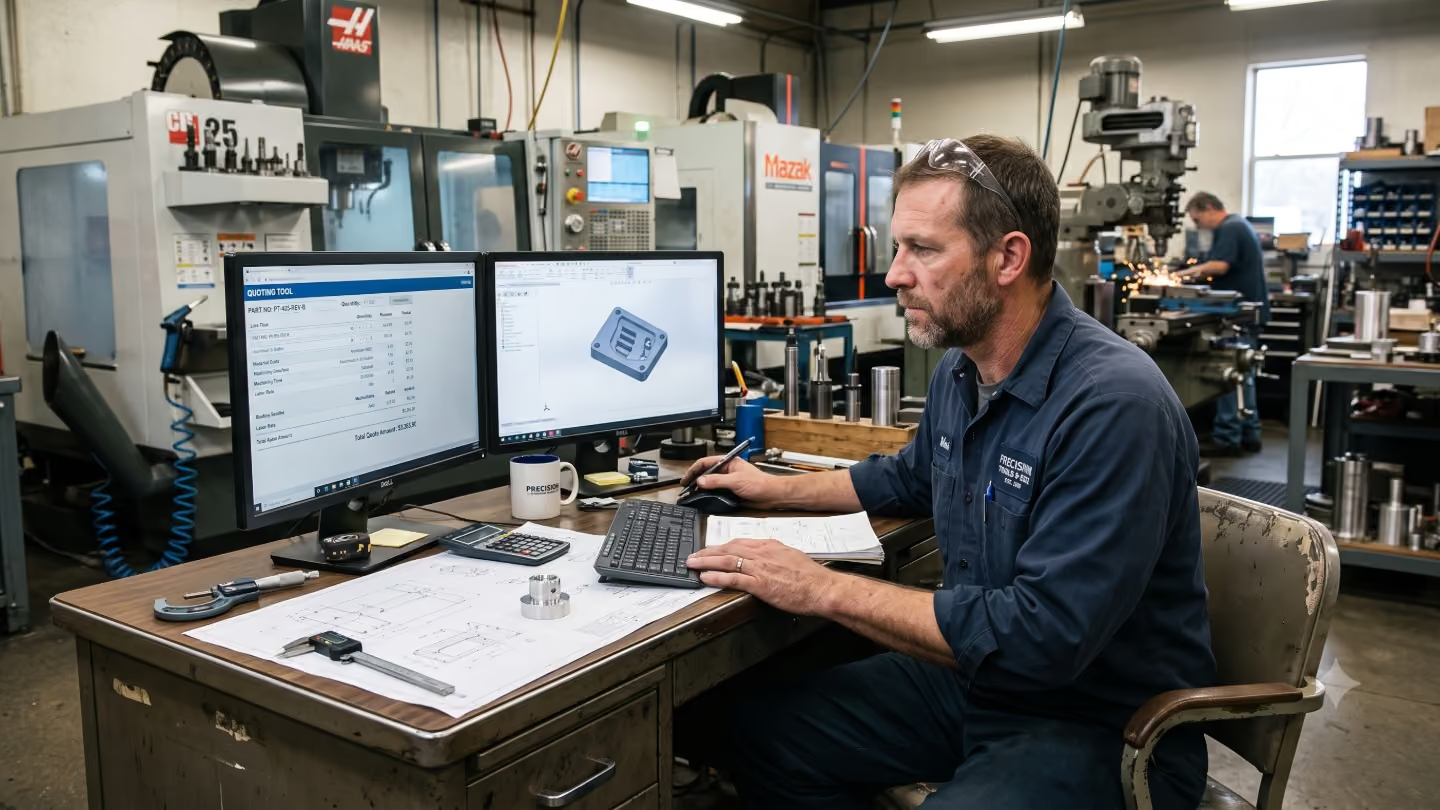
Image courtesy of Alexander Putter[/caption][spacer height="50px"]With SMEs accounting for most of the business population, their participation is crucial for seeing Industry 4.0 become a fully-fledged revolution. One of the myths surrounding Industry 4.0 is that only the larger companies can take advantage of it.However, this is not the case. As AMFG discussed in a previous article, for small and medium-sized enterprises (SMEs), where resources are typically limited, implementing a digital strategy doesn’t have to mean replacing existing systems with complex and expensive infrastructure.“New hardware systems, for example, can be retrofitted to older equipment to reduce expenditure. Sensors and other software platforms are also often very scalable and customisable options.”Moreover, SMEs can access support through partnerships or government assistance. Nevertheless, as Enterprise IT World points out, navigating these systems often requires time and understanding of the processes. “Finding the right partners, negotiating contracts, and coordinating tactics can all take time and resources. SMEs may face competition for these partnerships, particularly in industries where the adoption of Industry 4.0 is highly competitive.” They go on to point out that, “access to various types of assistance is frequently hampered by administrative paperwork and eligibility criteria. SMEs may find it challenging to manage these complexities while potentially missing out on crucial resources and incentives that could expedite their 4.0 journey.”While turning your job shop into a smart factory promises a wealth of opportunities, making it happen isn’t easy. A significant investment of time and money with a dedication to scalable implementation is crucial to make the necessary changes.
Industry 5.0
[spacer height="50px"][caption id="attachment_41203" align="alignnone" width="1000"]

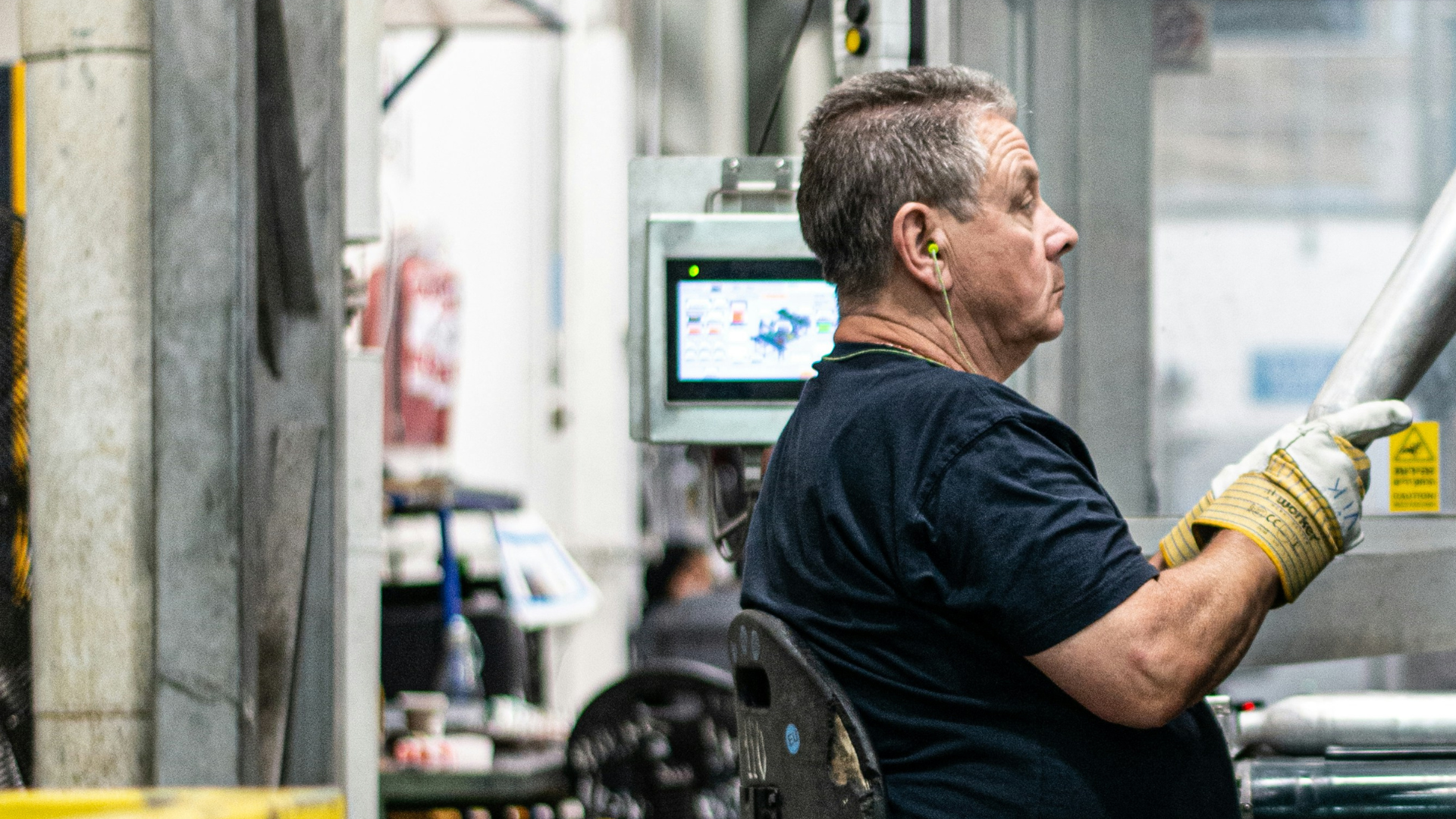
Image courtesy of Tomasz Frankowski on Unsplash[/caption][spacer height="50px"]Industrial revolutions seem to come around earlier every year.While some are still getting their heads around Industry 4.0, others are heralding the arrival of Industry 5.0. Industry 5.0 represents the next phase in the evolution of industrial production and primarily builds upon the foundations of Industry 4.0. The key characteristic of Industry 5.0 is the focus on the collaboration between humans and machines. Where Industry 4.0 prioritises machines and automation, Industry 5.0 places humans at the centre of the production process. It aims to enhance human creativity, skills, and craftsmanship through the use of advanced technologies.As TWI puts it, “Based upon personalisation and the use of collaborative robots, workers are free to deliver value-added tasks for customers. This latest iteration goes beyond manufacturing processes to include increased resilience, a human-centric approach, and a focus on sustainability.”While we’re still in the early days of Industry 5.0 we can expect Collaborative Robots (Cobots) “that are able to work safely alongside people creating new opportunities for businesses” or an “app that is able to track your lifestyle and inform the manufacture of a device to suit your individual needs”It may seem paradoxical, but developing this technology opens up new opportunities for people to be creative and innovative. By relieving humans of repetitive and mundane tasks, Industry 5.0 encourages innovation and creativity in the workforce. This allows workers to focus on tasks that require human intuition, problem-solving, and creative thinking.Working arm in (robotic) arm on the factory floor, Industry 5.0 promises to make the most of machines and human beings alike.
Final thoughts
[spacer height="50px"][caption id="attachment_41205" align="alignnone" width="1000"]
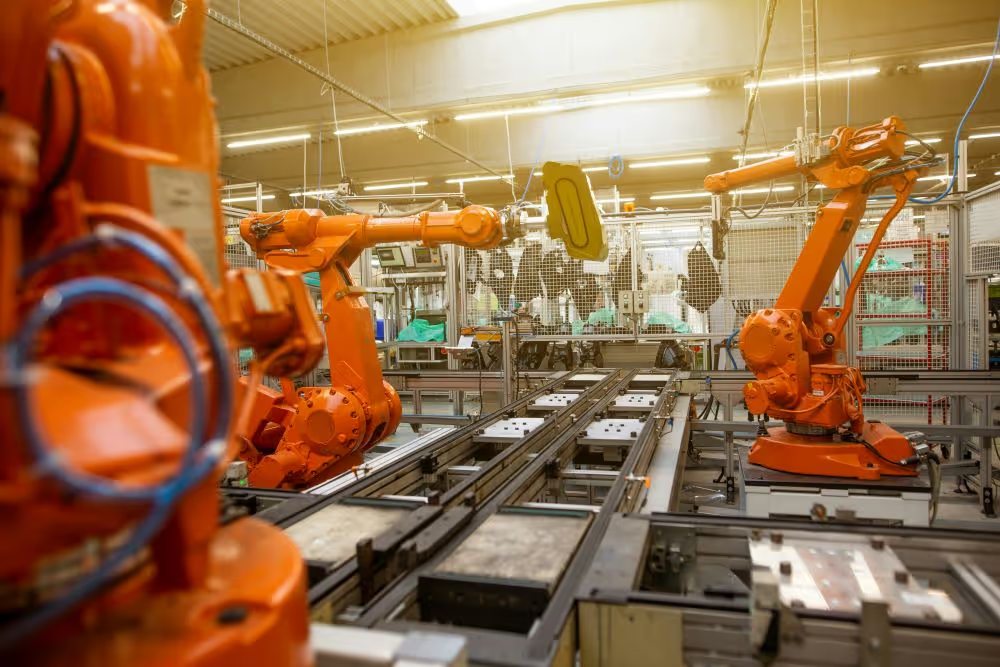
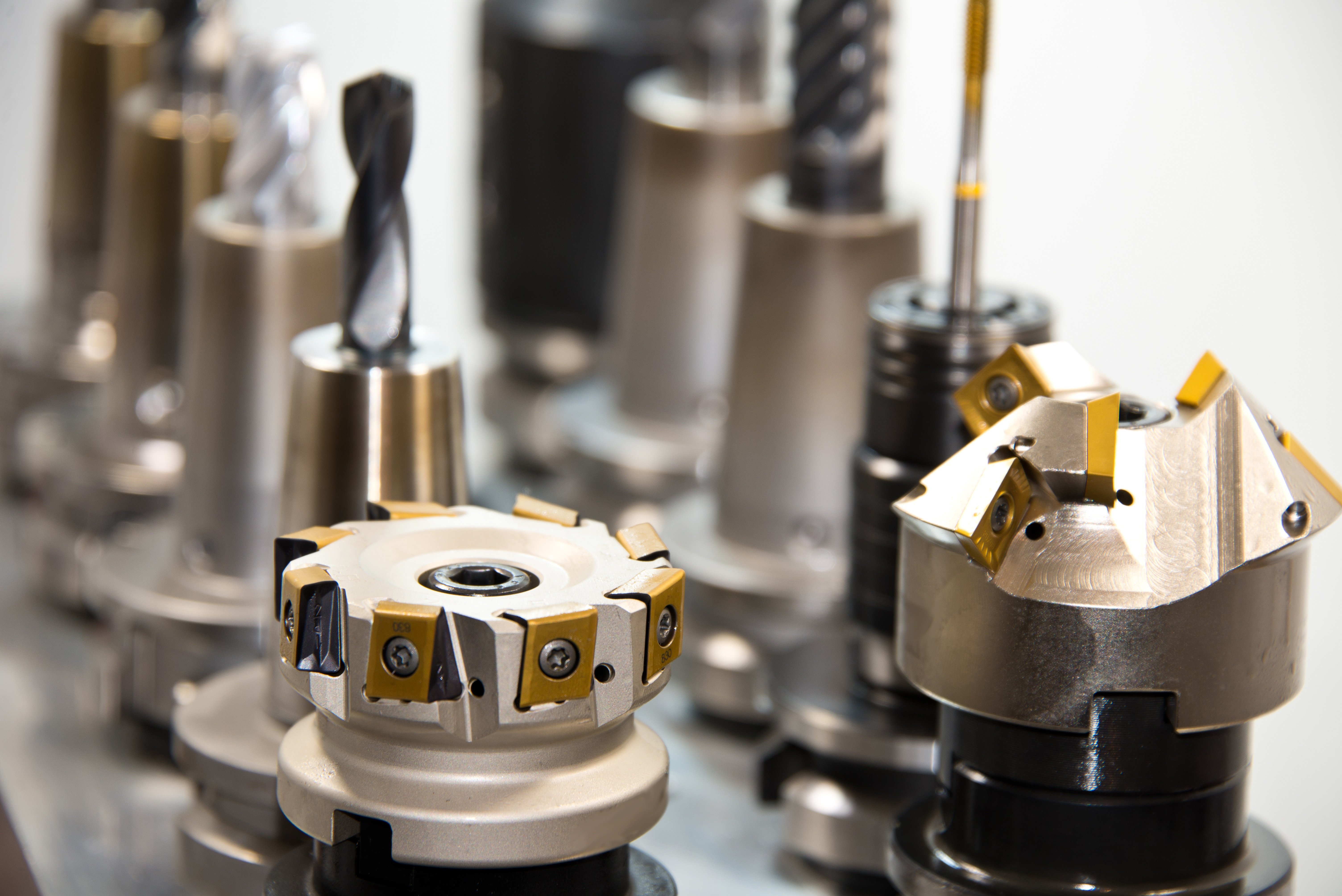
Image courtesy of Simon Kadula on Unsplash[/caption][spacer height="50px"]Industry 4.0 promised big things. In some cases, these promises are translating into change and innovation in the manufacturing space with companies like Freeport-McMoRan and Agilent Technologies showcasing the transformative power of AI and advanced analytics, resulting in remarkable gains in productivity and operational efficiency.These case studies show us that when implemented, Industry 4.0 technologies speak for themselves. The challenge remains guiding businesses through the hurdles of piloting, implementing and scaling these technologies to access the full benefits.As we look ahead to Industry 5.0, excitement builds around a more human-centric approach, emphasizing collaboration between humans and machines. This next phase promises to amplify human creativity and innovation, leveraging the strengths of both advanced technologies and human ingenuity. The introduction of collaborative robots (cobots) and personalized manufacturing processes is just the beginning of this new era.Industry 4.0 has undoubtedly delivered on many of its promises, and the journey is far from over. While challenges in scaling and adoption exist, they are not insurmountable. With the advent of Industry 5.0, the potential for further innovation and efficiency gains is immense. The future of manufacturing is bright, as technology enhances human capabilities and paves the way for a dynamic, innovative, and highly efficient industry.


.avif)
.svg)