The Staggering Scale of the F-35 Supply Chain


The F-35 Lightning II is not just a fighter jet.This vehicle is an industry in unto itself with manufacturing and demand taking place at a staggering scale. With decades of development, investments of trillions of dollars and dozens of US allies placing orders for hundreds of planes, the F35 supply chain is truly a global project.At the centre of this is US defence company Lockheed Martin, the company tasked with producing these planes. Lockheed Martin sits at the head of a vast international network of suppliers and manufacturers. From Boston to Britain to Bavaria, the F-35 programme partners with 1,650 high-tech suppliers.Here, we explore just how those moving parts add up to make the world’s most advanced fighter jet F-35.
Soaring demand
[spacer height="50px"][caption id="attachment_41358" align="alignnone" width="1000"]
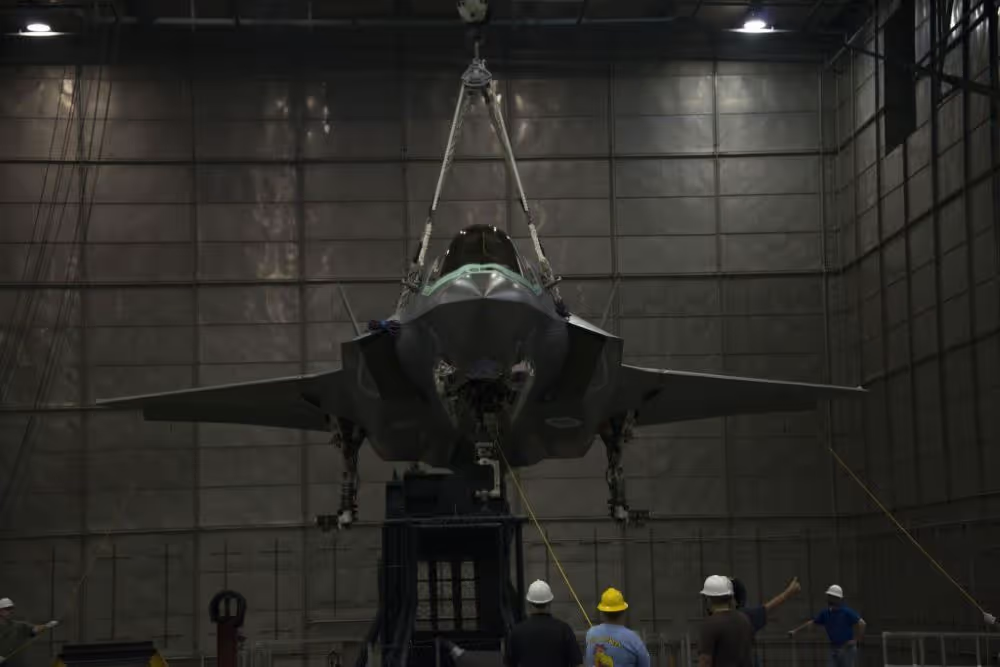
Lockheed Martin photo by Michael Jackson, Layne Laughter and Andy Wolfe 1[/caption]As a result of recent conflicts, countries around the world are reviewing their defence strategies and for some the F-35 is a key part of their defence programme, but why?According to Lockheed Martin, the F-35, “strengthens national security, enhances global partnerships and powers economic growth. As the most lethal, survivable and connected fighter jet in the world, the F-35 gives pilots the critical advantage against any adversary, enabling them to execute their mission and come home safe.”The F-35 comes with 3 different variants each with their specific use case. The A variant is used for – conventional takeoff and landing, the B for short takeoff/vertical landing and the C is the carrier variant designed for use by the Navy.The 5th generation of the F-35 comes complete with weapons flexibility, low observable stealth and a “helmet-mounted display to give pilots access to vast quantities of information - day or night.”As far as fighter jets go, the F-35 is in a league of its own.
The International Project
[spacer height="50px"][caption id="attachment_41356" align="alignnone" width="1000"]
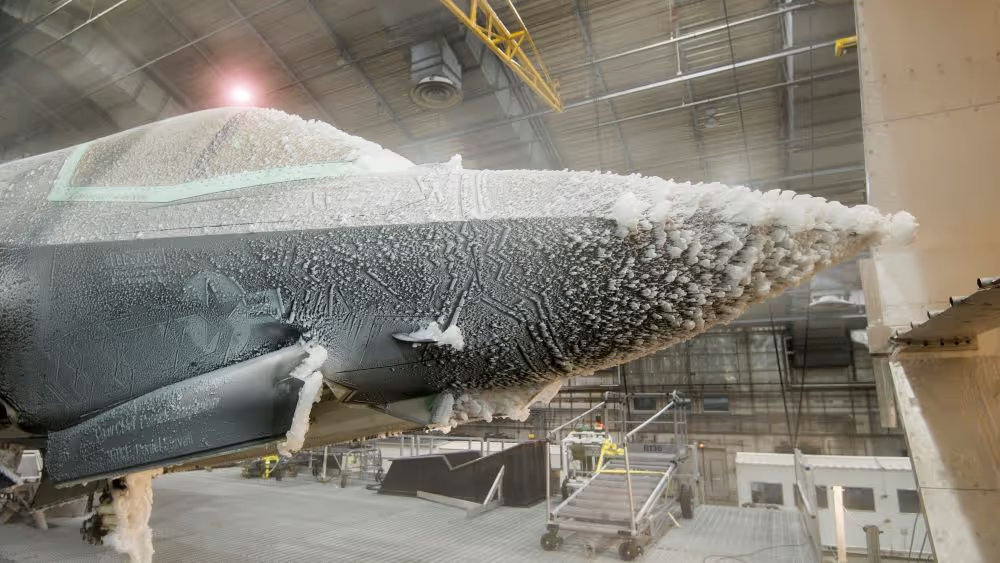
Lockheed Martin photo by Michael Jackson, Layne Laughter and Andy Wolfe 2[/caption][spacer height="50px"]Did you know that each F-35 is about 15% British?To work out why, we need to understand that each F-35 takes around 42,000 labour hours to make. To put that into perspective, 42,000 hours is almost 5 years. With hundreds of orders to fulfil, even making a handful of planes seems impossible at that rate. That’s why the planes are built concurrently with “overlapping [..] developmental steps to speed fielding of the fighter.”This is where Lockheed Martin’s subcontractors come in, each playing a part in getting these planes built and off the ground. British Aerospace (BAE) outlines the international effort that goes into manufacturing each plane.“Our US business is a major partner to prime contractor Lockheed Martin, producing the F-35’s electronic warfare system and vehicle management computer from locations in Nashua, New Hampshire and Endicott, New York. There is also a site in Rochester, UK that provides the Active Interceptor Systems, which the pilot uses to direct and manoeuvre the aircraft.“The vertical tail sections of the Conventional Take-Off and Landing (CTOL) variant of the aircraft are produced in Australia by a team led by Marand which includes components from our BAE Systems Australia manufacturing team.”
Machining’s role in building the planes
[spacer height="50px"][caption id="attachment_41352" align="alignnone" width="1000"]
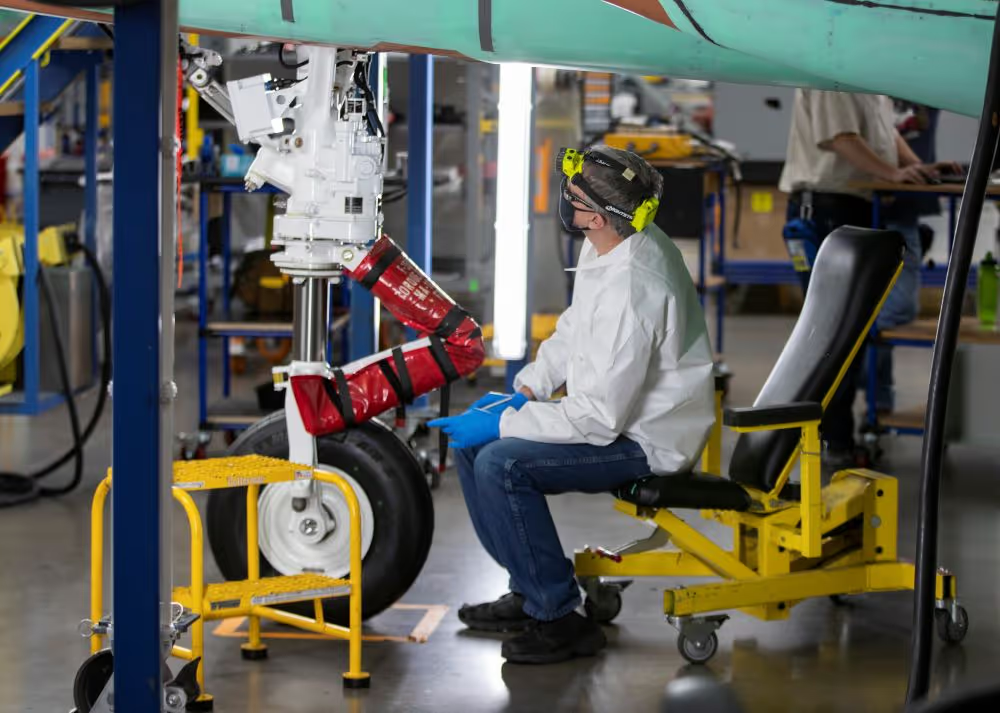
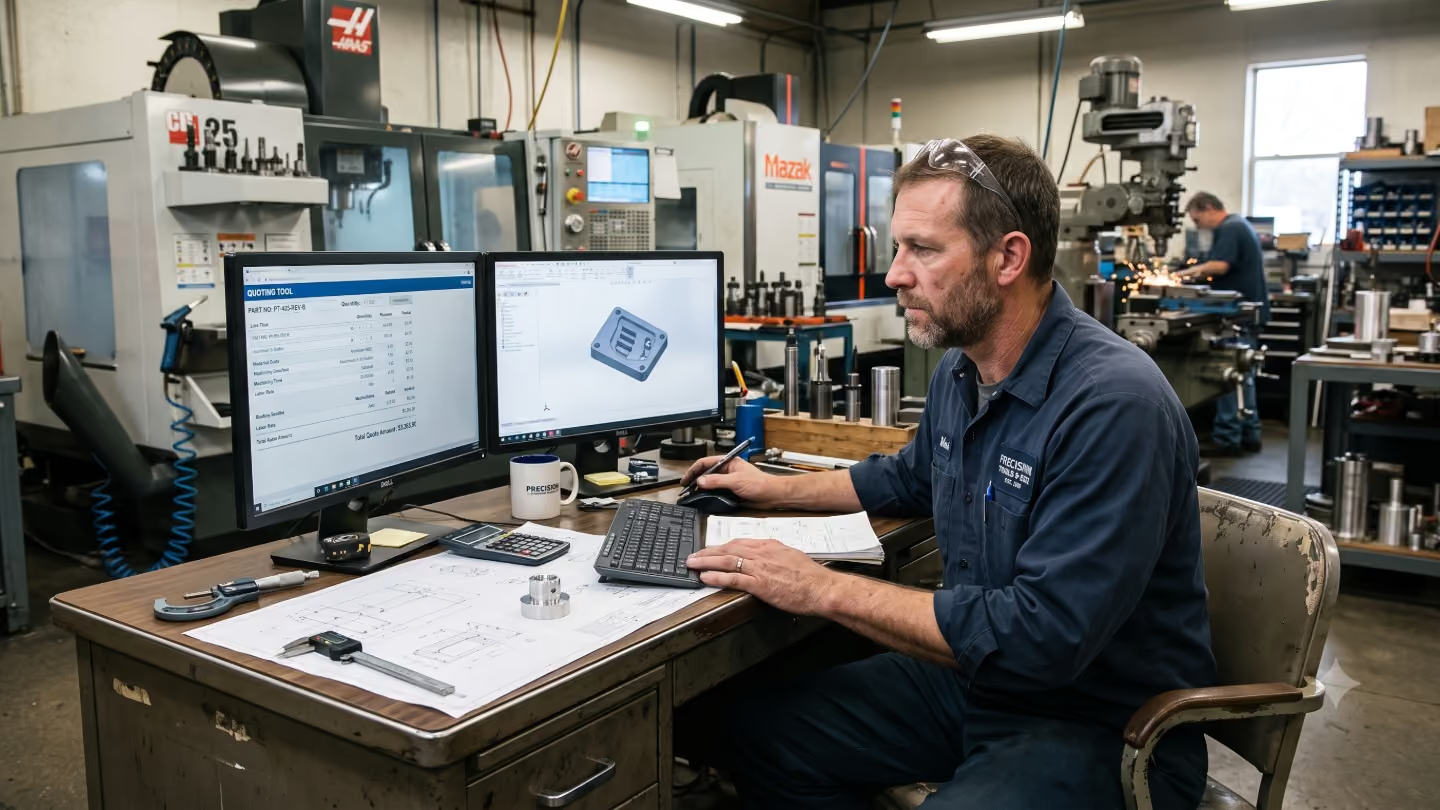
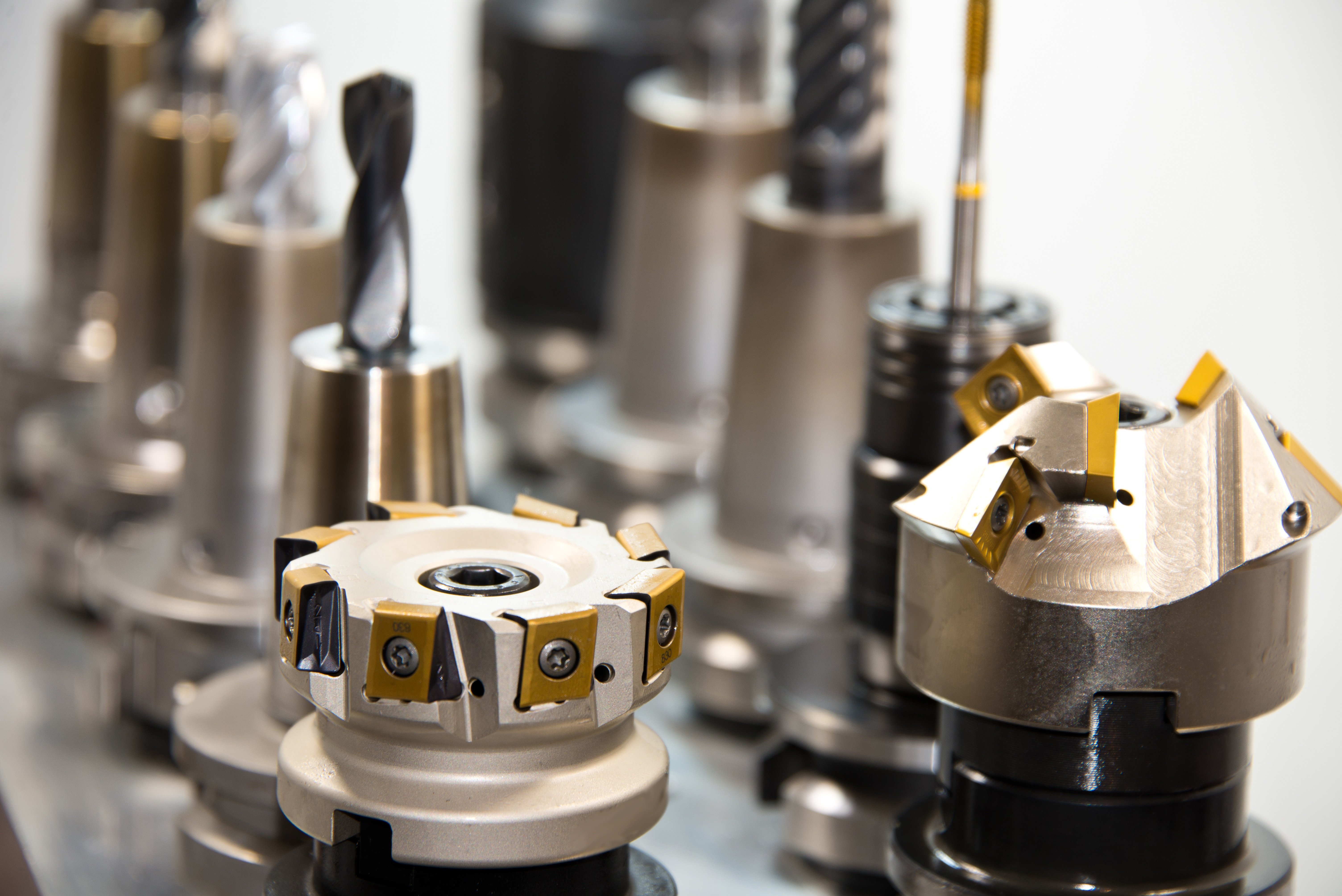
Lockheed Martin Aeronautics Corporation Fort Worth Mikaela Maschmeier[/caption][spacer height="50px"]AMFG has discussed how when it comes to highly-specialised use cases and environments, CNC machining is the natural option for the production of highly-specialised parts. This is true for producing parts for the cold vacuum of space, the rip-roaring racetracks of Formula 1 and certainly for the F-35 programme.Starrag, a manufacturer of high-precision machine tools plays a major role in facilitating machining for the F-35 programme. Starrag machines produce a wide range of Joint Strike Fighter (JSF) specialised components using steel, aluminium, and titanium. In fact, it is the company’s role in building machines tailored for machining titanium that makes it integral to the programme.According to Prakash Nanda, “titanium is most critical for aerostructures and engines, both military and civilian because it is strong yet lightweight and resistant to corrosion. It is less likely to cause galvanic corrosion when joined to carbon fiber-reinforced plastic (CFRP) parts like body and wing panels or control surfaces.”However, despite the benefits of the material, machining titanium can be “notoriously difficult” according to manufacturing machine supplier Kingsbury. From increased coolant required to specialised chip control, titanium can pose all kinds of challenges for machinists. Starrag’s response to this is the “Big Titanium Profiler (BTP) machining center with 16ft x 6.5ft (5,000mm x 2,000mm) pallet sizes to accommodate JSF stringers. Today, 23 BTPs are in production factories in the U.K. and Australia.”
Jobs for shops
[spacer height="50px"][caption id="attachment_41360" align="alignnone" width="1000"]
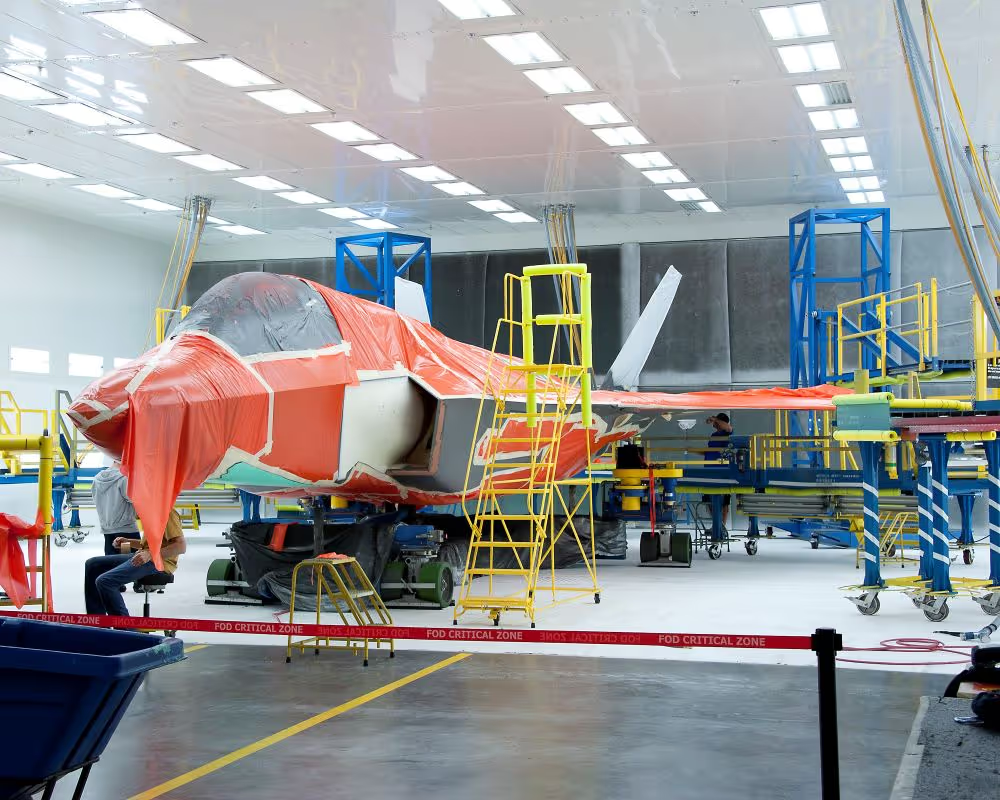
Lockheed Martin Fort Worth Texas Photo by Randy A Crites[/caption][spacer height="50px"]Behind-the-scenes looks at the production of F-35s usually involve a visit to Lockheed Martin’s assembly plant in Fort Worth, Texas. It’s fascinating to see how the parts move through the mile-long facility to become finished planes. Nevertheless, before the F-35s get to this stage, a huge number of companies - including job shops - have contributed to this effort. A quick look at other manufacturing companies emphasises the importance of titanium machining capabilities. In 2022, Canadian aerospace systems manufacturer Magellan Aerospace made headlines when it became contracted by Lockheed Martin to supply specifically machined titanium components for the F-35 programme. According to the company, “The contract is for shipsets of machined wing tie bars for the aircraft’s leading edge flap.”“Magellan’s Kitchener facility has industry-leading expertise in titanium machining operations and world-class machining capability, with an emphasis on high-speed machining of hard metals such as titanium, Inconel and stainless steel.”Similarly, Australian precision manufacturing company Axiom was contracted to assist BAE Systems for the F-35 programme. Axiom supported the manufacturing of both semi-finished and finished components out of forged and billet titanium parts that are assembled into the Vertical Tail of the F-35. Reflecting on their role in the project, Axiom used “six different CNC machines, consisting of both 3 & 5 Axis machines, providing the required capacity to meet the annual aircraft lot requirements.”
Final Thoughts
[spacer height="50px"][caption id="attachment_41354" align="alignnone" width="1000"]
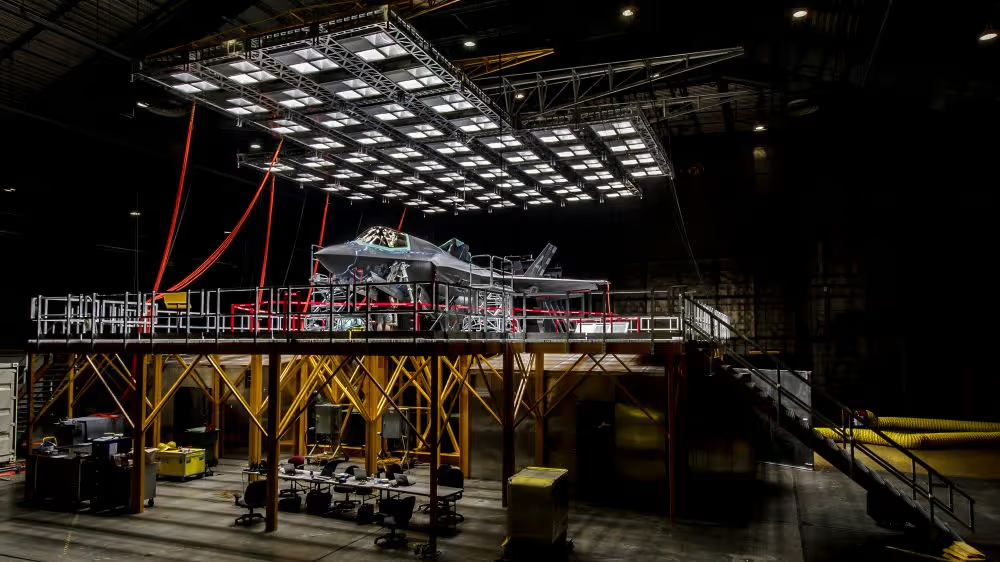
Lockheed Martin photo by Michael Jackson, Layne Laughter and Andy Wolfe 3[/caption][spacer height="50px"]The F-35 Lightning II is much more than a marvel of aerospace engineering; it's a global manufacturing juggernaut that showcases the power of international collaboration. Lockheed Martin’s ambitious project not only strengthens national security but also fosters global partnerships and powers economic growth. From titanium tail sections made in Australia to electronic warfare systems crafted in the US, the F-35 is a truly international affair, with each part reflecting the dedication and expertise of countless hands worldwide.Despite the complexity and challenges—like the notorious difficulty of machining titanium—the collective effort results in a fighter jet that is in a league of its own. With its advanced capabilities and cutting-edge technology, the F-35 is poised to dominate the skies and redefine modern air combat.

.avif)
.svg)