5 Precision Manufacturing Trends Shaping 2026
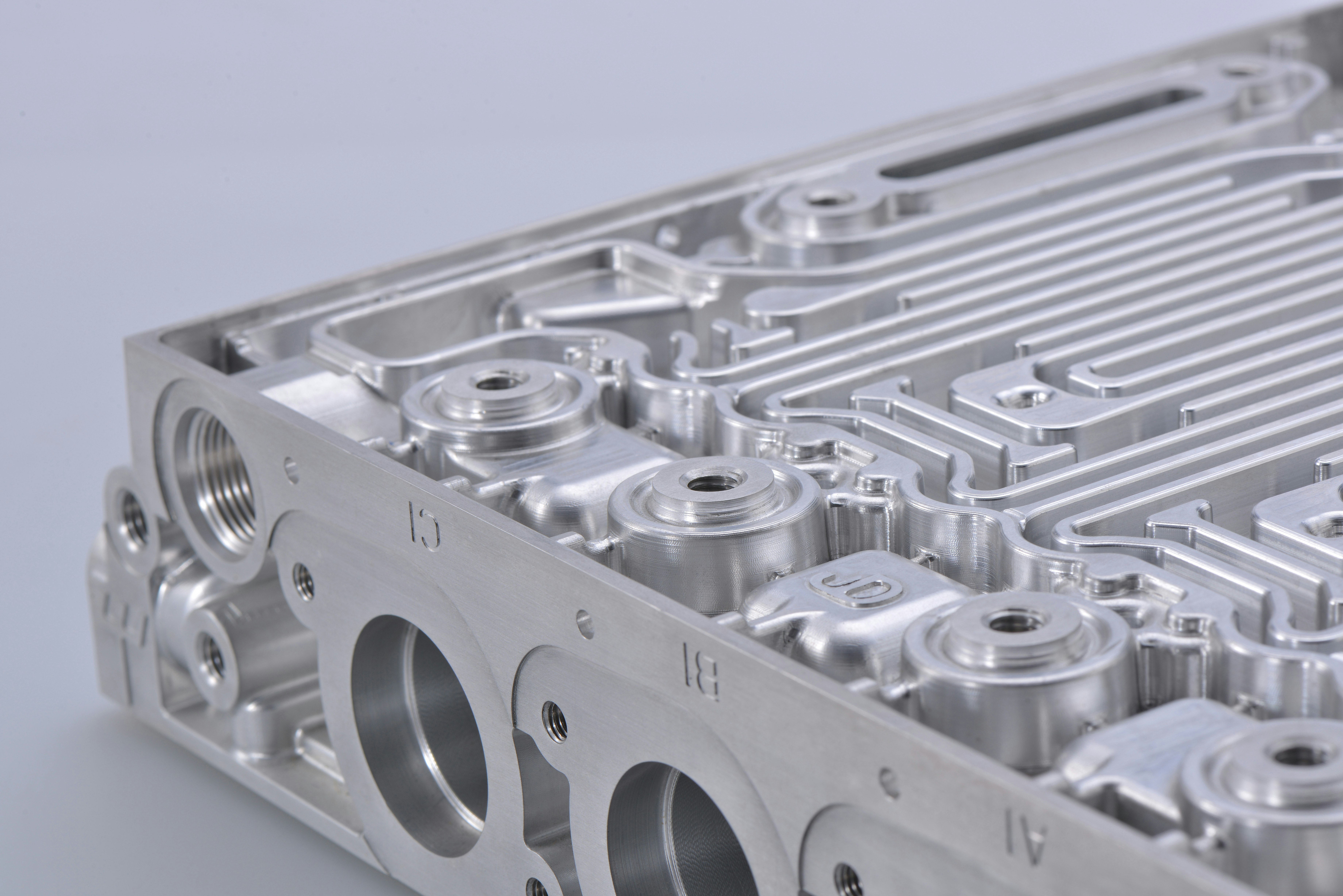


Precision manufacturing is evolving as aerospace, data centers, medical devices and other high-tech and industrial sectors demand increasingly accurate, complex and reliable components. According to Fortune Business Insights, the global precision machining market is projected to grow from $134 billion in 2026 to $224 billion by 2034, representing a compound annual growth rate (CAGR) of 6.6%.
As demand grows and manufacturing processes become more sophisticated, precision manufacturers face a challenge that extends beyond machining accuracy. They must determine how to produce increasingly complex components reliably, meet quality requirements, manage production capacity while maintain profitability.
Five trends are shaping precision manufacturing in 2026: rising demand for high-precision components, hybrid manufacturing that combines additive manufacturing and CNC machining, AI-driven manufacturing, digital twins and advanced robotics and autonomous production.
Together, these developments are changing how manufacturers plan, produce and evaluate work. They are also increasing the importance of connected production data, accurate estimating and a clear understanding of the resources required to complete each job.
1. Rising Demand for Precision Manufacturing
Demand for high-precision components is creating new opportunities and challenges for manufacturers across high requirement industries like aerospace, defense, medical devices and semiconductors.
Aerospace and defense applications require components that meet demanding tolerances and quality requirements, while semiconductor manufacturing depends on highly precise components and processes. As part designs become more complex, manufacturers must handle finer features and intricate geometries.
Material selection adds another layer of complexity. Components used in demanding applications often require strength, durability and wear resistance. Tough materials are more difficult to machine, requiring specialized tooling, carefully controlled cutting parameters and close process monitoring.
The result is a growing need for machining capabilities that combine precision, repeatability and material expertise.
However, producing a component to specification is only part of the challenge. Manufacturers must also understand the production implications of each requirement before committing to a job.
Tighter tolerances can mean longer cycle times, additional finishing operations, more frequent tool changes and more extensive inspection. If these requirements are not accounted for during estimating, manufacturers risk unexpected costs, rework, production delays and even reduced margins.
For precision manufacturers, the challenge is to turn increasingly demanding customer requirements into achievable, accurately costed production plans.
2. Hybrid Manufacturing Combines 3D Printing and CNC Machining
As aerospace, medical and energy industries demand increasingly complex components, hybrid manufacturing has provided engineers with more precision at speed.
Hybrid manufacturing combines additive manufacturing, such as metal 3D printing, with conventional machining processes. Additive manufacturing can print complex geometries and features that may be difficult to produce using conventional methods alone. CNC machining can then be used to achieve the required dimensional accuracy and surface finish on critical features.
This combination enables manufacturers to produce complex components while integrating different manufacturing processes into a more cohesive workflow.
DMG MORI's aviation and space solutions illustrate how hybrid machining can combine additive manufacturing with conventional machining. Its hybrid technology includes laser deposition welding and milling, enabling the production of complex geometries that may not be achievable through CNC machining alone.
However, hybrid manufacturing requires additional considerations for production planning and cost estimation. Manufacturers need to evaluate the different processes, tooling, setups and machining requirements involved in producing each component.
These requirements influence how a job is machined and how its total manufacturing cost should be calculated.
As manufacturing processes become more varied, accurate quoting depends on understanding the complete production route rather than treating each machining operation in isolation.
3. AI-Driven Manufacturing and Intelligent Estimating
Artificial intelligence (AI) is increasingly used in manufacturing, from analyzing machine data on the shop floor to automating information-intensive business processes.
In precision machining, AI can support quality control, defect detection, machining parameter optimization and predictive maintenance. Data from machine controls and sensors can provide insights into actual feed rates, cycle times and tool wear, helping manufacturers understand how production performs in practice.
AI-enabled systems can analyze sensor data to identify patterns in spindle vibration, load variation and chatter. These insights can help manufacturers adjust cutting speeds, feed rates and tool paths, while anticipating maintenance requirements.
The value of AI extends beyond machining operations. It also helps precision manufacturers improve their front of office workflows by processing requests for quotation (RFQs) to extract technical requirements and prepare estimates.
RFQs frequently contain information across 3D CAD models, 2D PDF drawings, material specifications, tolerances, surface finish requirements and geometric dimensioning and tolerancing (GD&T).
AI-powered tools extract and organize these requirements, reducing repetitive manual data entry and the need to transfer information between documents and spreadsheets. With precision manufacturers receiving more RFQs than they can handle, AI helps process RFQs more efficiently while reducing errors caused by manual data entry.
The benefits extend to estimating consistency. When technical requirements are captured in a structured way, manufacturers have a clearer starting point for assessing the processes, resources and operations required to produce a part.
Connecting estimating with actual shop-floor scheduling with MES provides another opportunity to improve operational speed.
The broader opportunity is to connect what manufacturers expect a job to cost with what it actually takes to produce. This creates a stronger basis for evaluating new work, planning capacity and protecting margins.
4. Digital Twins Connect Design and Production
A digital twin is a virtual representation of a physical machine, component, production line, or system. It can combine digital models, simulations and operational data to help manufacturers understand and evaluate how physical processes perform.
In precision manufacturing, connected digital models can link design, process planning, machining, tooling, quality and production information.
Manufacturers can use virtual simulations to evaluate machining strategies, validate tool paths and identify potential tool collisions before production begins. For components with tight tolerances or complex geometries, this can help reduce setup errors, material waste and the risk of tool damage.
Airbus provides an example of digital twin technology in industrial production. In its overview of digital twins in aerospace, Airbus describes applications that include monitoring production progress on helicopter manufacturing lines and using drilling and milling machine data to identify quality deviations, anticipate breakdowns and plan maintenance.
These applications demonstrate how digital models and production data can support greater visibility into manufacturing operations.
For precision manufacturers, the value lies in connecting information that might otherwise remain separated across engineering, production planning, machining and quality control. Better visibility can support process validation, maintenance planning and production scheduling.
Digital twins can therefore contribute to more informed production decisions before and during manufacturing.
The more closely design intent and production reality are connected, the better equipped manufacturers are to anticipate problems before they affect quality, delivery or cost.
5. Advanced Robotics and Autonomous Production
Labor availability, production costs and supply-chain uncertainty are important considerations for precision manufacturers assessing how to meet customer demand and make effective use of existing capacity.
Robotics and autonomous production offer ways to automate repetitive tasks, increase machine utilization and reduce the amount of direct operator intervention required for certain operations.
Robotic arms can load and unload components into CNC mills and lathes, supporting automated production and lights-out machining where the process and equipment allow it. Collaborative robots, or cobots, can work alongside operators on tasks such as inspection and secondary finishing.
Rather than simply replacing skilled workers, these technologies can complement their expertise by taking on repetitive tasks and supporting higher production throughput.
However, automation does not remove the need to understand production capacity.
Manufacturers still need to assess machine availability, labor requirements, tooling, process constraints and delivery commitments when deciding whether to accept new work.
These considerations also affect estimating. A job completed with automated loading and extended machine operation may have a different labor requirement from one that depends on continuous operator involvement. The actual impact depends on the equipment, process and production setup.
Quoting processes need to reflect how work will be manufactured, including the role of automation and the resources required to support it.
Understanding the relationship between labor, machine capacity and automation helps manufacturers assess not only whether they can produce a component, but also whether they can produce it within the required timeframe and at an acceptable margin.
A Holistic View of Precision Manufacturing
The five precision manufacturing trends shaping 2026 point toward a broader change in how manufacturers need to manage their operations.
Advanced machining, hybrid manufacturing, AI, digital twins and robotics each offer different capabilities. But their value depends on how effectively manufacturers integrate these technologies into their wider production processes.
As components become more complex and production methods more interconnected, decisions cannot be made in isolation. Engineering requirements affect process selection. Process selection influences cycle times, tooling and capacity. These factors determine production costs, delivery feasibility and ultimately, job profitability.
Estimating and quoting sit at the intersection of these considerations.
Before accepting a new RFQ, precision manufacturers need to understand the component requirements, identify the processes needed to produce it, assess the resources available and determine whether the work can be completed profitably.
This makes estimating more than an administrative step at the beginning of production. It is a way to connect customer requirements with engineering capability, manufacturing capacity and financial outcomes.
In 2026, competitive precision manufacturers will need more than advanced machinery or faster quoting processes. They will need a clearer, more connected understanding of how every job moves from requirement to finished component.
The manufacturers best positioned to succeed will be those that turn every RFQ into a more informed production decision by understanding the part, the process, the capacity required and the profitability of the work before committing to it.


.svg)