How 3D Printing is Revolutionising Eyewear
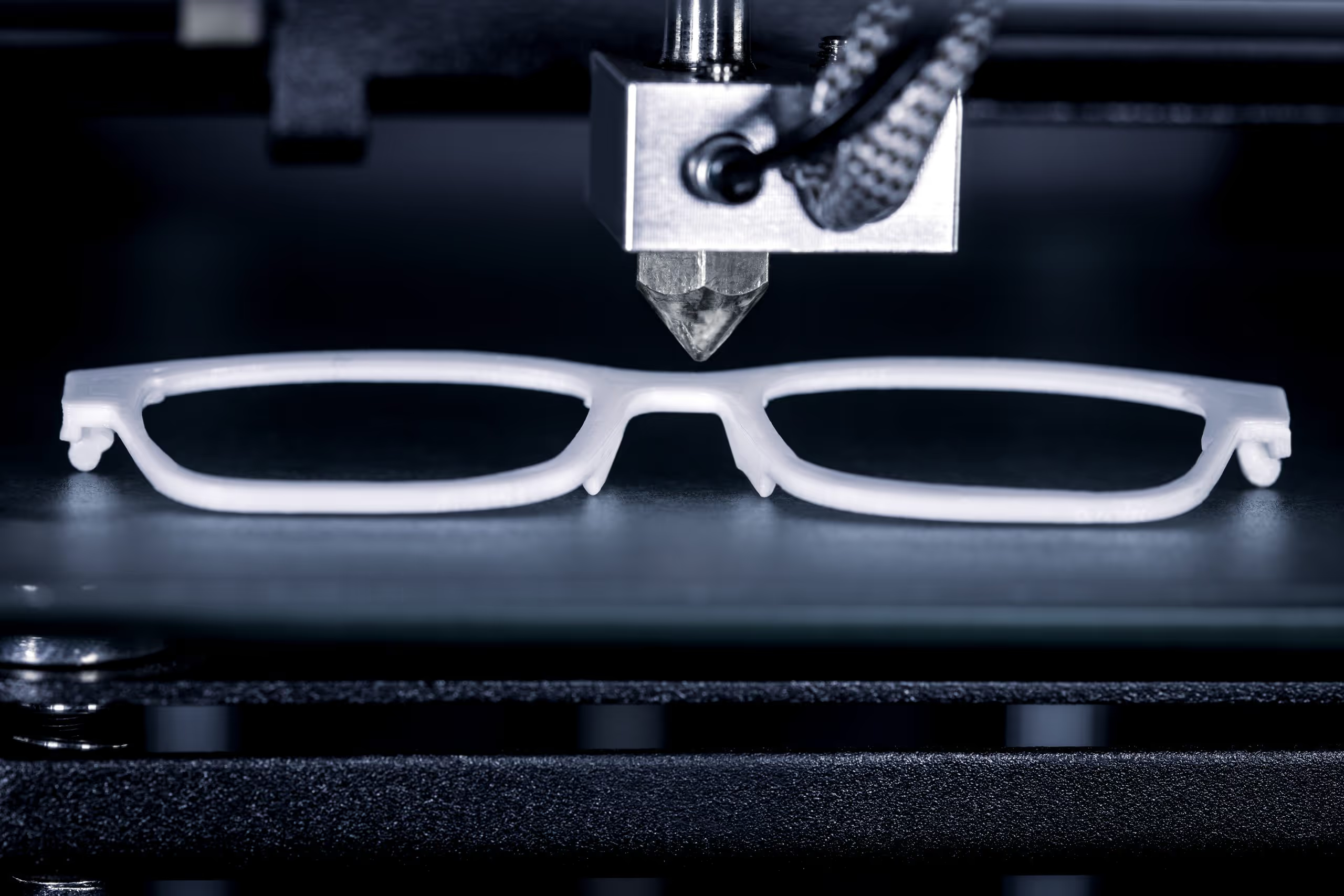


3D printed eyewear is the future– it's plain to see.
The benefits of customisability and efficiency that 3D printing technologies boast are being recognised by eyewear companies across the industry. Manufacturers have moved from prototyping to small batch production, and larger companies are pushing toward larger-scale production in the future.
Exactitude Consultancy predicts a CAGR of 8.1% as the 3D-printed eyewear industry booms across the coming decade, from a value of $665.34 million in 2023, to $1,450.33 million in 2033. Consumers are leaning towards complex, customised glasses previously considered unfeasible with traditional manufacturing techniques. Similarly, companies are engaging with high-growth applications to keep business flourishing after the pandemic.
Advanced adoption has historically been held back; overall unit numbers required by the industry are high, and AM is perfectly suited to low volume production. Likewise, the printing technology often renders glasses that require post-processing to some degree– a barrier for a product that necessarily needs to be ultra-comfortable.
However, a range of factors, ranging from a drive towards sustainability to the ability to respond to market trends mean that AM is being seriously considered as a solution in the eyewear industry.
In the past five years, more and more 3D printed eyewear solutions have popped up, with frames being the primary application for this technology– half a million are produced each year. The volumes that larger companies demand have historically been too large for the remit of AM, but this looks set to change.
In light of this trend, AMFG are investigating additive manufacturing in the eyewear industry. In this preliminary article, we will explore the motivations underlying the increased usage of AM for eyewear products, and the technology propping up production. Innovative companies and products are ten a penny in this sector, and towards the end of this article we showcase four exciting case studies from recent years.
Why are companies opting for AM?
Aesthetic benefits
AM is primarily beneficial for the world of eyewear due to the strength of 3D printed products. They possess excellent mechanical properties, are lightweight, high in quality, and durable, and are setting the new standard for comfort in eyewear.
Now that customers can have their faces scanned and receive glasses that do not require adjustment, ill-fitting glasses and constituent problems (such as eye strain) could be a thing of the past. Users can create eyewear that can be tested and evaluated during lifetime and user testing to quickly gain feedback and iterate on dimensions and design.
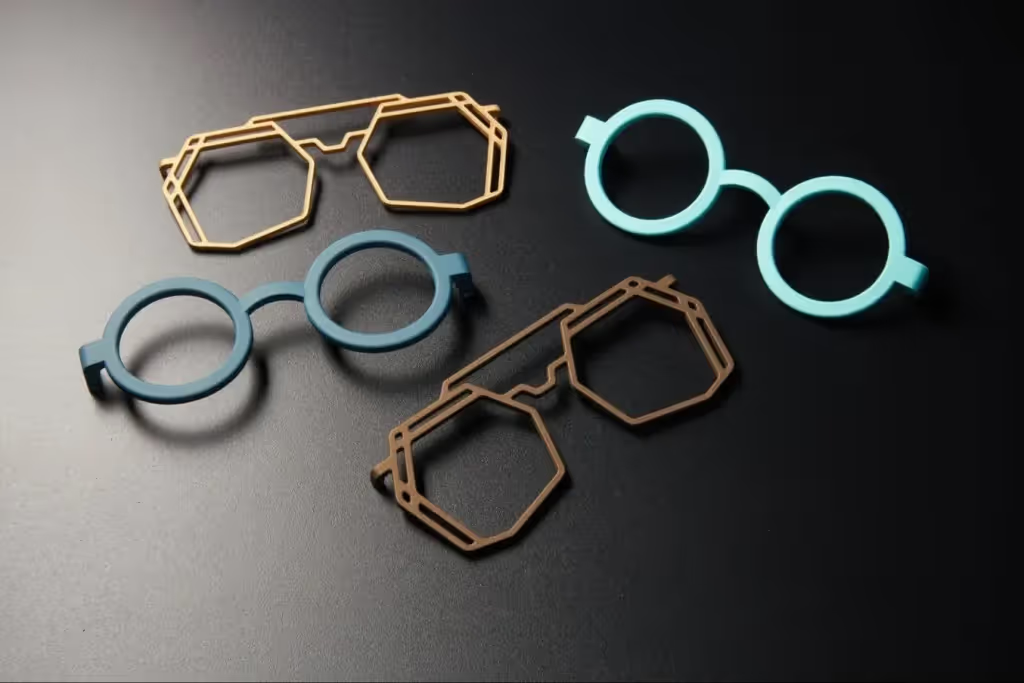
Furthermore, the aesthetic capabilities bestowed by 3D printing tech are unrivalled. Customisation is the new norm, and eyewear is adapting to customers’ need to be involved in the items they consume. Style and function can coexist happily thanks to AM, as customers can personalise their eyeglasses, from colours and patterns to logos and serialisation.
Glasses aren’t just an accessory, rather a means of self-expression. AM permits freedom of design, allowing manufacturers to achieve innovative and unique aesthetics without needing to resort to expensive tools. This isn’t a one-off, either– customers can evaluate their eyeglasses throughout the product’s lifetime and pass on information to manufacturers for them to iterate on dimensions and design.
Sustainability
The eyewear industry is one of the most wasteful consumer product manufacturing sectors in the world, as traditional injection moulding or subtractive processes leave large amounts of acetate products in outdated collections that cannot be reused nor recycled.
3D printing production, conversely, only produces the required parts. There will be excess powder, but this can easily be reused in a future print. Manufacturers can even utilise recycled material; for example, Antwerp startup W.R. Yuma creates sunglasses from locally recycled plastic and 3D printing technology.
A shorter, efficient supply chain that engages in sustainable practices is not only good for the environment (Siemens estimates that 3D printing frames results in a 58% lower carbon footprint), but beneficial for business, too. Sustainability is important for customers, and the rise of AM eyewear is bearing the truth of this fact.
Product development
A speedier prototyping process is the aim of the game for any manufacturer. AM stimulates product development, allowing new designs to be produced quickly and cost-effectively. Designers and engineers are able to formulate, adapt (when necessary), and finally realise ideas by significantly shortening the development process.
Creating and testing multiple designs of eyewear is much more flexible, making R&D cycles significantly shorter. Manufacturers can prototype eyewear, checking for dimensionality, fit, and overall design, granting them the ability to fit products to the customer’s exact needs. If companies are interested in launching small series, they can target specific customers or target groups without incurring an equivalent level of costs associated with traditional routes.
Given this freedom, major players may start to focus on innovative glasses like luxury eyewear and smart eyewear moving forward.
Efficiency and responsiveness
As mentioned above, eyewear production as it stands is wasteful and inefficient. Parts produced through injection moulding, die cutting, or precision CNC milling are accompanied by significant equipment costs. Outsourcing can take weeks and rack up thousands of dollars in costs, and given the fickle nature of fashion, companies can get caught out and lose lots in the process.
Unsellable stock means missed profits and unnecessary money spent on production, and clogs up physical warehouse space– this approach is financially unsustainable. 3D printing substantially lowers the risk of starting a new product line and enables the production of small, on-demand batches.
3D printing permits manufacturers to develop a digital inventory, solving overproduction and excess stock. This flexibility means companies can react to market trends as they occur, adapting materials and designs according to what is ‘in vogue’. Customers are more involved in the process of design than ever before, bolstering the relationship between manufacturers and distributors.
Digitisation
AM-produced eyewear is only the first aspect of a broader digital ecosystem. 3D printing glasses facilitates a greater degree of design complexity, meaning housings for electronics and intricate assemblies needed for wearables are possible. Without this technology, these features would need to be installed through expensive multi-part injection moulds.
Moving forward, smart eyewear may emerge into a significant industry in its own right. This would involve the seamless integration of components like cameras, advanced software, and microphones into eyewear. Functionality would go beyond vision, with augmented reality and health monitoring made possible. Glasses that display real-time performance data to athletes and glasses that include translation functions could become a reality. With these technological possibilities, our conception of what ‘glasses’ are may completely change.
For example, the summer of 2021 saw Luxexcel launch VisionPlatform 7, a new platform for 3D printing prescription lenses, and also partner with Optiswiss to introduce commercial 3D printed lenses to the market, used in both normal and smart glasses.
How does the tech work?
When going through traditional manufacturing processes, consumers select a pair of eyeglasses at the optician, which are then measured to fit before being sent to be fitted with the correct lenses. After a few weeks, the customer returns for a fitting, during which the optician then adjusts the arms of the frame, the nose pieces, and ensures that the glasses sit symmetrically.
3D printing slashes this process in half. By leveraging digital technologies, customers can have their faces scanned on their first visit, eliminating the need for refitting and readjustment. For example, family-owned eyewear company Thema Optical have internally developed a technology that uses a facial scan to create personalised glasses, allowing customers to virtually try on their glasses before buying.
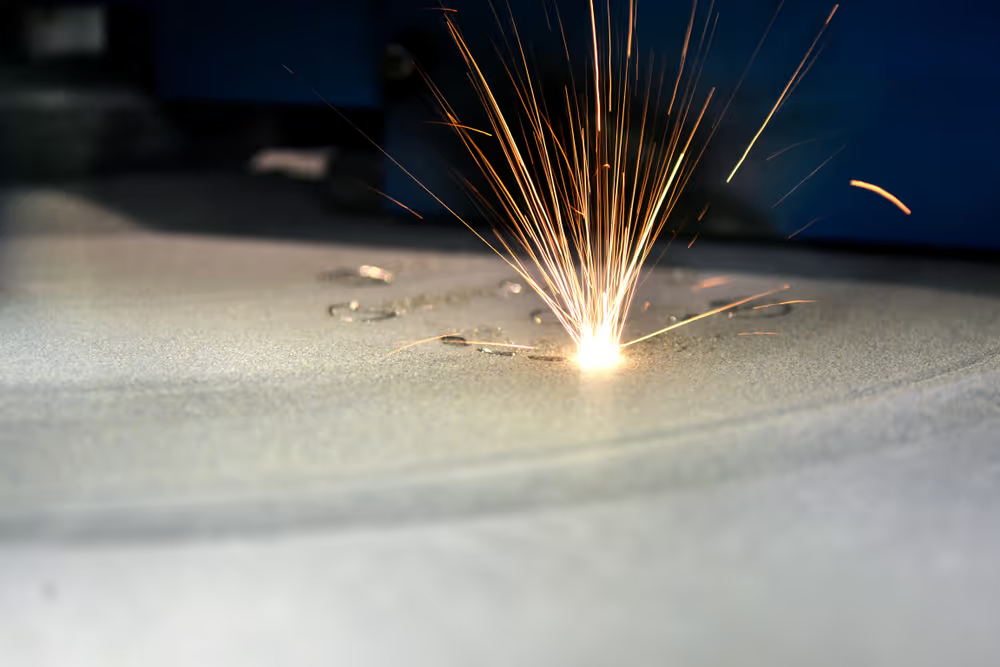
In terms of technology, Selective Laser Sintering (SLS) rules the roost. The process uses a laser beam to selectively melt– and subsequently fuse– powdered material, typically nylon. Nylon is the material of choice given its design flexibility and lightweight properties; it is resistant to abrasion, tough, strong, and durable.
Unlike Stereolithography (SLA) and Fused Deposition Modelling (FDM), SLS does not require a support structure. The unsintered powder supports the part during printing and eliminates the need for dedicated support structures, as it provides additional strength and acts as its own support structure.
This means that SLS is perfect for producing parts with complex geometries, such as interior features, thin walls, and undercuts– which all feature in eyewear products. Parts produced by SLS have excellent mechanical properties, rivalling the strength of injection-moulded parts.
SLS parts characteristically have a rough surface finish and require additional post-processing to remedy this. Placing components in a vibratory tumbler facilitates an 80% reduction in surface roughness, and colouring a frame through a water bath dye allows colour to penetrate all surfaces of the part.
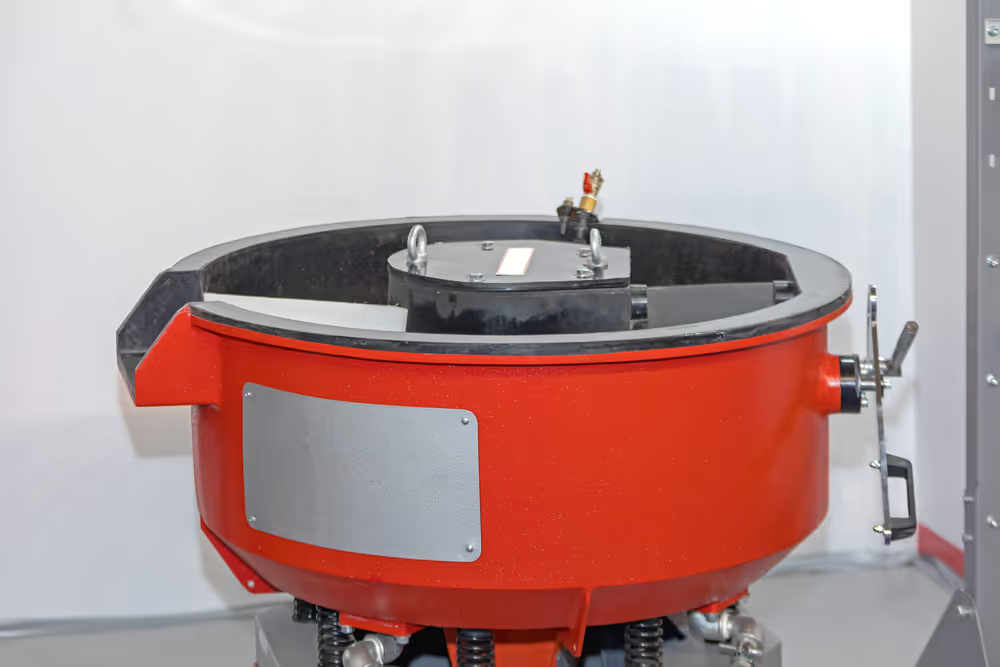
A vibratory tumbler
Cerakote coating improves the mechanical properties of the part whilst simultaneously allowing a wide variety of colourways. Printed parts can then be improved in regard to their chemical and scratch resistance, before being laser-imaged to achieve interesting patterns or marks of customisation.
Although SLS printing with nylon is the most common technology in 3D-printed eyewear, other methods are being explored. For example, SLA (which involves the solidification of a liquid resin with a laser beam) is being used to create patterns of eyeglass frames for investment casting. Production with multi jet fusion fusion, digital light processing (DLP), fused deposition modelling (FDM), and others is also being developed.
Four eyewear brands that are changing the game
Visages
In 2024, VISAGES was founded, offering brands a new economic model based on on-demand production through AM and AI. In addition to this, the French company targets end-users who are in the market for a tailor-made product.
VISAGES uses a smartphone scan to capture and analyse all facial measurements, with their AI solution to create custom frames accurate to a tenth of a millimeter. The scan collects essential measurements, such as pupillary height, which allows the remote ordering of corrective and progressive lenses that fit perfectly.
Thélios

Dior3D sunglasses. Image courtesy of Dior
Luxury eyewear is a growing market, one being progressed, in part, by Thélios. Earlier this month, the unit of LVMH collaborated with Dior to introduce the Dior3D sunglasses, using SLS to blend Dior’s design with futuristic craftsmanship.
The frames of the pieces are entirely 3D printed, featuring an intricate openwork design that is lightweight and durable. Thélios’ decision to use SLS matches with Dior’s stringent luxury standards, a positive indication of 3D printing’s emergence into the luxury eyewear market. This release is not just limited to a small set of exclusives, either– several thousand pairs are being produced yearly.
Silhouette
At the end of 2024, eyewear company Silhouette announced a collection made from a new bio-circular material made with organic waste from industries like forestry, agriculture, and aquaculture. The SPX Green+ range reduces carbon emissions by 60% compared to the production process of traditional raw material made from fossil fuels.
This investment in sustainable practices demonstrates changing consumer attitudes. Customers are thinking green more and more, and 3D printed eyewear is poised to capitalise on this.
Modo
In 2025, Modo Eyewear, a New York brand, announced that its Buy a Frame – Help a Child See programme has reached two million. The initiative, which sees the company team up with Seva Foundation, offers vision screenings, optometrist exams, prescription glasses, and corrective treatments to children at need, free of charge.
This programme forms part of a wider effort to enhance vision care across the world, as the two companies have committed to establishing Vision Centres in India and Nepal. Modo Eyewear represents the power of 3D printing companies to help give back and the potential possessed by 3D printing to address problems in developing countries.
Final thoughts
From cutting-edge customisation to sustainable production, 3D-printed eyewear is proving to be more than just a passing trend—it’s a glimpse into the future of the industry. As technology advances and major players invest in additive manufacturing, we’re seeing eyewear become more personal, efficient, and eco-friendly than ever before.
Whether it’s bespoke designs, reduced waste, or even smart features, 3D printing is reshaping what glasses can be. As production scales up, it's essential that companies invest in a holistic solution to workflow management.
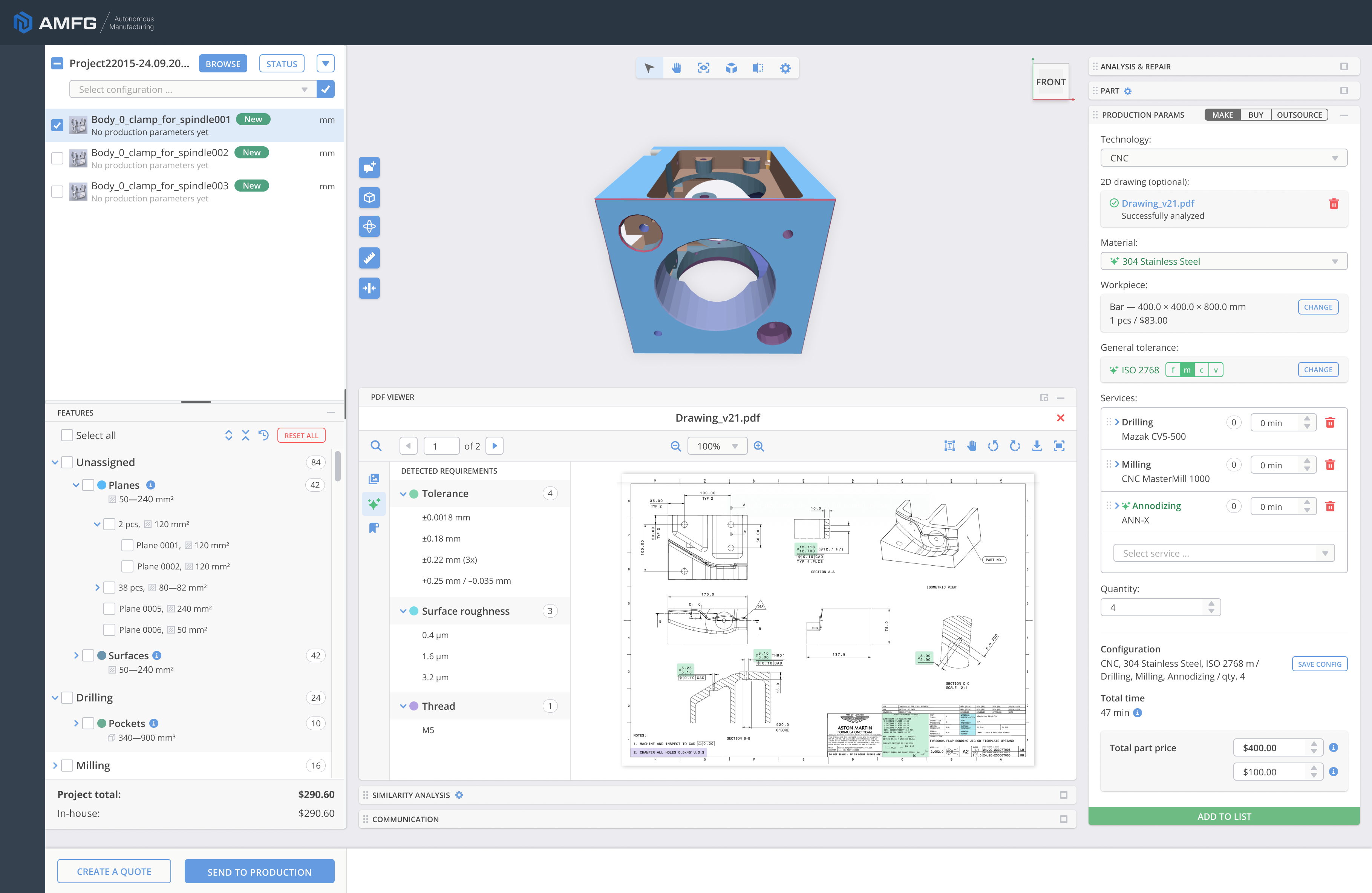
AMFG is an award winning MES designed to empower production workflows, from order placement to shipment, with seamless integration and precision automation.
With over 500 successful implementations in 35 countries and across a range of industries, we specialize in enabling companies to successfully integrate our software for AM and CNC production, into their wider manufacturing processes and scale their AM operations.


.avif)
.svg)