How Education Gets Brazil Into The Top 10 Manufacturers
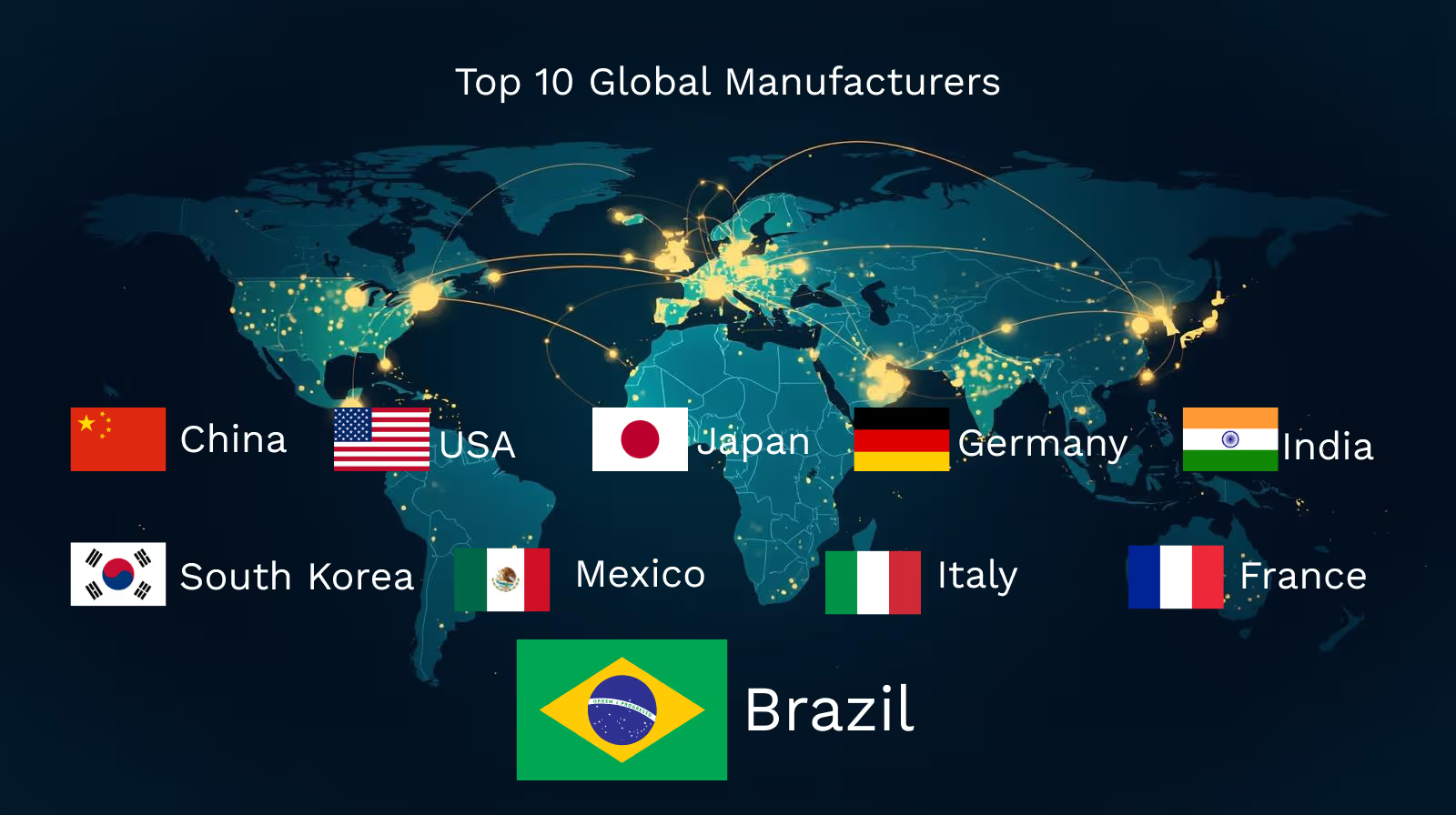


Ask a machinist who the top countries are for manufacturing, and they’ll mention the USA, China, Japan, Germany, or India. One country they may not bring up, is Brazil.
While often dismissed as a competitive manufacturer, in 2025 Brazil ranked 10th in the world’s top manufacturing countries, with a contribution of approximately $290 billion to the global manufacturing industry.

Why Brazil?
Brazil has huge natural resources, a booming domestic market, and is perfectly placed to benefit from international shipping markets. However, despite all these advantages, the Brazilian industrial sector has been struggling for years. In 2025 the sector’s growth lagged behind the global average in the first quarter - marking the first time the country's industrial sector has fallen behind the global average in less than a year.
So how does manufacturing thrive in Brazil, while their industrial sector as a whole struggles to keep up? Well, as any good manufacturer knows, success always comes down to the people. The machinists, engineers, and technicians behind the machines are what make a company, or in this case an industry, successful. Brazil’s educational programe SENAI has trained millions of people, ensuring the country has a wealth of highly skilled professionals to drive the manufacturing industry forward.

SENAI
Started in 1942 by the Brazilian Confederation of Industry, the Serviço Nacional de Aprendizagem Industrial (SENAI), or “National Service for Industrial Training” in English, is a network of not-for-profit secondary level professional schools. Their mission is simple: promote vocational and technological education, innovation, and the transfer of industrial technologies. SENAI offers over 1,800 courses and has 3 million annual enrollments in technical and vocational training courses. Their work has helped change the perception of trades like manufacturing and engineering, and Brazil’s manufacturing industry now employs over 9.7 million workers.
SENAI graduates are more likely to go into higher education, and those who go into their studied field earn more than those who had a formal education, and are less vulnerable to unemployment. The success of these graduates demonstrates a truth that many manufacturers already know - a trade school education is just as valuable as a university degree.
With a global skills gap and an aging workforce, educational programmes like SENAI are not just valuable to the economy of individual countries, they could be the answer to a number of issues currently facing the manufacturing industry. But will it work in other countries?
While it started in Brazil, SENAI’s success has meant the organization is now a key part of Brazil’s foreign policy, and working with Agência Brasileira de Cooperação (ABC) or the “Brazilian Cooperation Agency” in English, SENAI has trained workers in a range of other countries for years. These training programmes have helped countries rebuild after war, natural disaster, or economic disruption, highlighting the necessity and importance of the trades - without manufacturers, nothing would get made.
We’ve spoken before about the importance of machining education, but could other countries copy the scale of SENAI’s success?
Forget Brazil - what about me?
SENAI’s funding, history, and mission are all the result of Brazilian culture. We’ve seen that the training works anywhere, but setting up an institution of the same magnitude is a different story.
SENAI receives a large proportion of its funding from a levy imposed on industrial companies, like a tax system, which would not work in other countries. However, including manufacturers in the educational programme means that the training is technical, thorough, and actually teaches necessary skills rather than useless modules for extra credit. It also means that manufacturers can hire graduates safe in the knowledge that they’ve been properly trained, and don’t need another six months of careful teaching before they can operate a lathe.
Getting companies and manufacturers involved in education may be the best way to ensure that workers are trained correctly, and to the standard that employers are looking for, but it doesn’t go quite far enough. SENAI’s trainees are still disproportionately male, and there are concerns about positive self-selection, with many graduates coming from middle-income households.
SENAI’s success is proof that educating the younger generation in the trades creates an industry that can thrive, even when other sectors are struggling, but it isn’t a perfect system. Other countries may find that a SENAI style programme is the answer to many of the problems facing manufacturing, but it’s best used as an example, not a perfect model.
About AMFG
AMFG works with high-mix, low volume manufacturers across the globe, streamlining their operations with our cutting-edge software platform. Our scalable tools automate all stages of manufacturing operations, providing automatic quoting and order management. Using our software, our clients can adapt to complex demand with efficiency and precision, securing their place at the forefront of the manufacturing industry.
For more information, please visit www.amfg.ai or contact: press@amfg.ai



.svg)