Is Nearshoring The Next Big Thing?
.avif)


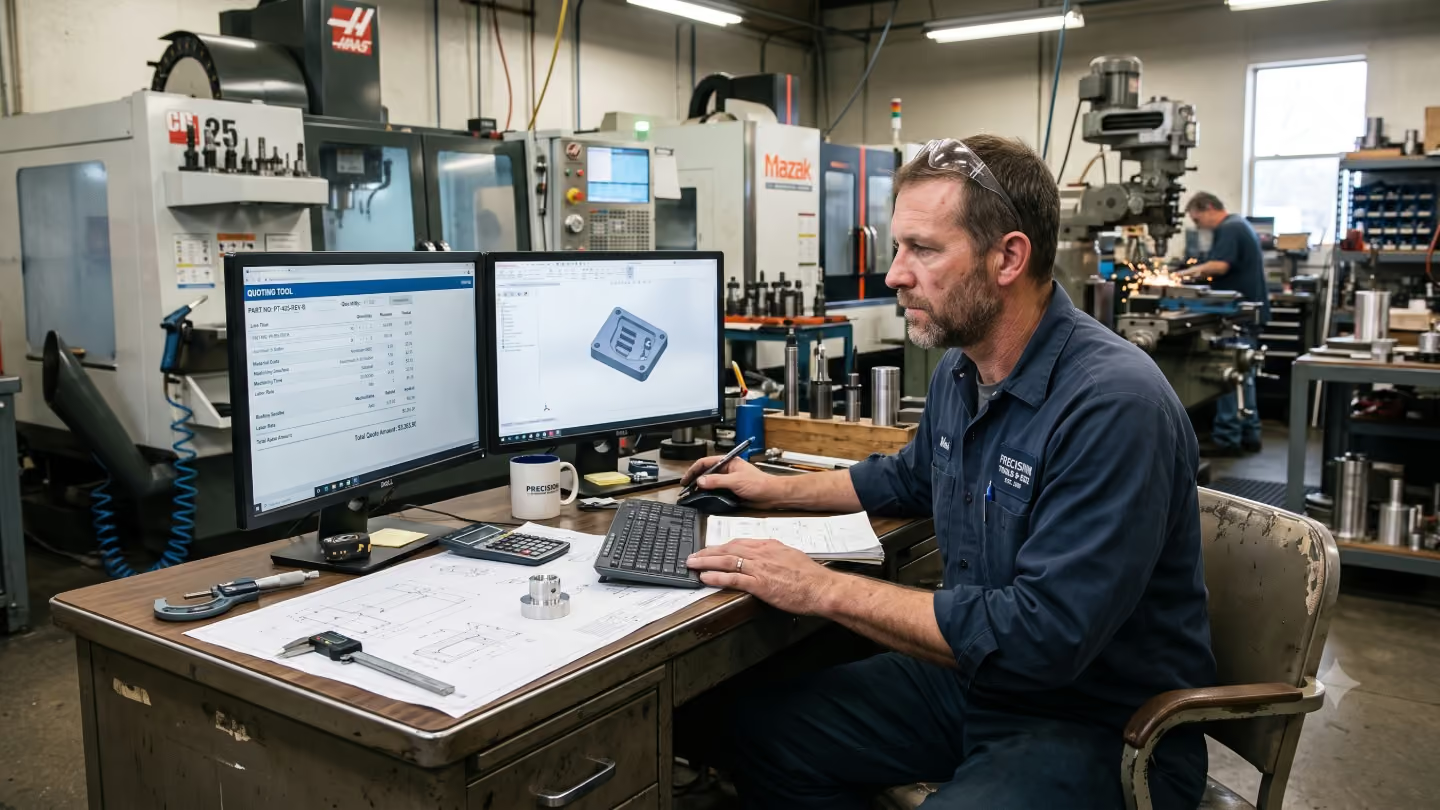
In a constantly changing world, instability can hit your supply chain with very little warning. Companies and shops are turning to a variety of strategies to protect themselves, from reshoring and automation to supplier diversification. One commonly used technique is nearshoring which, when implemented correctly, can mitigate the inherent risk of international supply chains.
So What Is Nearshoring?
You might think the clue’s in the name, and you’d be right. Nearshoring is the process of outsourcing work to a nearby country. Effectively the middle child between offshoring and reshoring, the inventively named strategy provides a compromise between the benefits of proximity and efficiency, and the disadvantages of cost and distance.
First coined in the 1990s, nearshoring developed as an alternative option to offshoring, at a time when many manufacturers were focused on moving manufacturing away from home. The strategy proved extremely popular in Europe due to close physical proximity between countries, and similar cultures often following the same regulatory standards. In the USA, businesses found contracting work out to Canada, Mexico, and Central and South America massively beneficial.
Tell me the benefits!
For countries that are struggling to manage a growing skills gap, looking abroad can be a quick fix. Different countries will have differing levels of skilled workers available, and taking advantage of this difference is often the simplest way to boost employee numbers.
A major benefit of nearshoring is the close geographical proximity. Working with companies in a neighboring country means workers are usually in similar, if not the same, time zones, and in person visits are viable. Managing risk, maintaining operational alignment, and fixing issues quickly are all possible due to the lack of distance. Countries that are close geographically often have similar languages, cultures, and regulations, reducing potential friction between partners.
If geographical proximity is such a benefit - why nearshore in the first place? Why not focus on reshoring or onshoring instead? Well compared to reshoring, nearshoring provides greater financial benefits to all parties, at least in the right circumstances. From the perspective of the employer, if labour costs are lower abroad outsourcing work to nearby countries lowers costs ensuring higher profit margins. And in the foreign country as more jobs are created, financial prosperity increases benefiting the wider economy.
In short, nearshoring is cheaper than reshoring, and less risky than offshoring. When the political and economic environment is stable, nearshoring benefits all countries and companies involved, contributing to economic growth for the outsourced country and increased profit for the companies.
Are There Any Downsides?
Unfortunately, a stable political and economic environment is not always possible. Unstable supply chains negatively impact the efficacy of nearshoring, with disrupted shipping lines and fluctuating material prices increasing costs and delivery times.
As a reaction to disrupted supply chains, governments are pushing for manufacturers to reshore their supply chains with financial incentives. By choosing to nearshore, rather than reshore, companies and shops may be missing out financially, while exposing themselves to avoidable risks.
Many of the longer term problems facing manufacturing, such as the growing skills gap or unstable material prices, cannot be fixed with nearshoring. As a strategy its value lies in its ability to offer the best of both worlds but it should be viewed as part of a short term plan, rather than a solution for underlying issues.
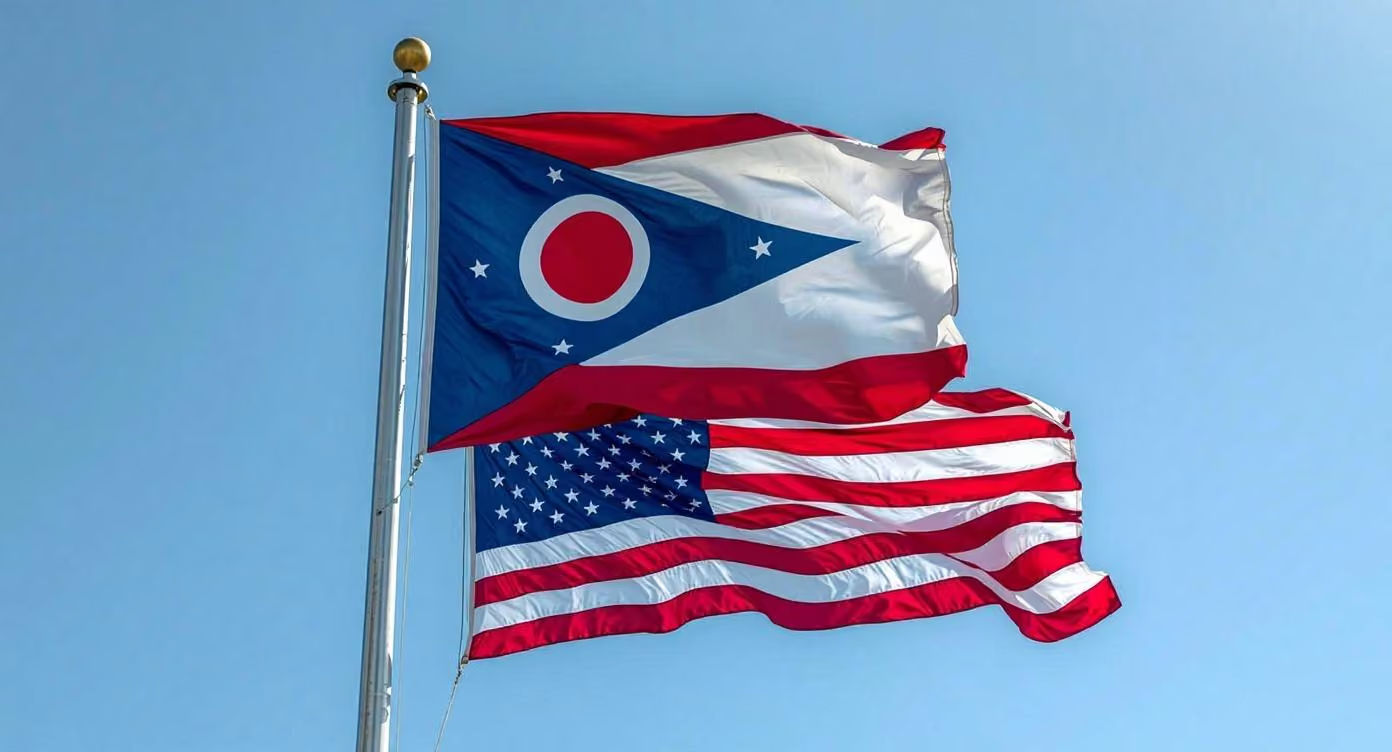
.avif)
Which is better?
Like most things in life, the answer depends on context.
Reshoring is ideal if your shops is:
- Looking for skilled workers that aren’t available locally
- Aiming to save money on labour costs
- Want to benefit from different regulations without worrying about cultural differences
However, reshoring is unlikely to be a useful strategy if you:
- Worry about any part of your supply chain being out of the country
- Want to benefit from financial incentives being offered by governments
- Need to visit the site every day to check up on things
Essentially a good middle ground between offshoring and reshoring, manufacturers cannot rely solely on nearshoring. However, when used in combination with other strategies like reshoring, automation, and digitization, it can be a useful way of protecting your business.
About AMFG
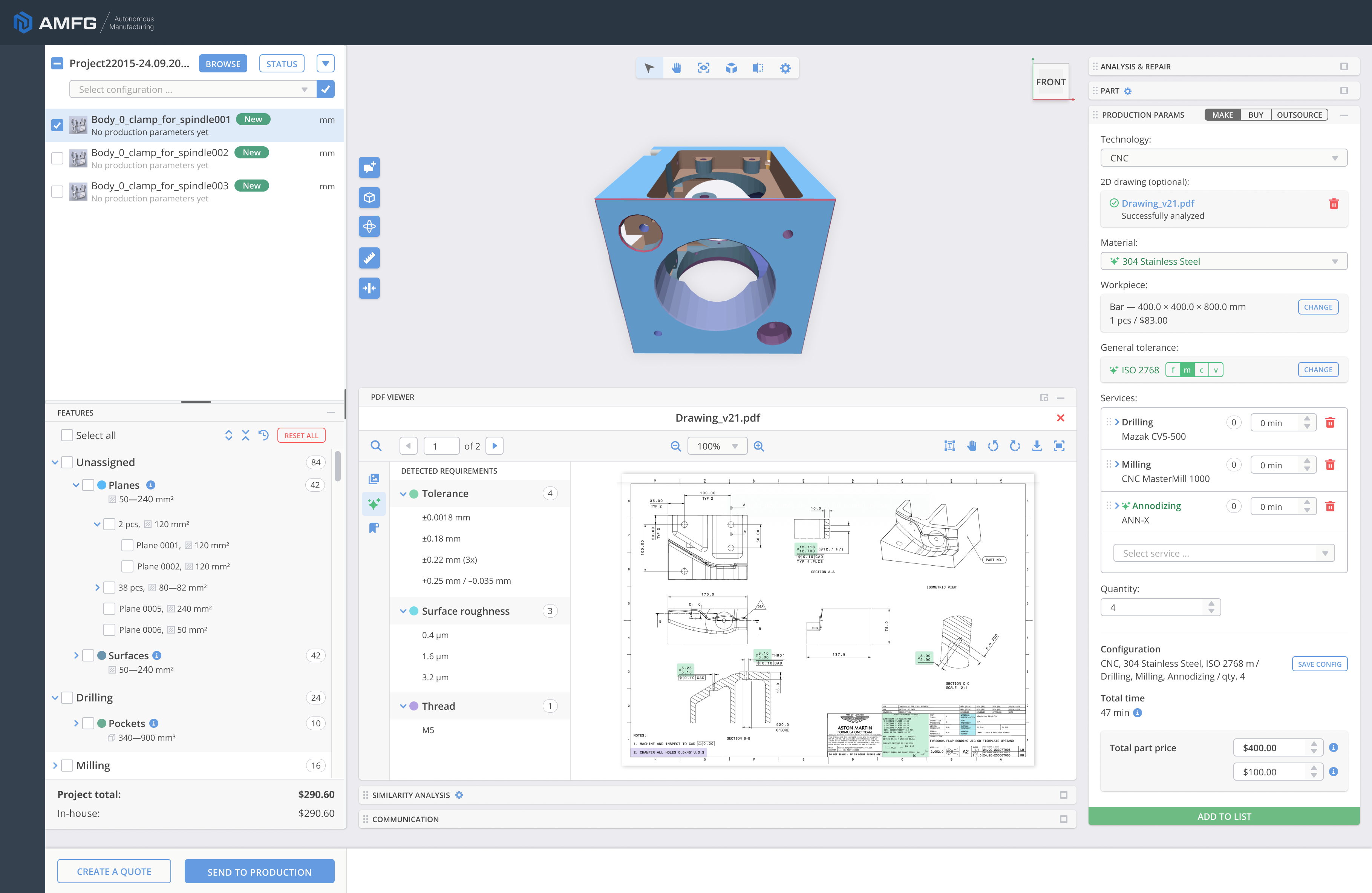
AMFG’s mission is to lower the estimating and quoting skills barrier. With auto-suggestions, DFM warnings, a streamlined intuitive interface, and specialised support teams dedicated to helping shops make the most of their software, AMFG is the most effective way to quickly lower the skills barrier in manufacturing.
For more information, please visit www.amfg.ai or contact: press@amfg.ai


.svg)