Lowering the Quoting Skills Barrier


It’s no secret that automation software and AI are changing the way manufacturers work. Technology is no longer only useful for manual labor on the shop floor. With AI, automation software can now help with technical tasks too, like quoting and estimating, helping to bring down the skills barrier in manufacturing.
As the skills gap continues to increase, lowering the skills barrier is one of the quickest ways to battle manufacturing’s greatest threat.
Why is the skills barrier so high?
The human race has been making tools, toys, and textiles since we first learned to walk. As the complexity of our creations grew, so did the list of abilities and knowledge required to continue making products. Having a high skills barrier then, is a sign of a developing economy and society, one where humans rapidly progress and continuously invent new ways to create the necessities of life.
Jump forward to the 21st century, and becoming a manufacturer now requires education, experience, and specialised training, often taking years to become fully qualified. Whether it’s running a CNC machine, or setting up a 3D printing lab, the skills barrier required is immense, matching the huge leaps forward we have taken as a human race.

Too high to survive?
The manufacturing industry is facing a growing skills gap. Fewer and fewer young people choose manufacturing as their career path, and those that do make it into a shop often leave faster than previous generations. Add to that the fact that every shop is different, meaning even experienced manufacturers often have to spend time learning new ways of working, and it can feel like the skills barrier is so high, it’s unreachable.
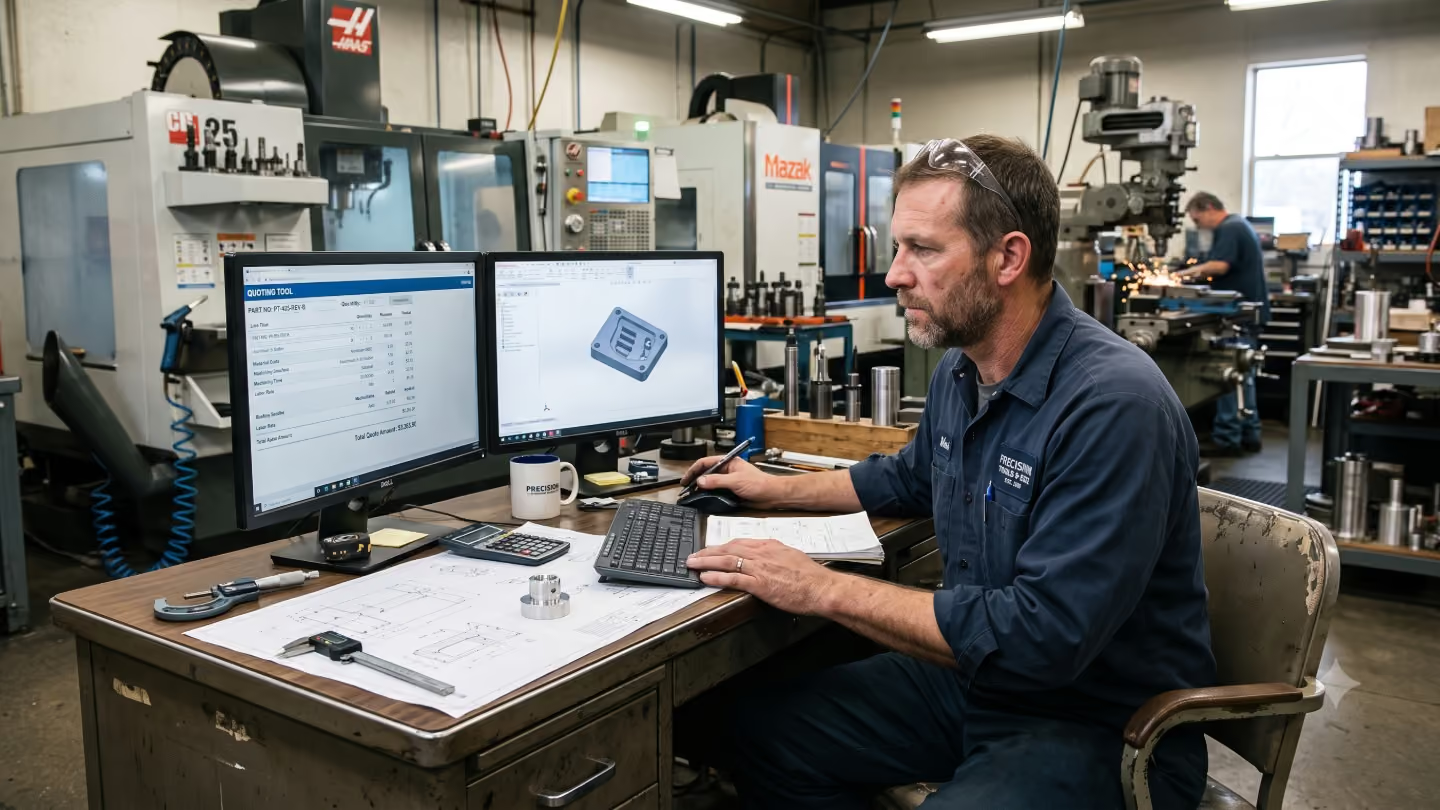
One prime example of this is quoting. If two different shops receive the same quote, they inevitably respond with different timing estimates, based on their individual setups and machines. While this individuality helps shops to find their niche and maintain a competitive advantage, it means the skills barrier for quoting is sky-high. Understandably, not only is it frustrating for established manufacturers to spend time relearning a skill each time they move shop, it can be off-putting and overwhelming for those just starting out, contributing to the growing skills gap.
So what can we do?
There’s a range of different ways the skills gap can be tackled. One of the most effective is to lower the quoting skills barrier. By making quoting simpler, accurate, and consistent, manufacturers don’t face an uphill battle relearning an old skill, and younger workers can gain experience without making costly mistakes on the shop floor.
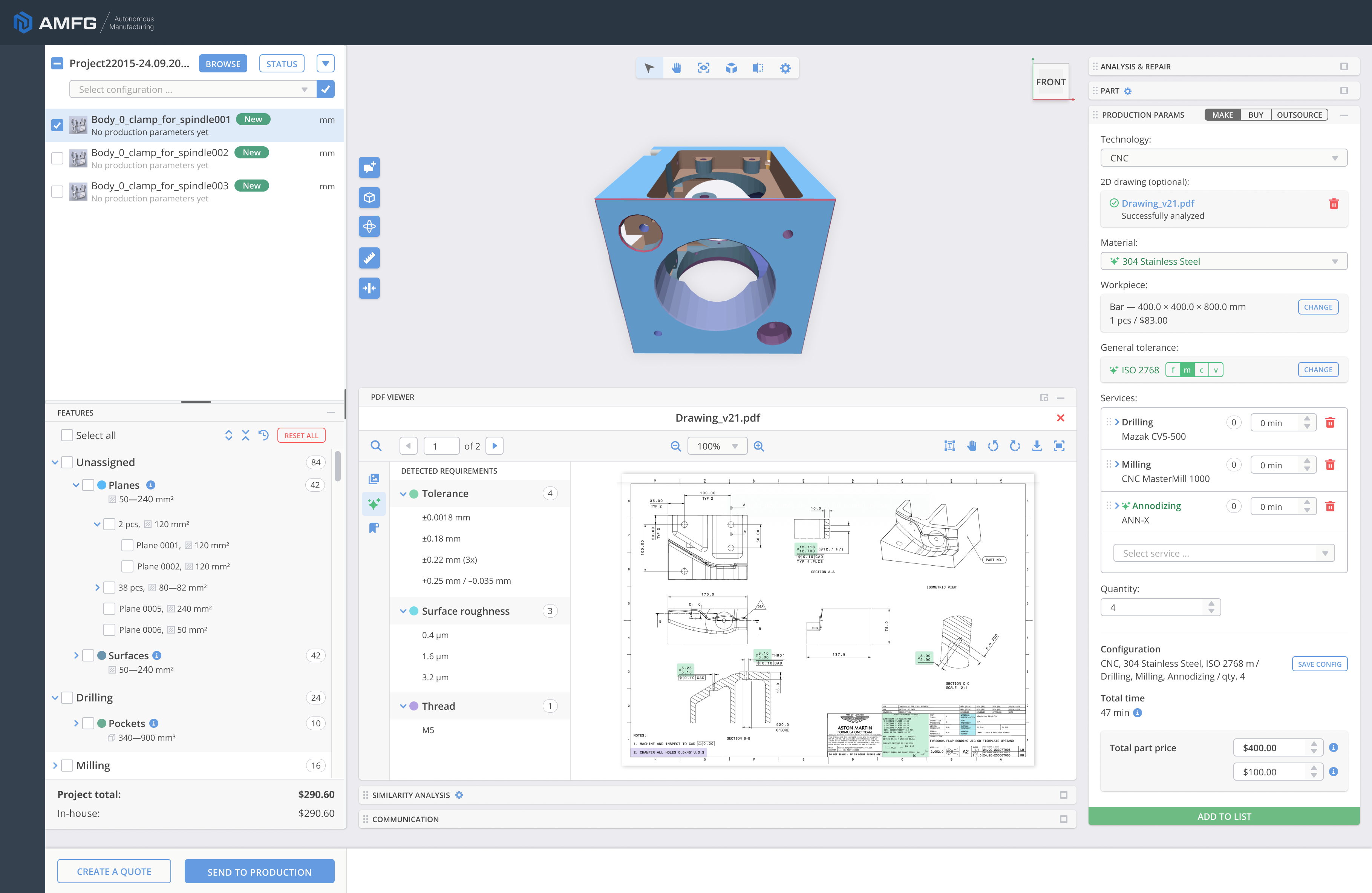
Software like AMFG’s quoting and production tools helps workers quote easily and accurately. Customized to match individual costing logics, AMFG learns how to quote based on each shop’s unique setup and quoting process, and can auto-quote in minutes. Add to that a dedicated team of trained engineers, all with backgrounds in manufacturing, who train and support workers to use AMFG effectively and suddenly anyone can complete a quote quickly and accurately. Workers no longer need decades of experience to quote, or time to adjust to a new shop’s quoting methods. With AMFG the quoting skills barrier comes down, but shops maintain their own individuality - the best of both worlds.
About AMFG
AMFG’s mission is to lower the estimating and quoting skills barrier. With auto-suggestions, DFM warnings, a streamlined intuitive interface, and specialized support teams dedicated to helping shops make the most of their software, AMFG is the most effective way to quickly lower the skills barrier in manufacturing.
For more information, please visit www.amfg.ai or contact: press@amfg.ai


.svg)