Only in Ohio: Where Manufacturing Is At The Heart Of It All
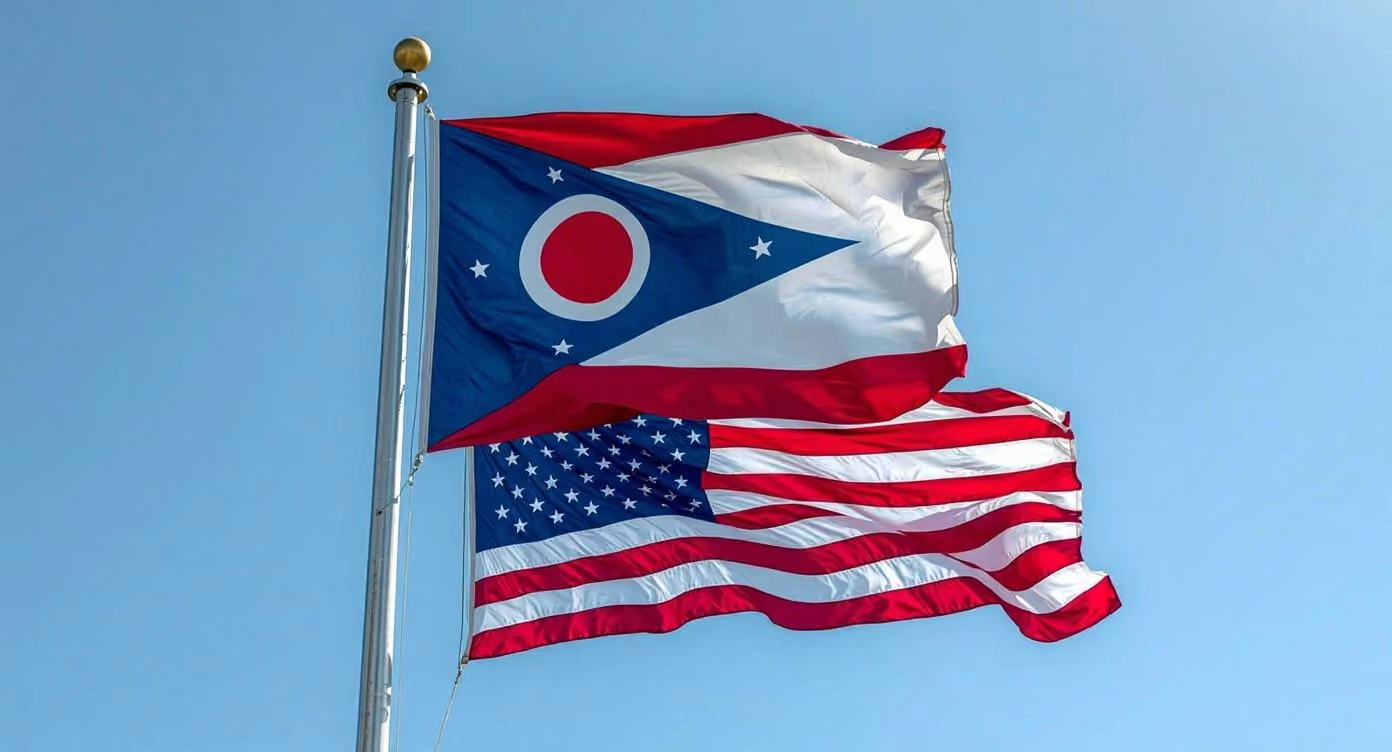


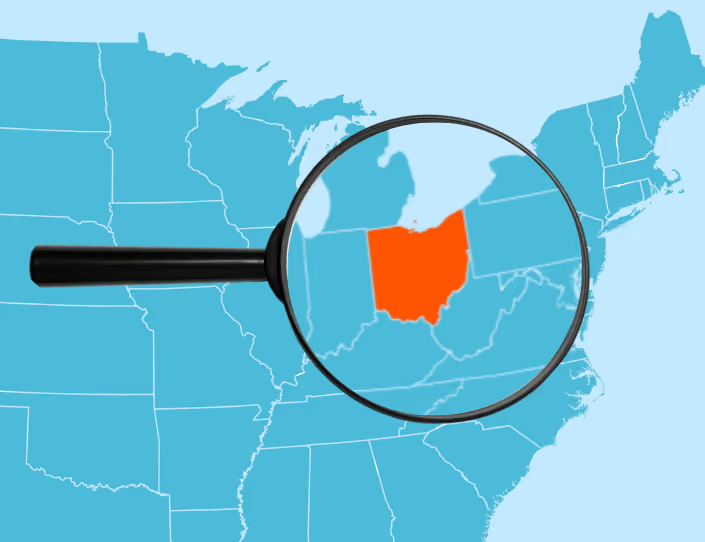
Commonly known as the Buckeye State, Ohio has a long and varied manufacturing history. With 13,907 manufacturing companies providing 851,775 jobs, Ohio is the third largest manufacturing employer in the U.S. So how did the home of Wright brothers’ first aeroplane gain its well deserved reputation for manufacturing and innovation?
History
After gaining statehood in 1803, Ohio quickly leveraged its natural resources and skilled workforce to its advantage. A natural abundance of low-grade ore in Youngstown prompted demand for iron, and later steel, furnaces. Over the first half of the nineteenth century, these furnaces became a common site across the state, prompting Youngstown to become known as the city of steel.
By the 1850s the combination of newly built railroad connections and a shift within the iron industry from charcoal to coke (a form of purified coal), transformed Cleveland into the third-largest iron and steel manufacturing city in the U.S. With connections throughout the state, and an abundance of coke for manufacturing, the city became a powerhouse of innovation. The industrial revolution of the 19th century provided Ohio with an economic boom, and manufacturing kept pace with technological advancements.
It wasn’t just iron and steel that thrived. Manufacturing machine tools, automotives, chemicals, and clothes all became thriving areas of business during the late nineteenth and early twentieth centuries.
In time, cities across Ohio became associated with specific types of manufacturing, developing clear identities.
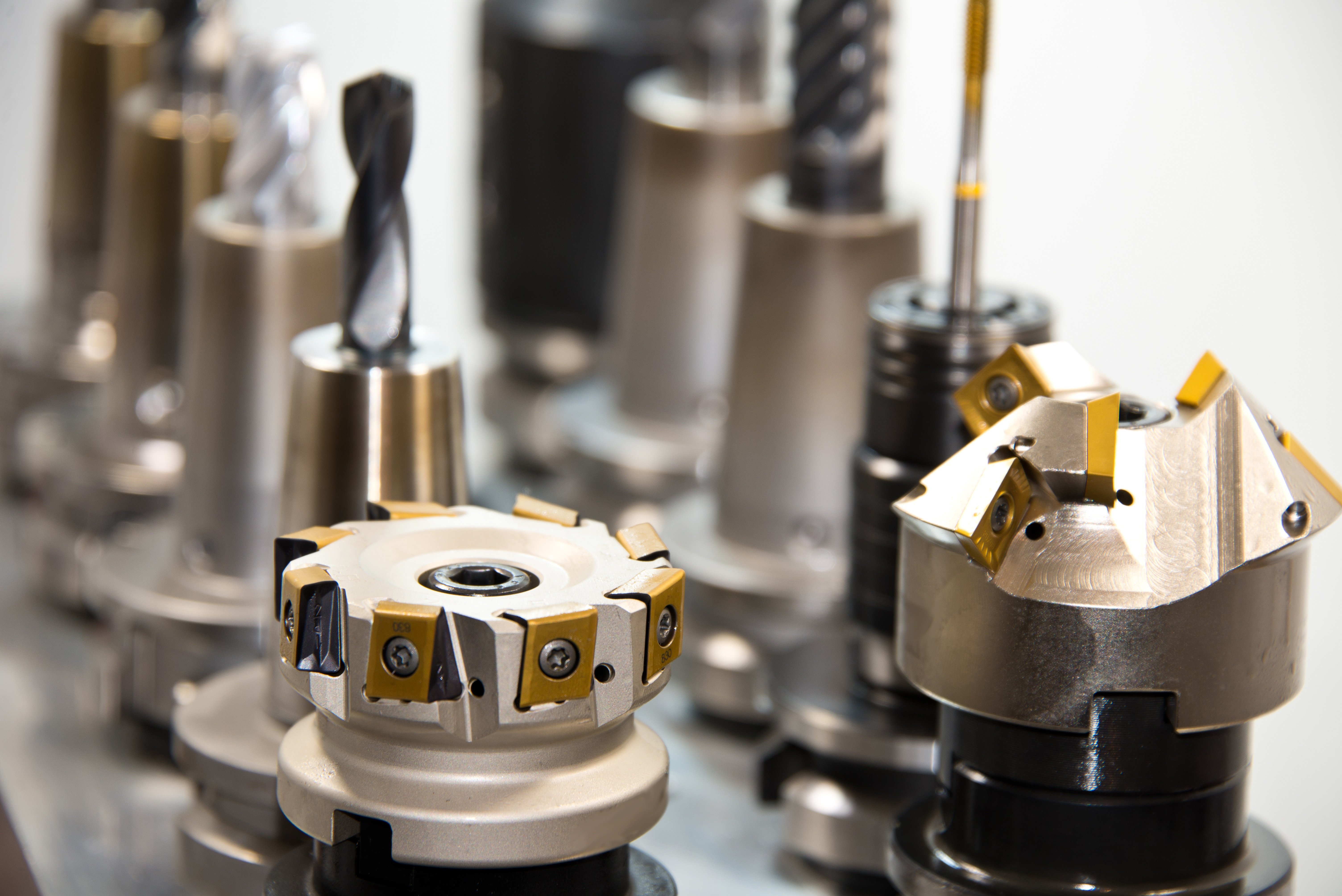
- Cincinnati focuses on manufacturing machine tools,
- Dayton produces business machines, computers, and automotive products,
- Youngstown was, and still is, a steel city, and is now also a major metal producer and fabricator,
- Akron is renowned for its rubber industry,
- And while Toledo developed a reputation for glass manufacturing, in more recent times it’s become known for its transportation equipment.
For decades manufacturing was the largest contributor to Ohio’s economy, until the services sector boom of the late 20th century changed the game. Competing industries, recessions, and a national shift towards offshoring and importing badly impacted the manufacturing industry across the U.S. While the “rust belt” states suffered as a result, Ohio’s manufacturing industry is being revitalised by consistent investment. Today, a wide range of conglomerates and industry leaders call Ohio home.
GE Aerospace
With 57,000 employees worldwide, over 10,000 of whom are Ohioans, GE Aerospace is the largest manufacturer in the state. First founded in 1892 as the General Electric Company, GE Aerospace went on to create the first turbosupercharger for the US government as they prepared to enter WW1 in 1917. As demand grew, GE decided to expand in order to better compete with other manufacturers and bought a second factory in Cincinnati, Ohio which was formally opened in 1949. The plant is now known as the Evendale Plant and is the world headquarters of GE Aerospace, employing 6,500 people.
GE is planning to invest a total of $160 million into Ohio in 2026, as part of a wider plan to invest $1 billion into U.S. manufacturing in 2026, maintaining its position as the most significant contributor to manufacturing in the state.
Honda
Founded in 1948 in Hamamatsu, Japan, Honda initially focused on manufacturing motorcycles, before moving on to automobiles in 1963. In November of 1982, the company began making automobiles in the Marysville Auto Plant, Ohio. Honda made sure from the beginning to hire local workers from the area, a strategy which resulted in massive success.
Honda stayed in the state, and today has five manufacturing facilities in Ohio: three auto plants (the Marysville Auto Plant, the East Liberty Auto Plant, and the Performance Manufacturing Center), as well as the Anna Engine Plant and a transmission plant in Russells Point. The original Marysville facility now employs over 5,000 people, while the Anna Engine Plant is the largest Honda engine plant in the world. In total over 12,000 associates support Honda’s Ohio manufacturing, and since 2019 the company has invested over $1.4 billion in the five facilities to modernise equipment and adopt new technologies.
Honda is now establishing a new EV Hub and investing over $1 billion to re-tool existing auto and powertrain plants for the production of electric vehicles. It is also spending $3.5 billion jointly with LG Energy Solution to establish a joint venture EV battery plant in Fayette County, Ohio. As Honda transforms, manufacturers in Ohio will be building the company's future.
Stellantis
Formed in 2021, Stellantis is the merger of Fiat Chrysler Automobiles (FCA) and the PSA Group, making them the world’s fourth-largest automaker by global vehicle sales.
One of the automotive manufacturers under the Stellantis brand is Jeep, which has been producing cars in Ohio’s Toledo Complex since 1941. Every Jeep Wrangler ever made was manufactured in Ohio.
Stellantis has two facilities in Toledo (Toledo North and Toledo South) which together are called the Toledo Complex, and one facility in Perrysburg called Toledo Machining. The company is going ahead with a previously announced investment in advanced technologies and product enhancements, as well as expanded component production.
In addition to this, Stellantis are planning to invest $13 billion over the next four years in US operations, with almost $400 million earmarked for investments in Toledo facilities. Production launch of new facilities is anticipated for 2028, and over 900 jobs are predicted to be made. Considering Stellantis already employs 5,000 workers in their Toledo facilities, this newest venture will have a substantial impact on the local manufacturing community.
Bath & Body Works
Founded in Boston, Massachusetts in 1990, Bath & Body Works are a textbook case of the efficacy of reshoring. Their focus on keeping production in the U.S., and ensuring local expertise is on hand in Ohio, is a key reason why the company hit $7.9 billion in annual sales in 2021.
With over 500 stores internationally, and more than 1,900 locations in North America (U.S. and Canada), Ohio is an important state for the company and plays a key part in how they keep 80% of the company’s production in the US.
In 2012 the company opened a Personal Care and Beauty Campus (Beauty Park) in New Albany, Ohio, that is a consolidated group of suppliers supporting the company’s supply chan.
In addition the Beauty Park, Bath & Body Works also have company-operated distribution, fulfilment, and shipping facilities in central Ohio. Their Columbus facilities employ 4,816 workers, and all the company’s corporate executives live a short drive away from the facilities, meaning they can develop new products and fix issues quickly.
As a fundamental part of the company’s success, Ohio will remain a key manufacturing hub for Bath & Body Works for many years to come.
Swagelok Co
Manufacturing industrial fluid systems since 1947, Swagelok Co have always had their roots in Ohio. Their first plant, the Crawford Fitting plant, was built in Cleveland in 1950. As they expanded a second facility was built in Solon, a Cleveland suburb, in 1964. That same facility today employs 4,800 people and is the company headquarters.
A worldwide company with customers in 70 countries, 20 manufacturing facilities, and five global technology centers, Swagelok’s products have been used in breathing packs for astronauts on Apollo 9, and on the Viking 1 spacecraft.
In 2018 Swagelok announced an update to their headquarters as part of a $152 million investment in the area, and a few years later announced plans to build a new 200,000 square foot distribution center on its Solon campus.
Swagelok’s history of creating innovative solutions that support historical firsts is tied to its base and history in the state of Ohio, and its recent investments in the area suggest this legacy will continue into the distant future.
Future
While there has been an overall decline in manufacturers in Ohio, with a 35% decrease from June 1990 to December 2025, there has been a positive uptick. In the last five years, there has been a 19.58% increase in working manufacturers in Ohio, suggesting an industry rapidly recovering.
Industrial machinery is currently Ohio’s largest manufacturing sector, employing 17% of the state’s industrial workforce. Ohio currently has the number 1 workforce for glass product manufacturing, and the number 2 workforce for electrical equipment, appliance, and component manufacturing. Despite this positive growth, as of 2025, only 2% of Ohio’s manufacturers are women-owned, meaning the state is still not taking advantage of all its skilled workers, to the detriment of the industry as a whole.
A combination of consistent investment and a national push towards reshoring has given manufacturing in Ohio a new lease of life, and the state has regained its place as one of the leading manufacturing states in the U.S. What comes next is uncertain, but it could only happen in Ohio.



.svg)