Don’t Wait Until Manual Manufacturing Workflows Start Costing You Time and Money


As Head of Manufacturing Engineering at Makelab, a modern 3D printing service based in Brooklyn, Cinterita focuses on 3 pillars: testing new materials, optimizing Design for Additive Manufacturing and building seamless workflows for scale.
She navigated scaling a high mix 3D manufacturing shop came with the operational hurdle of manual tracking and seamless transfer of information without human error.
The Broken Thread in Operations
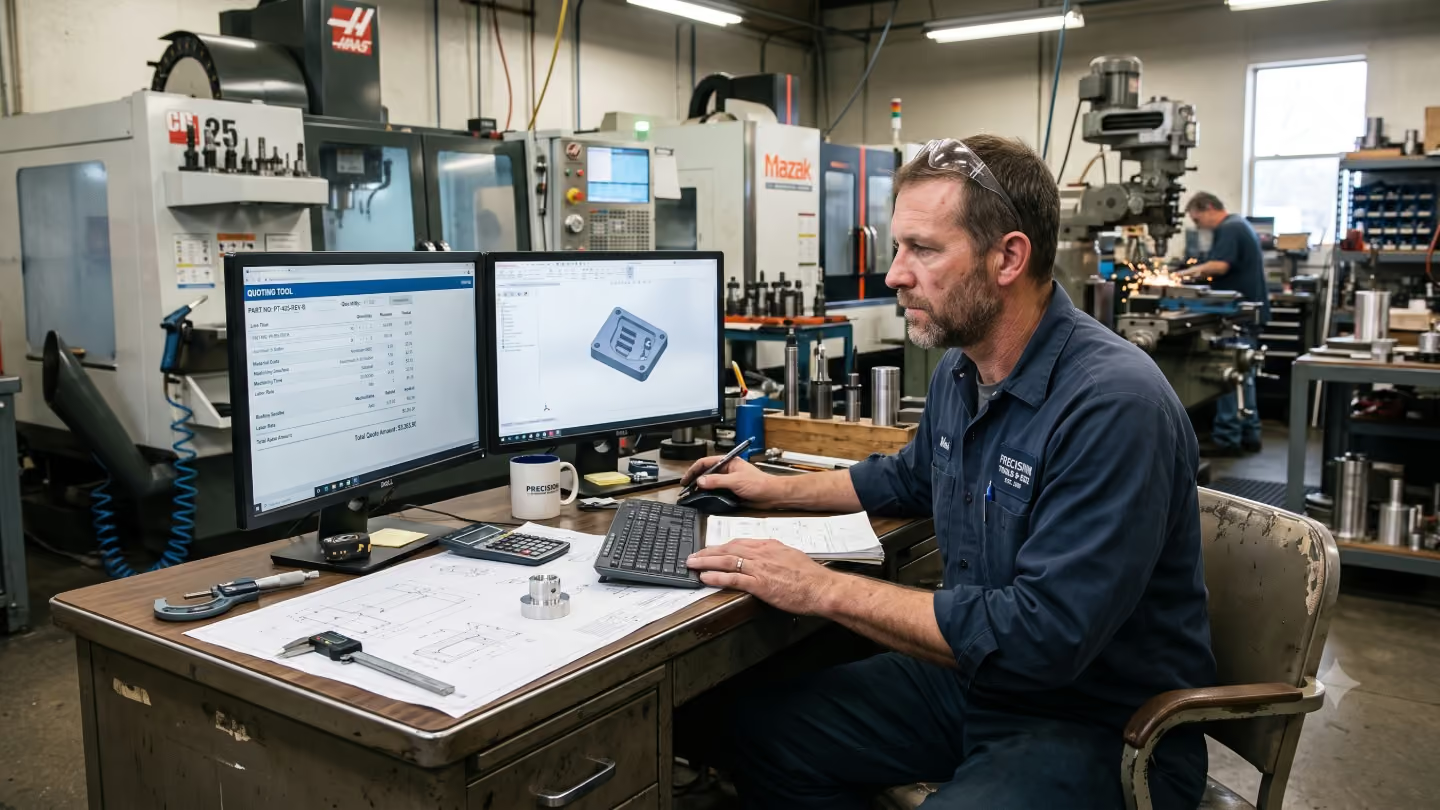
When Makelabs initially started, many of the processes were manual. But as order volumes grew, the physical forms, post-its and whiteboards turned into operational vulnerabilities.
“Imagine someone manually writing down an order number and swapping digits” Cinerita explains, “that small mistake leads to a mix up, confusion and missed deadlines. When you’re scaling up to thousands of parts, how can you rely on a single whiteboard? What if it gets erased?”
Beyond the physical tracking, Makelab also faced headaches with disconnected software tools. A single project had to go through multiple software that don’t speak with each other. The team had to spend time translating files, reentering data, introducing a fresh risk of human error and adding to the strain on their workload.
Focusing in on a Single Source of Information
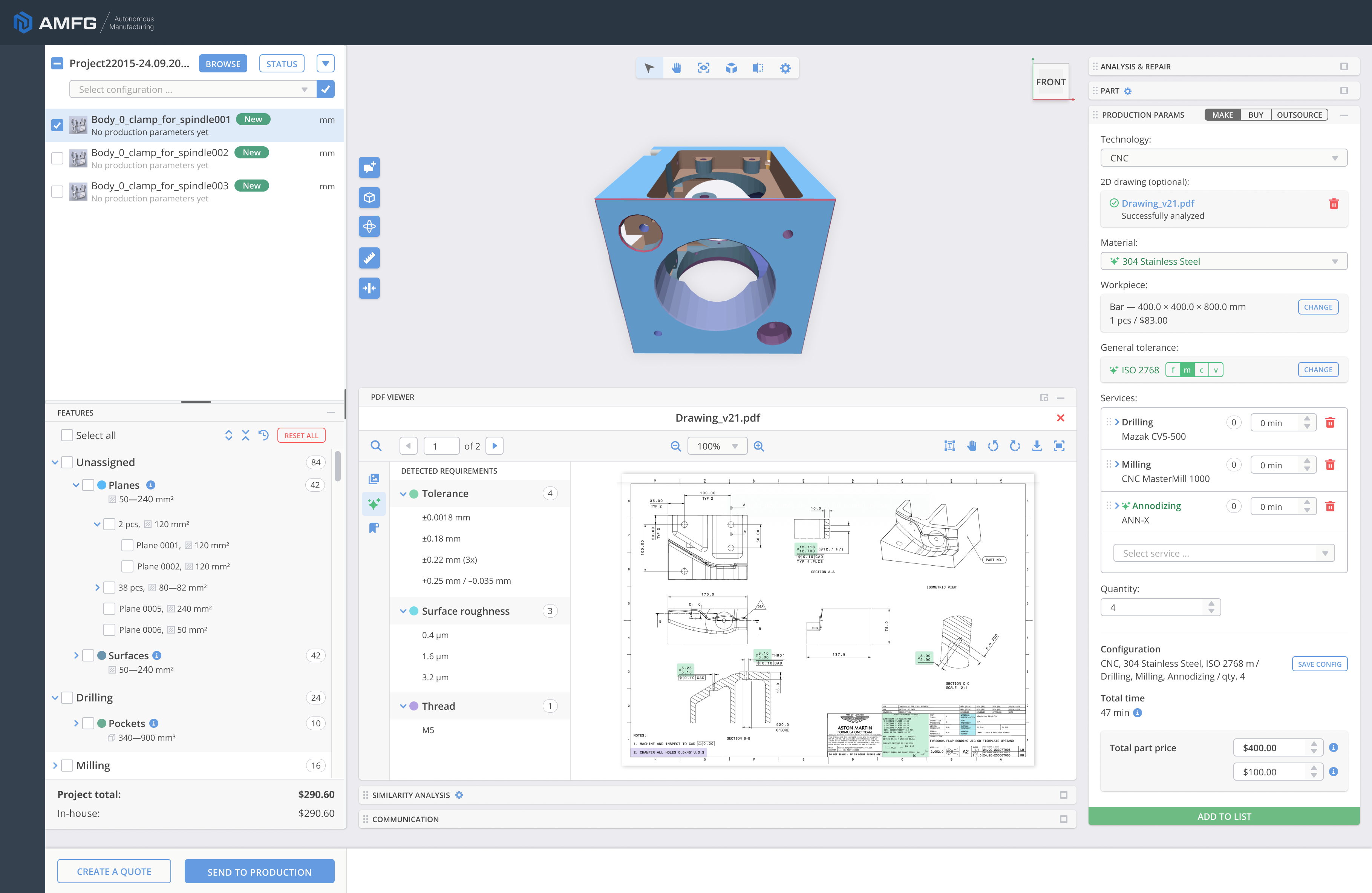
To solve data silos and prepare for high volume production, Makelab turned to AMFG as a single connected platform to keep track of their operational work flows.
“We needed traceability,” Cinerita shares. “With AMFG, I don’t have to look through multiple platforms to understand where a part failed or why an order is delayed. Everything is consolidated in one place.”
AMFG provides Makelab with visibility. Rather than searching for updates from different team members, they can pull an order on and see its status in real time. They use the scheduling systems in the software to enable visibility into machine capacities. Users can see what’s failing, what’s working, what is happening when.
Beyond that, Makelab is a power user that has built automations on top of AMFG through custom webhooks. When order statuses are marked as “completed,” subsequent process steps trigger automatically, eliminating administrative busywork.
Designing Systems for People
Change is always scary. Transitioning to new software can be hard. Cinerita emphasizes how successful adoption requires an approach that is thoughtful and relevant to the end user.
“It’s not just about learning something new, it’s about unlearning old habits,” Cinerita explains. “Don’t force people to change for a system, rather build a system that adapts to people.”
To put this in practice, Makelab uses a segmented onboarding approach, where they only onboarded team members with functions that were used for their daily tasks. They found no need for all their members to master all the features, to make the transition as seamless and simple as possible.
From Minutes Saved to Hours Earned
While saving 10 to 20 minutes per order may seem incremental, across hundreds of custom jobs, the time savings quickly adds up.
“It saves us at least a couple hours every single day” says Cinerita, “But beyond time, it removes the stress and mental load of having to remember every detail or second guess your data.”
The operational benefits flow outward to impact customer experience and team output.
- Early Failure Detection
The real time visibilities allow engineers to catch production failures early and adjust their schedules proactively to prevent unexpected downtime - Faster Customer Turnaround
When customers request timeline changes, they are able to make decisions and think about how to speed up production. - Refocused Engineering Improving Quality
Instead of doing manual data entry, engineers can focus on the shop floor doing what they love, ultimately improving the customer experience by producing reliable, consistent, quality products.
Advice for the Industry: Don’t Wait Until Manual Costs You
For custom part manufacturers hesitant to modernize their operations, Cinerita offers a straightforward piece of advice: don’t wait for manual processes to break.
"If you wait until manual operations start costing you business, you’ve already waited too long," Cinerita warns. "Modernizing is a competitive necessity. Systems today are highly customizable. Use that leverage to build a workflow that propels your business forward."
Watch the Video Interview Here



.svg)